1.28.2022

Too Short for a Blog Post, Too Long for a Tweet 311


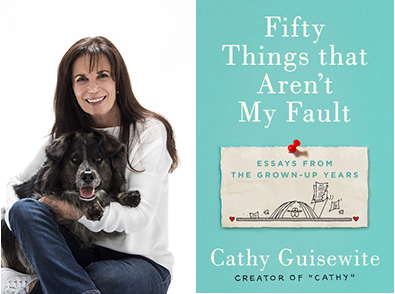
Here are a few excerpts from a book I recently read, "Fifty Things That Aren't My Fault: Essays from the Grown-up Years," by Cathy Guisewite.


“Hey, Mom.” That’s all she had to say. I’m a mom-linguist at this point—can translate four hundred slightly different inflections of “Hey” and “Mom” into four hundred completely different meanings. 

"I’ll book you a flight home,” I answered warmly, and heard many, many words of relief in her “Okay.”


“A birth mother came in today who’d like to meet you.” 

“What?” I choked back. I was single and terrified. I’d only signed up with an adoption facilitator a couple of months earlier and was still wrestling with whether I could or should really do this on my own.

Suddenly there I was, twenty-four hours later, with my hand touching the rest of my life through the shirt of an equally scared, unbelievably trusting stranger. In one day I’d gone from the dream of having a daughter “someday” to being half of a miraculous meeting of two moms—one who was bringing a little girl into the world; one who would take her through it. 

I would say it isn’t possible to describe the bond that grew between my daughter’s birth mother and me in the four weeks that followed, except it felt to me, and I’m pretty sure to her too, that our bond was deep and immediate the minute we met. I will never be able to comprehend the selflessness of her love that made it possible for her to seek a life for her child she knew she couldn’t provide. I can still hardly breathe when I think of the faith she put in me to be the mom she couldn’t be. I drove my daughter’s birth mother to the hospital when she went into labor. The admitting nurse asked if we were sisters. So much more than that, I’ve thought a million times since that night. We are so very much more than that. 

I held her birth mother’s hand while our daughter was being born. I fed the baby that suddenly belonged to both of us tiny bottles in the hospital nursery day and night until she was ready to come home. I made sure our daughter and her birth mother had time alone together in the hospital, and that the three of us had a little time together, too. Then I drove our daughter home by myself, just the two of us. I was so overwhelmed by the impossibly complicated emotion of driving her away from her birth mother, the incomprehensible joy and responsibility of becoming her life mother, that I couldn’t stand to have anyone else in the car. I was on my own and thousands of miles away from any family. My daughter and I locked around each other deeply and completely, and have been each other’s world ever since.

I look at her now, engrossed in her iPhone with the two thousand Facebook friends she’d rather be with than me. I would do anything for my child. I would crawl across the earth on my hands and knees to help her. I would die for her. I would give her anything—my food, my blankets, my bed, my air, my home, my life. She is my life. I would do anything for her. 

Anything, it turns out, except keep my mouth shut. 

“Pull your shoulders back, honey. You’re all slumpy.” I’ve lost all ability to screen outgoing messages. I continue . . .


I walk down the hall to the home office Dad shares with Mom. Command Central for all the critical business of their days. It’s half the size of a spare bedroom, with two desks, two swivel chairs, two file cabinets, two computers (one desktop, one laptop), reams of paper, multipacks of tape, staples, pencils, file folders, and many “pending” piles. A room so full of meticulous records from the past and supplies for the future that if one parent’s sitting at one desk and the other wants to get to the other desk, they both have to stand and sort of twirl around for the second person to squeeze through. The dance they’ve done a million times in their sixty-five-year marriage. The dance I would have done with my husband a maximum of two times before renting office space across town.


My daughter is friends with a universe of strangers, people she’s never met in countries she’s never been to: great big global groups of Facebookers, bloggers, and gamers. Attachments are fragile and fickle, and all in the air. Landlines don’t exist. Single-tasking is ancient history. Human contact is to be avoided whenever humanly possible. 

Mom and Dad make weekly pilgrimages to the bank to visit the people guarding their money. They know their bank tellers’ names and wedding anniversaries and how it’s going with the recent foot surgery. My daughter never goes inside a bank. Has never even spoken to a drive-up teller. Money comes out of an ATM on the sidewalk; money goes in by snapping photos of birthday checks on the kitchen counter and clicking deposit. 

Mom and Dad shop in stores, eat in restaurants, and buy tickets for upcoming plays and ballets at the theater box office in person. Dad doesn’t even like to drop mail in the mailbox that’s in front of the post office. He likes to park, go inside, and hand his letters right to a U.S. Postal Worker he knows by name. 

My daughter shops, returns, buys tickets, pays bills, and orders takeout online. She scans and bags her own groceries in the self-check-out area at the supermarket. She’s been in a post office once, when I tried to force her to learn how to buy stamps for the thank-you notes I forced her to write by hand. Never even made it to the counter. “They have machines, Mom!” She pointed and, before I could stop her, ran to the self-serve machine in the lobby and came back waving a sheet of generic metered first-class postage stamps over her head like a millennial victory flag. 

“But you can pick out pretty stamps at the counter!” I implored, trying to pull her toward the long line of people my age and older who were waiting for a person to wait on them. “The postal worker can show you all the pretty stamps and you can pick the ones that match the sentiment of the notes you’re sending!” My daughter looked at me with the same sick disbelief as the day the credit card reader wasn’t working on the gas pump where she stood trying to fill the tank of her car. 

“The credit card thing isn’t working on the gas pump!” she wailed through the window of the passenger seat where I sat. 

“Walk inside the gas station and give your card to the person behind the counter,” I answered as patiently as I could. 

“WHAT?!” she recoiled. 

“There’s a person inside! Give your credit card to the person!” I said less patiently. 

“WHAT?! I’m not dealing with some random dude!” She got back in the car, slammed the door, and started the engine. “I’ll drive to a different station where things work! Seriously, Mom? The person??!” 

Mom and Dad are brick and mortar. Face-to-face. Grounded. When Mom and Dad are with friends, no one’s twitching to check text messages or Instagrams. People are fully there when they’re there, plugged in to the moment and one another. Relationships are anchored, connected by all those visible and invisible cords. Is that why the friendships, marriages, and sort of everything else, including all the cars and appliances made by their generation, seemed to last a lot longer? 

I think a little wistfully that the last cord that connected my daughter to something that really mattered was the umbilical one. What will keep the people in her world attached to each other or anything else when the people in my parents’ and my world are gone? I want my daughter to know the strength and clarity of not wandering that far from the base unit that’s helped make my parents’ relationships so solid and my life so secure. I want her to stay connected to the power source of principles, values, faith, and family that will help her be grounded and safe. 

But I also want my parents to experience the thrill of unplugging. They might not ever be ready for the wonder of carrying the Encyclopedia Britannica in a smartphone in their pants pockets and aprons, but they could at least experience the freedom of taking a phone call on the front porch with the World Wide Web on their laps. 

I want, for one minute of my life, to not feel right in the middle.


“How will you dial 911 if you’re unconscious?” I ask, my benevolent caregiver patience wearing thin. 

They look at me as if I’m the illogical one. 

“We’ll dial 911 before we become unconscious!” Dad exclaims. “Honestly, honey! You worry too much!”


They call it the “sandwich generation,” but it seems much more squashed than that. More like the “panini generation.” I feel absolutely flattened some days by the pressure to be everything to everyone, including myself.


“How about a used sticky note??” I ask, picking one off the counter and holding it in the air. “Can I throw out one used sticky note with a grocery list from last Thanksgiving?!” 

“No! I wrote the Holecs’ new address on the back of that!” Mom says, plucking it from my hand. 

“You use the backs of sticky notes??” 

"You don’t use the backs of sticky notes??”


I spent nineteen years trying to expose my daughter to art, music, dance, theater, literature, and the wonders of nature. All those conversations in the botanical gardens, she’ll forget. All those concerts, gone. This, she’ll remember. The big takeaway from childhood: Mother can’t be in the house with an open container of Cool Whip. 

She stares at me with critical college student eyes. I search them for a flicker of her five-year-old eyes—the ones that saw me as perfect, back when she wanted to be just like me. All I can find are the teen ones, recalculating my standing and reaffirming her superiority. 

She shakes her head. “Wow.” 

I’m not sure if it’s because of shame or surrender or just because this scene is so ridiculous, but her “Wow” makes me start laughing, which makes her start laughing. And then we’re laughing together, doubled over each other in the kitchen. I’m so far from being perfect, and she’s so close to needing me not to be perfect. There’s relief, I think, that the guard can finally be let down. If she can remember this moment—where her old vision of me and her new vision of me blur into some loving acceptance of Mom as an Actual Human—it’s surely more precious than anything they tried to teach her through the self-guided tour headset I forced her to wear at the Natural History Museum.

1.26.2022

Too Short for a Blog Post, Too Long for a Tweet 310


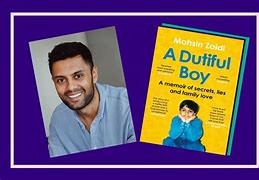
Here are a few excerpts from a book I recently read, "A Dutiful Boy: A memoir of secrets, lies and family love," by Mohsin Zaidi.


‘What if the non-believer is a really good person?’ I asked, without waiting to be called on. I was thinking of Superman. Superman was my hero. He wasn’t Muslim but he helped everybody. 

The young preacher smiled sympathetically in my direction. ‘They still won’t go to heaven,’ he replied, shaking his head gently, as if damning somebody to eternal hellfire was as straightforward as saying yes or no to a cup of tea. 

‘OK …’ the cogs in my seven-year-old mind still turning, ‘but what if you have a non-believer who is better than a Muslim? Then what happens?’ 

His arms now crossed as he sat up to look at me more purposefully. ‘The Muslim will answer to Allah for his behaviour. The non-believer will be punished for failing to embrace Islam,’ he said, in a tone slightly sharper than before. 

That still didn’t sound fair. ‘OK … What if you get a non-believer who has been really, really good and never heard of Islam. What happens to them?’
 
Frustrated with my childish inquisitiveness, he snapped back: ‘That wouldn’t happen these days because of technology,’ and then he moved on. 

As we were ushered into the men’s hall for the main sermon, the conversation left me uncomfortable, like I had swallowed something without chewing.


Go on, Mohsin. Say it. It’s time. I … I’m … I … I’m g-gay, I said to myself. I was overcome with a rush of exhilaration while the fluttering emotions in my chest searched frantically for a place to settle. I said it loud enough to make it real but so softly it didn’t touch the walls, or the carpet or the bed. I didn’t want it to tarnish the room. Saying the words made me feel like I’d been released from the dark pit of my imagination, allowed for a moment to stretch and scream. I let myself imagine him. A man who might love me, who might hold my hand one day. That was enough, just to picture him, for a brief moment. 

The relief was short-lived. What would I do? I would do nothing. I could feel the angels on my shoulders scribbling furiously. I would tell no one. I would work hard, get a job, find a wife and have children just the way Allah had planned. I could never tell anyone my secret. I found the dark pit this emotion had emerged from and folded the feeling, and myself, back inside. I felt the stone-cold lid shut me in; this was a familiar darkness. A darkness that comforted my eyes after the blinding light.


‘You know, I’ve figured out why you’re so sexy. You have Western features and brown skin,’ he announced. ‘It’s that combination of East and West.’ 

‘You think that without my “Western features” I wouldn’t be attractive?’ 

‘That’s not racist!’ 

‘No?’ 

‘Of course not. If I was racist I wouldn’t be here, would I?’ he said triumphantly. 

For gays, I was too Muslim. For Muslims, I was too gay. For whites, I was too brown, and for my family, I was too white. It was time to create a space where I could just be myself. And to do that, I had to bite the bullet and move out of the house because it no longer felt like a home.


‘You know, I was so upset when she told me,’ said the woman with the samosa. 

‘Yes, I was also very, very upset,’ replied the other. 

‘But now I see that this is normal. I love her completely!’ 

‘Yes, yes, me too, completely normal.’ 

Asian mothers could compete over absolutely anything.


GQ magazine had voted ‘criminal barrister’ one of the top ten sexiest professions in the world but it didn’t seem to be doing much for my love life. When I boastfully told people I was a barrister they assumed I was working in a coffee shop.

1.20.2022

Too Short for a Blog Post, Too Long for a Tweet 309


Here are a few excerpts from a book I recently read, "Four Hundred Souls: A Community History of African America, 1619-2019," edited by Ibram X. Kendi and Keisha N. Blain.


But a year before the Mayflower, in 1619, another ship dropped anchor on the eastern shore of North America. Its name was the White Lion, and it, too, would become one of the most important ships in American history. And yet there is no ship manifest inscribed with the names of its passengers and no descendants’ society. These people’s arrival was deemed so insignificant, their humanity so inconsequential, that we do not know even how many of those packed into the White Lion’s hull came ashore, just that some “20 and odd Negroes” disembarked and joined the British colonists in Virginia. But in his sweeping history Before the Mayflower, first published in 1962, scholar Lerone Bennett, Jr., said of the White Lion, “No one sensed how extraordinary she really was…[but] few ships, before or since, have unloaded a more momentous cargo.” 

This “cargo,” this group of twenty to thirty Angolans, sold from the deck of the White Lion by criminal English marauders in exchange for food and supplies, was also foundational to the American story. But while every American child learns about the Mayflower, virtually no American child learns about the White Lion. 

And yet the story of the White Lion is classically American. It is a harrowing tale—one filled with all the things that this country would rather not remember, a taint on a nation that believes above all else in its exceptionality.

The Adams and Eves of Black America did not arrive here in search of freedom or a better life. They had been captured and stolen, forced onto a ship, shackled, writhing in filth as they suffered and starved. Some 40 percent of the Angolans who boarded that ghastly vessel did not make it across the Middle Passage. They embarked not as people but as property, sold to white colonists who just were beginning to birth democracy for themselves, commencing a four-hundred-year struggle between the two opposing ideas foundational to America. 

And so the White Lion has been relegated to what Bennett called the “back alley of American history.” There are no annual classroom commemorations of that moment in August 1619. No children dress up as its occupants or perform classroom skits. No holiday honors it. The White Lion and the people on that ship have been expunged from our collective memory. This omission is intentional: when we are creating a shared history, what we remember is just as revelatory as what we forget. If the Mayflower was the advent of American freedom, then the White Lion was the advent of American slavery. And so while arriving just a year apart, one ship and its people have been immortalized, the other completely erased.


The hypocrisy of white Christians who said their religion condemned darker-skinned people to perpetual slavery even as they worshiped a brown-skinned Jewish man who was put to death by an imperial power could hardly be starker, both then and now.


The most important part of the petition—the part that compelled historian Katharine Gerbner to describe it as “one of the first documents to make a humanitarian argument against slavery”—is the plain affirmation that Blacks are first and foremost human beings and not salable animals for toil and labor. A humanitarian argument is different from an argument based on inclusion and exclusion. Inclusion—in this case, being included as beneficiaries of the bounty of America—is important, but it is not fundamental because if the people who want to be included are not considered worthy or even really people at all, then your commitment to inclusion will evaporate. But if you start from the idea that Blacks are indeed human, then every commitment to equality after that will be unshakable. And that is the thing to be learned from the 1688 petition. Blacks do not need allies who fight for our inclusion; rather, we need people who are possessed of the basic belief that we are human and that any arguments that depend on rejecting that proposition are tyrannical, unjust, and to be fought. 

This may seem to be a semantic point. After all, can’t allies do exactly that? Yes, but there’s more to consider. By their very nature, alliances are agreements, explicitly or implicitly, and usually the most essential part of an alliance is that it is made for mutual benefit and advantage. But think about that. What does it mean to rely on a system of racial support founded on people entering into that kind of pragmatic agreement? 

The 1688 Germantown petition is a model of, if nothing else, a quality that Black people need in white Americans—the uncompromising belief that what is wrong with racism is not that it inhibits full access to American goods and treasures but that it is an affront to the human standing of Black Americans. Black people don’t need allies. We need decent people possessed of the moral conviction that our lives matter.


In the comfortingly distorted view of the past, American slavery came about in the passive tense. That’s just the way things were back then. Slavery was an inherited reality, a long-standing if unsavory fact of trade and war. In reality, colonial legislatures consciously conceived American chattel slavery at the turn of the eighteenth century, and they spelled out its terms in painstaking regulatory detail. Virginia’s slave codes contained forty-one sections and more than four thousand words.


The 1793 Fugitive Slave Act was one of the first federal laws to provide universal protection for slave owners against loss of property in enslaved people. It codified anti-Blackness and white supremacy because it signaled that a white person’s claim to stolen property was inherently more important than a Black person’s right to freedom and liberty. It reified that the United States was a nation divided, one that established freedom with whiteness and servitude with Blackness. Most critically for Black people, whether enslaved or free, the United States proved to be hostile to their freedom and hypocritical in its claims for justice and liberty.


The results of the 1840 census, which by the time of McCune Smith’s review in 1844 were under the ultimate control of Secretary of State John C. Calhoun, showed data on the health of both white and Black Americans, the latter of which were divided into categories of “free” and “enslaved.” According to these data, enslaved Black Americans enjoyed much better health than free ones, particularly mental health. Free African Americans were eleven times more likely than enslaved ones to be mentally ill, he found. Enslavement was therefore beneficial, according to the census data, and freedom could prove fatal. 

Except for protests by one physician, antislavery activists offered only pallid rebuttals, while McCune Smith analyzed the data and found it rife with fraud and error. He demonstrated that many of the figures were specious or invented and that by every meaningful measure, from life expectancy to disease rates to mental health, free Blacks enjoyed far superior health than the enslaved. 

McCune Smith presented his detailed report to the U.S. Senate in 1844. Former president John Quincy Adams, then serving in the House of Representatives, ordered an investigation, but Calhoun, a slavery advocate and former medical student, appointed a proslavery crony who pronounced the census flawless. Thus the 1840 census was never formally corrected, and enslavement was held to be necessary for African American health.


From the inception of her crusade, Wells-Barnett claimed that white hysteria about the rape of white women by Black men effectively masked violence against women—both Black and white. “To justify their own barbarism,” she argued, Southern white men “assume a chivalry which they do not possess.” Lynching, she explained, was not about protecting Southern womanhood but had everything to do with shoring up white men’s social, economic, and political power—in other words, white male supremacy. Desperate to control white women’s sexual behavior and maintain sexual control over Black women, Southern white men had created a scapegoat in the animalized figure of the Black rapist. Wells-Barnett argued that the focus and attention on the image of the Black rapist concealed lynching’s motives and masked violence against Black women who were victims of sexual assault and lynching.

1.14.2022

Too Short for a Blog Post, Too Long for a Tweet 308


Here are a few excerpts from a book I recently read, "Maybe You Should Talk to Someone: A Therapist, HER Therapist, and Our Lives Revealed," by Lori Gottlieb.


I know how affirming it feels to blame the outside world for my frustrations, to deny ownership of whatever role I might have in the existential play called My Incredibly Important Life. I know what it’s like to bathe in self-righteous outrage, in the certainty that I’m completely right and have been terribly wronged, because that’s exactly how I’ve felt all day.


Therapists, of course, deal with the daily challenges of living just like everyone else. This familiarity, in fact, is at the root of the connection we forge with strangers who trust us with their most delicate stories and secrets. Our training has taught us theories and tools and techniques, but whirring beneath our hard-earned expertise is the fact that we know just how hard it is to be a person. Which is to say, we still come to work each day as ourselves—with our own sets of vulnerabilities, our own longings and insecurities, and our own histories. Of all my credentials as a therapist, my most significant is that I’m a card-carrying member of the human race. 

But revealing this humanity is another matter. One colleague told me that when her doctor called with the news that her pregnancy wasn’t viable, she was standing in a Starbucks, and she burst into tears. A patient happened to see her, canceled her next appointment, and never came back.


It’s not just the words people say or even the visual cues that therapists notice in person—the foot that shakes, the subtle facial twitch, the quivering lower lip, the eyes narrowing in anger. Beyond hearing and seeing, there’s something less tangible but equally important—the energy in the room, the being together. You lose that ineffable dimension when you aren’t sharing the same physical space.


Through his tears, John says that this is exactly what he didn’t want to happen, that he didn’t come here to have a breakdown. But I assure him that he’s not breaking down; he’s breaking open.


Erikson maintained that, in later years, we experience a sense of integrity if we believe we have lived meaningful lives. This sense of integrity gives us a feeling of completeness so that we can better accept our approaching deaths. But if we have unresolved regrets about the past—if we think that we made poor choices or failed to accomplish important goals—we feel depressed and hopeless, which leads us to despair.

1.10.2022

2022 Predictions


I’m a month late on when I usually stick my neck out to prognosticate about the year ahead.  I assure you that the extra time does not make these wild-ass guesses any better.

  1. Having risen to the very top of music (BTS) and TV (Squid Game), Korea now conquers…social media: Kakao goes global and viral.
  2. Halfway to 2024, R’s retake Congress, Senate stays split, and the parties are already starting to consolidate behind Harris vs. DeSantis.
  3. Bitcoin shake-out as transition to mainstream stalls out.
  4. Creative cinemas re-tool and re-open, injecting interactivity, fun, and safety into the traditional viewing model; Americans flock back to the theaters in droves.
  5. Shohei Ohtani will have an even better start to 2022 than his historic 2021, but alas a late-season injury means the beginning of the end of two-way play.

1.07.2022

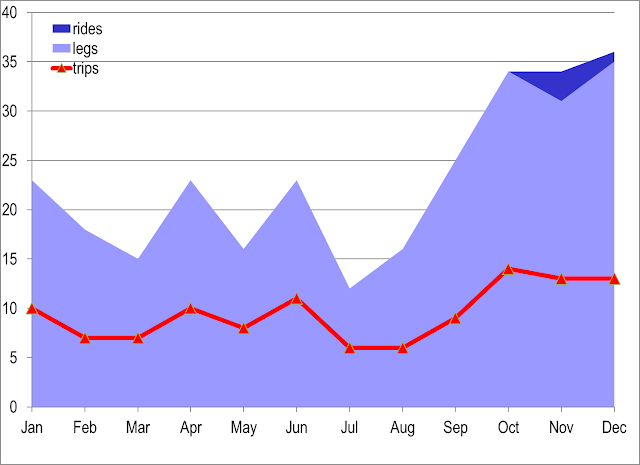
2021 Car Usage


This is the 12th year I have tracked car usage, so I think it's safe to say this has become a habit. As has the nerdy tracking and graphing of it in Microsoft Excel. (You can check out 2020 here, 2019 here, 2018 here, 2017 here, 2016 here, 2015 here, 2014 here, 2013 here, 2012 here, 2011 here, 2010 here, and 2009 here.)

As before, the Philly totals represent, in order, number of trips, number of legs represented in those trips (i.e. going to and from my in-laws, making one stop to get gas, counts as three legs), and number of legs in which I was driven (rather than driving).
 
The other city totals represent, in order, number of times I was in that location, number of days I was in that location, number of trips, number of legs represented in those trips, and number of legs in which I was driven. 

January 10/23/0

February 7/18/0

March 7/15/0

April 10/23/0

May 8/16/0 Trenton 1/1/1/2/0 DC 2/2/1/7/0

June 11/23/0 Bucks 1/1/1/4/0 camps 3/3/3/8/0

July 6/12/0 DC 1/3/2/7/0 camps 2/2/2/7/0

August 6/16/0 camps 2/2/2/7/0 OCNJ 1/7/10/33/3 Rehoboth 1/7/5/18/0

September 9/25/0 DC 1/1/1/2/0 NYC 1/1/0/0/0

October 14/34/0 OCNJ 1/1/1/4/0

November 13/31/3 Baltimore 1/1/0/0/0 Pittsburgh 1/1/1/7/0

December 13/35/1 CA 1/12/12/45/1 OCNJ 1/1/1/4/0

    
So my Philly total is 114 trips involving 271 legs, plus another 4 legs in which I was driven.  So that works out to about 9 1/2 car trips and 23 legs a month.  

This was another COVID-influenced year, of course, the largest impact of which was far less business-related travel than usual.  Who's to say what post-COVID normal will mean in that regard?

By the way, we're now up to about 45,000 miles on our singular family car, which is literally the same age as Asher (bought it our first full day back from picking him up, when he was about a week old).  Which works out to less than 7,000 miles a year, a far cry from typical suburban families who might drive both cars 15,000 miles each for work and errands and/or have additional cars for kids and family outings.  A reminder that city living is green living.

1.05.2022

Too Short for a Blog Post, Too Long for a Tweet 307

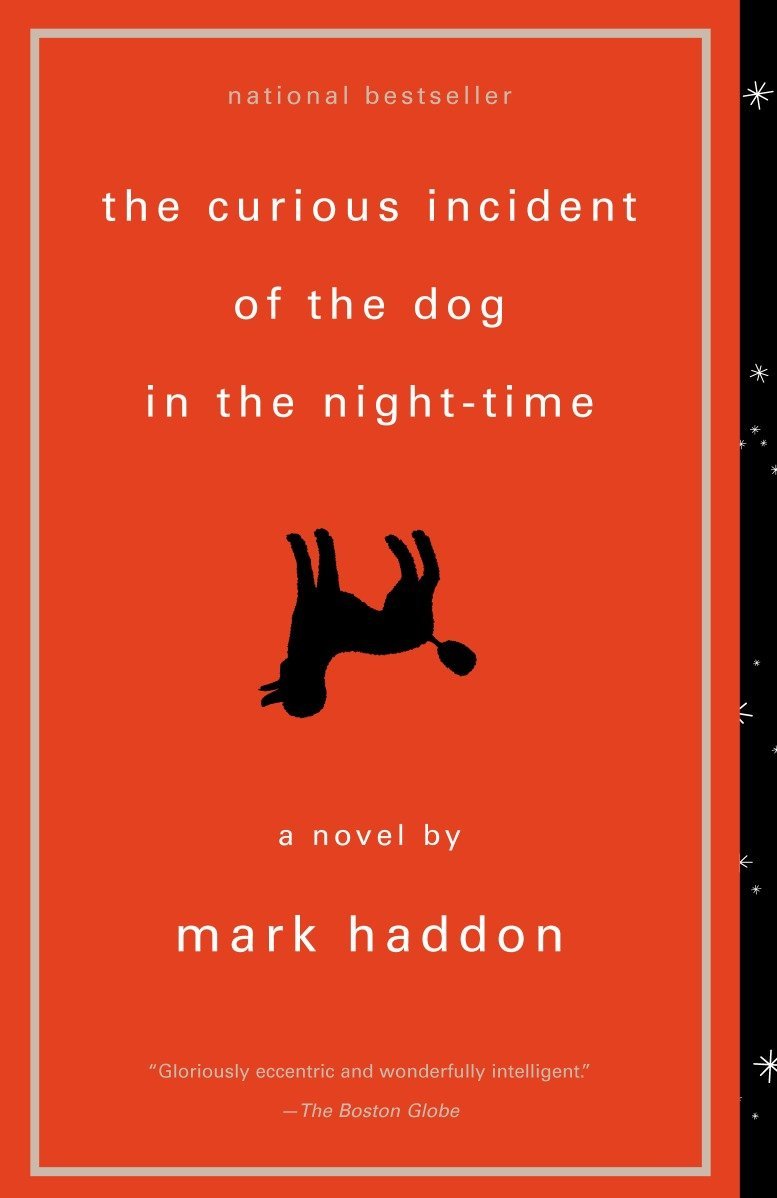
The Curious Incident of the Dog in the Night-Time: Haddon, Mark:  9781400032716: Amazon.com: Books


Here's an excerpt from a book I recently read, "The Curious Incident of the Dog in the Night-Time," by Mark Haddon.

Prime numbers are what is left when you have taken all the patterns away. I think prime numbers are like life. They are very logical but you could never work out the rules, even if you spent all your time thinking about them.

1.01.2022

2022


So long, 2021 (and 2020 for that matter).  Hello New Year!

Too Short for a Blog Post, Too Long for a Tweet 522

  Here are a few excerpts from a book I recently read, "Moby Dick," by Herman Melville. Again, I always go to sea as a sailor, bec...