 On May 14, 2016, I climbed onto the treadmill at the local
Y, logged into Netflix, and jogged my way through a couple of episodes of
Scandal. Since then, ever the
documentarian, I have tracked all my viewing.
(Not counting sports, which I’ve seen the occasional game on TV as well as watched video highlights.) Here is the full list
(in alphabetical order) of my entertainment consumption from that first episode
of Scandal to when I finished You on January 27, 2019:
On May 14, 2016, I climbed onto the treadmill at the local
Y, logged into Netflix, and jogged my way through a couple of episodes of
Scandal. Since then, ever the
documentarian, I have tracked all my viewing.
(Not counting sports, which I’ve seen the occasional game on TV as well as watched video highlights.) Here is the full list
(in alphabetical order) of my entertainment consumption from that first episode
of Scandal to when I finished You on January 27, 2019:1.30.2019
That's Entertainment
On May 14, 2016, I climbed onto the treadmill at the local
Y, logged into Netflix, and jogged my way through a couple of episodes of
Scandal. Since then, ever the
documentarian, I have tracked all my viewing.
(Not counting sports, which I’ve seen the occasional game on TV as well as watched video highlights.) Here is the full list
(in alphabetical order) of my entertainment consumption from that first episode
of Scandal to when I finished You on January 27, 2019:
1.29.2019
Too Short for a Blog Post, Too Long for a Tweet 167
 Here are a couple of excerpts from a book I recently read, "Bunk: The Rise of Hoaxes, Humbug, Plagiarists, Phonies, Post-Facts, and Fake News," by Kevin Young:
When friend is merely a verb, not a person; when
apocalypses too are computer based and costly, like Y2K, then turn out
to be mostly paranoia, or worse, marketing; when you can fall in love
not with television or through television but on television through a
series of dates you couldn’t really afford in a rented mansion that
seems specifically designed for reality TV, is a set really, a soft-core
porn palace, and then wonder why it doesn’t work when the cameras are
off; when your first instinct at the sign of national tragedy is to tell
your phone, not tell someone using that phone: then you have become as
fictional as the world that you’ve created.
I
thought I’d nearly finished this book—filled with hoaxers and
impostors, plagiarists and phonies—but as soon as I had sent a draft to
my publisher, elated and relieved, Rachel Dolezal raised up her
faux-nappy head. Now I have to take time to write about her too?
I
can’t decide if Dolezal, the woman revealed to have been merely
pretending to be black, lecturing as such and even leading her local
Oregon NAACP, is the natural extension of what I’ve been saying all
along, or a distraction from this book’s larger point: that quite
regularly, faced with the paradox of race, the hoax rears its head. It
turns out, I now know, it rears its rear too.
1.25.2019
Too Short for a Blog Post, Too Long for a Tweet 166
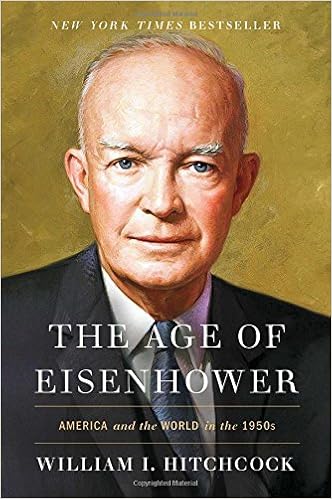 Here are a few excerpts from a book I recently read, "The Age of Eisenhower: America and the World in the 1950s, William I Hitchcock:
Although to contemporary viewers the Checkers speech appears saccharine and insincere, colored by Nixon’s wounded pride and class resentment, at the time it was hailed as an honest and, above all, gutsy demonstration. The New York Times ran a digest of editorial opinion from the nation’s newspapers on September 25, in which the speech was seen as “a smash hit,” and Nixon was described as “honest” and “sympathetic.” The Los Angeles Times, which had backed Nixon from the start, declared him “an adversary of evil and a champion of right.” The Dallas Morning News even styled him “the sort of he-man who has made this country what it is.”
Hundreds of thousands of telegrams flooded into the Republican National Headquarters calling for Nixon to stay on the ticket. His painstaking assessment of his debts and his modest income, combined with his antagonism toward liberal elites, resonated with millions of viewers. Nixon revealed an uncanny ability to identify with the financial insecurities and ideological anxieties of the American Everyman—who wanted to see him rewarded. There was no way to dump a fighter like Nixon. For once, Eisenhower had been outmaneuvered. “You’re my boy,” Ike told him when they met the next evening in Wheeling, but Eisenhower’s big grin hid the menace of that remark.
Nixon had saved his skin and his career. But at what cost? Ever after, Ike would treat him with suspicion and a certain disdain. Nixon’s failure to fall on his sword, his public pleading, his naked ambition, his almost painful self-exposure on television—all this repelled the proud Eisenhower. He could admire the way Nixon had fought for survival. But he could never trust him.
1.23.2019
Too Short for a Blog Post, Too Long for a Tweet 165
 Here are a few excerpts from a book I recently read, "I Never Had It Made: An Autobiography," by Jackie Robinson:
Some things counterbalanced this ugliness. Black people
supported me with total loyalty. They supported me morally; they came to
sit in a hostile audience in unprecedented numbers to make the
turnstiles hum as they never had before at ball parks all over the
nation. Money is America’s God, and business people can dig black power
if it coincides with green power, so these fans were important to the
success of Mr. Rickey’s “Noble Experiment.”
Some
of the Dodgers who swore they would never play with a black man had a
change of mind, when they realized I was a good ballplayer who could be
helpful in their earning a few thousand more dollars in world series
money. After the initial resistance to me had been crushed, my teammates
started to give me tips on how to improve my game. They hadn’t changed
because they liked me any better; they had changed because I could help
fill their wallets.
1.18.2019
Too Short for a Blog Post, Too Long for a Tweet 164
 Here are a few excerpts from a book I recently read, "Born Trump: Inside America’s First Family," by Emily Jane Fox.
And as the Trump-Kushners gravitated more to the
five-star hotel and private-plane end of the spectrum, a place on their
detail became one of the more desirable assignments in the
administration. In administrations past, the plum gigs had usually been
on the First Lady’s Detail, known as the FLD. Jokingly, agents have
dubbed the FLD “Fine Living and Dining,” because most First Ladies make
so many trips to so many lovely places, go out to the best restaurants,
and take a few vacations with their kids, with their detail in tow. This
First Lady stuck closer to home—or homes, in the Trumps’ case. She
rarely made public appearances or traveled anywhere other than to Trump
Tower, Bedminster, New Jersey, or Mar-a-Lago. She didn’t socialize
outside much, either.
Ivanka,
on the other hand, more than made up for it. She crisscrossed the
country, flitted about vacation spots at luxury resorts, frequented
glitzy parties and hot restaurants, and stayed at several city and beach
and country homes. In jest, some agents started referring to Ivanka’s
detail as FLD Lite. Since the typical FLD didn’t exist in Trumplandia.
Ivanka’s, more than anyone’s, was the assignment to get.
Ivanka’s
siblings had a tougher time. Don Jr.—“Marksman”—in particular chafed at
the idea of protection, for several reasons. For starters, he was
generally more private than his sister. He went to his home in the
Catskills to fish and build bonfires and roam around on ATVs with his
kids most weekends, and took off for days-long hunting trips in the most
remote parts of the Canadian bush, looking for moose, and ten-day boys’
fishing trips in Alaska. He wore flannel shirts and baseball caps,
sometimes full-camp suits with neon orange vests. He flew mostly
commercial, in coach, hopscotching from one flight to a small airport
onto a tiny plane into a far-flung town no one on the Upper East Side
had ever heard of.
“I
have friends that they only knew me as Don,” he’s said of the people he
meets out upstate or in hunting camps. “They find out what my last name
is and they’re like ‘I had no idea.’ You see them the next time and
they’re trying to treat you differently and you’re like ‘what happened.’
Why should that make any difference? They’ll say, ‘You’re right.’ It’s a
great equalizer.”
1.15.2019
Too Short for a Blog Post, Too Long for a Tweet 163
 Here are a few excerpts from a book I recently read, "The Color of Law: A Forgotten History of How Our Government Segregated America," by Richard Rothstein:
De facto segregation, we tell ourselves, has various causes. When African Americans moved into a neighborhood like Ferguson, a few racially prejudiced white families decided to leave, and then as the number of black families grew, the neighborhood deteriorated, and “white flight” followed. Real estate agents steered whites away from black neighborhoods, and blacks away from white ones. Banks discriminated with “redlining,” refusing to give mortgages to African Americans or extracting unusually severe terms from them with subprime loans. African Americans haven’t generally gotten the educations that would enable them to earn sufficient incomes to live in white suburbs, and, as a result, many remain concentrated in urban neighborhoods. Besides, black families prefer to live with one another.
All this has some truth, but it remains a small part of the truth, submerged by a far more important one: until the last quarter of the twentieth century, racially explicit policies of federal, state, and local governments defined where whites and African Americans should live. Today’s residential segregation in the North, South, Midwest, and West is not the unintended consequence of individual choices and of otherwise well-meaning law or regulation but of unhidden public policy that explicitly segregated every metropolitan area in the United States. The policy was so systematic and forceful that its effects endure to the present time. Without our government’s purposeful imposition of racial segregation, the other causes—private prejudice, white flight, real estate steering, bank redlining, income differences, and self-segregation—still would have existed but with far less opportunity for expression. Segregation by intentional government action is not de facto. Rather, it is what courts call de jure: segregation by law and public policy.
1.14.2019
Practice Makes Perfect
 I really enjoyed this article about Kansas City Chiefs quarterback Patrick Mahomes, who is the odds-on favorite to win league MVP in his first full year at the helm. Those amazing and improvisational throws he is now famous for, it turns out, are practiced, built up to, and meticulously prepared for.
It reinforces for me that the more incredible the physical feat, the more and better practice was involved. Or, said another way, any highlight worthy of SportsCenter, memed into popular conscience, or otherwise viewed by millions was actually forged by thousands of repetitions on a practice field far away from public scrutiny.
Professional sports is but one manifestation of this principle, albeit a very prominent and extreme example. Whatever great thing we might desire to do in our lives before countless adoring eyes, we must first do our diligent, private, and unremarkable preparations for.
In the era of Instagram and of reality TV stardom, it can be tempting to think we can luck our way into fame and adulation, or that fame and adulation are a reliable marker for the substance of our mark on the world. Not so. There is no shortcut for the mundane, repetitive, and unglamorous preparation needed to do something amazing. Let's put in that work.
1.10.2019
Too Short for a Blog Post, Too Long for a Tweet 162
 Here are a few excerpts from a book I recently read, "From Here to Eternity: Traveling the World to Find the Good Death," by Caitlin Doughty:
In America, where I live, death has been big business since the turn of the twentieth century. A century has proven the perfect amount of time for its citizens to forget what funerals once were: family- and community-run affairs. In the nineteenth century no one would have questioned Josephine’s daughter preparing her mother’s body—it would have seemed strange if she didn’t. No one would have questioned a wife washing and dressing the body of her husband or a father carrying his son to the grave in a homemade coffin. In an impressively short time, America’s funeral industry has become more expensive, more corporate, and more bureaucratic than any other funeral industry on Earth. If we can be called best at anything, it would be at keeping our grieving families separated from their dead.
1.08.2019
2018 Car Usage
 This is the 10th year I have tracked car usage, so I think it's safe to say this has
become a habit. As has the nerdy tracking and graphing of it in
Microsoft Excel. (You can check out 2017 here, 2016 here, 2015 here, 2014 here, 2013 here, 2012 here, 2011 here, 2010 here, and 2009 here.)
This is the 10th year I have tracked car usage, so I think it's safe to say this has
become a habit. As has the nerdy tracking and graphing of it in
Microsoft Excel. (You can check out 2017 here, 2016 here, 2015 here, 2014 here, 2013 here, 2012 here, 2011 here, 2010 here, and 2009 here.)As before, the Philly totals represent, in order, number of trips, number of legs represented in those trips (i.e. going to and from my in-laws, making one stop to get gas, counts as three legs), and number of legs in which I was driven (rather than driving).
1.04.2019
Too Short for a Blog Post, Too Long for a Tweet 161
 Here are a few excerpts from a book I recently read, "The Square and the Tower: Networks and Power, from the Freemasons to Facebook," by Niall Ferguson:
Even today, the majority of academic historians tend to study the kinds of institution that create and preserve archives, as if those that do not leave an orderly paper trail simply do not count. Again, my research and my experience have taught me to beware the tyranny of the archives. Often the biggest changes in history are the achievements of thinly documented, informally organized groups of people.
1.03.2019
Middle Ages
 Yesterday I turned 46. If that milestone doesn't scream "middle age," I don't know what does.
I didn't get a tattoo or a piercing, nor have I been shopping for a convertible. Although I guess you can poke fun at me for growing my hair out. (It is my real hair, in length and in color...no really!) And I am prone to say "these kids" and grouse about it being too loud at ballgames and cocktail parties.
The thing about getting old is that we only age in one direction, so the only day I have to be this exact age is today. I remember when I was little, I would calculate that in the year 2000 I would be all of 27 years old. It seemed impossibly old and in the future. Of course, it is now way in the past and what I wouldn't give to be 27 again.
Ah, but 46 is pretty good too. Quite frankly, it's better than 27, by a lot. I'm so blessed, not in the least because I can hope that 47 will be even better, and 48 even better than that, and so on. Thank you all who are in my life, who I have to thank for my charmed life!
1.01.2019

Subscribe to:
Comments (Atom)
Too Short for a Blog Post, Too Long for a Tweet 522
Here are a few excerpts from a book I recently read, "Moby Dick," by Herman Melville. Again, I always go to sea as a sailor, bec...

-
PHILADELPHIA NAMED BEST CITY FOR NEW GRADS How about Philly besting Boston, New York, Chicago, Atlanta, and every other city in America for ...
-
 I recently had a humorous but telling incident on my bus ride into work. It being rush hour, the vehicle is often crowded and even standin...