1.30.2018

In All the Darkness

Perhaps it is an indication of my sheltered childhood, but perhaps you can relate to the inherent trust level afforded hallowed institutions and icons when we were growing up.  Storied sports programs (USA Gymnastics, Michigan State).  Respected journalists and TV personalities (Charlie Rose, Matt Lauer).  Comedians, actors, power brokers (Bill Cosby, Louis CK, Kevin Spacey, Dustin Hoffman, Brett Ratner, Harvey Weinstein).  Policemen and police departments (Baltimore et al).  Presidents of the United States (Clinton, Bush 41, Trump).  We revered, adored, and honored these people and entities.

Many have in recent years proven to be dangerous, despicable, and criminal.  We have learned about depraved deeds, systemic enabling, and corruption more pervasive and calculated than anything conceived on TV or in the movies.  And, in addition to feeling sick to our stomachs, we are feeling shaky and traumatized.  If we cannot trust our familiar bedrocks, what is there to stand on?

If you yourself have been violated by a trusted person - a parent, pastor, teacher, or coach - there are many more feelings that are conjured by all of this news.  Maybe the bravery of those who have looked evil in the eye and have refused to back down from speaking the truth has emboldened you.  Or maybe you feel even more unmoored and scared, that sick feeling that was once tucked away in a safe place now rising to the surface.

It is good that dark deeds are being exposed, and that victims are finding strength in numbers and in the encouragements that are pouring forth.  But I know it is still hard for some to deal with all of the past and all of the present, and that healing for many will take much more time and much more space.  It does not seem we have much to stand on, especially when institutions and icons we once trusted are exposed for the frauds they are.  I pray though that we will help each other stand.

One day the light will shine in a glorious and final way, and all of the condemnation that needs to happen will happen, and all of the restoration that needs to happen will happen.  Let us not be overcome by all the darkness, but move towards and wait for that light. 

1.29.2018

Too Short for a Blog Post, Too Long for a Tweet 109

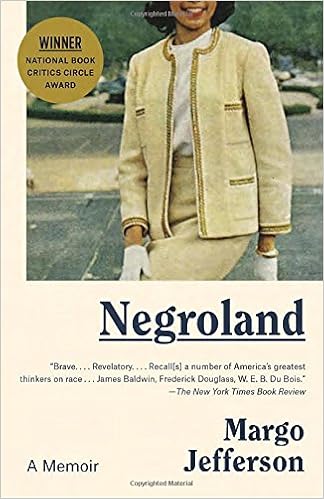
https://images-na.ssl-images-amazon.com/images/I/51Ax2eZTSdL._SX322_BO1,204,203,200_.jpgHere are two excerpts from a book I recently read, "Negroland: A Memoir," by Margo Jefferson:

We were Bronzeville girls until I was three and Denise six; then we moved to Park Manor. Bronzeville was the second biggest Negro city in America, and our grandmother owned two buildings there. We were living comfortably in one of them on a day in 1949 when history records that “the attempt by two black families to move into two houses in the South Side neighborhood of Park Manor produced a mob of 2000 whites chanting ‘We Want Fire, We Want Blood,’ while white policemen watched in silence.”* What else would White Policemen do? They were upholding twenty-five years of law and more than one hundred years of custom. They were protecting the property of their fellow officers who owned homes in Park Manor. 

One evening several years later, when we have safely settled in Park Manor, a patrol car stops Daddy on his way home. 

“What are you doing here?” 

“I live here.” 

“What’s in that black bag? Drugs?” 

“I’m a doctor.” 

Which the bag’s contents reveal he is. A pediatrician, luckily, not an anesthesiologist.

***

Once, maybe ten years ago, I told a lover, “Actually, I’m as white as I am black.” He’d picked up something of mine—a CD, a book—and said, teasingly, “Not a lot of black folk like Elly Ameling.” My retort still felt dangerous to say out loud, despite all the talk of hybridity, creolization, cosmopolitanism, and mulatto consciousness. “Sometimes I almost forget I’m a Negro,” my mother wrote seventy years ago. It wasn’t a disavowal; it was her claim to a free space. She was talking about her happiness at that moment—how you feel when everything inside and around you is where it belongs. How you feel when your rights in America are self-evident, not to be argued, justified, or brooded on every day.

1.25.2018

What Am I Working On

As has become my custom every three months, here's what I'm working on now at work. I won't repeat anything from last time that I happen to still be working on, and for confidentiality's sake I have to blur some of the details for some of these studies.

* Estimating the economic, community, and social impact for three faith-based universities.

* Estimating the net effect a proposed industrial development on a greenfield site will have on the revenues and expenditures of the local municipality and school district.

* Estimating the number of new residents and school children that a proposed residential development will represent.

* Describing the downstream effects of expansion or contraction in one industry cluster on its supply chain and on the communities its workers live in.

* Estimating the public improvement revenues that can be generated by a proposed tourist destination to be used to fund needed infrastructure for the site.


* Helping a consortium of localities to assess their affordable housing needs.

1.23.2018

Too Short for a Blog Post, Too Long for a Tweet 108

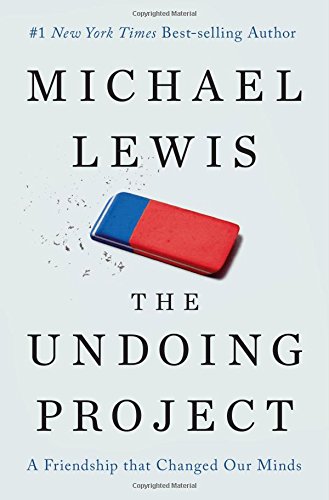
https://images-na.ssl-images-amazon.com/images/I/41xSNcb9xkL.jpgHere's two excerpts from a book I recently read, "The Undoing Project: A Friendship That Changed Our Minds," by Michael Lewis:


Later, when he was a university professor, Danny would tell students, “When someone says something, don’t ask yourself if it is true. Ask what it might be true of.” That was his intellectual instinct, his natural first step to the mental hoop: to take whatever someone had just said to him and try not to tear it down but to make sense of it. The question the Israeli military had asked him—Which personalities are best suited to which military roles?—had turned out to make no sense. And so Danny had gone and answered a different, more fruitful question: How do we prevent the intuition of interviewers from screwing up their assessment of army recruits? He’d been asked to divine the character of the nation’s youth. Instead he’d found out something about people who try to divine other people’s character: Remove their gut feelings, and their judgments improved. He’d been handed a narrow problem and discovered a broad truth. “The difference between Danny and the next nine hundred and ninety-nine thousand nine hundred and ninety-nine psychologists is his ability to find the phenomenon and then explain it in a way that applies to other situations,” said Dale Griffin, a psychologist at the University of British Columbia. “It looks like luck but he keeps doing it.”


By changing the context in which two things are compared, you submerge certain features and force others to the surface. “It is generally assumed that classifications are determined by similarities among the objects,” wrote Amos, before offering up an opposing view: that “the similarity of objects is modified by the manner in which they are classified. Thus, similarity has two faces: causal and derivative. It serves as a basis for the classification of objects, but is also influenced by the adopted classification.” A banana and an apple seem more similar than they otherwise would because we’ve agreed to call them both fruit. Things are grouped together for a reason, but, once they are grouped, their grouping causes them to seem more like each other than they otherwise would. That is, the mere act of classification reinforces stereotypes. If you want to weaken some stereotype, eliminate the classification. 

Amos’s theory didn’t exactly contribute to the existing conversation about how people made judgments of similarity. It took over the entire conversation. Everyone else at the party just circled around Amos and listened. “Amos’s approach to doing science wasn’t incremental,” said Rich Gonzalez. “It proceeded by leaps and bounds. You find a paradigm that is out there. You find a general proposition of that paradigm. And you destroy it. He saw himself doing a negative style of science. He used the word a lot: negative. This turns out to be a very powerful way of doing social science.” That’s how Amos would begin: by undoing the mistakes of others. As it turned out, other people had made some other mistakes.

1.22.2018

The Roots of The Roots' Black Thoughts' Thoughts

https://static.highsnobiety.com/wp-content/uploads/2017/12/14225016/black-thought-hot-97-freestyle-000.jpgI'm very late to this party, but I finally got around to digesting Black Thought's epic 10-minute freestyle on Hot 97 from last month.  Video here, annotated transcript here, and interview here.  All I can say is "wow."  (And, since The Roots are from Philly, "yeah!")

Well, let me say more than wow, actually.  Besides the fact that it's a great rap over sick beats, what draws me to this is the vast array of allusions and topics he covers in his verses.  I mean, in any 10-minute span have you referenced the Bible and Shakespeare, quoted Yeats, and name-dropped Kendrick Lamar and Kanye West?  Oh, and while you're at it throw in Freakonomics, Henrietta Lacks, and Buzz Bissinger, OK?

There are so many layers of social commentary, word play, and homages to past lyrics here, in such a deep and poetic format.  I am serious when I say that I hope that this 10-minute clip is part of what archeologists find 10,000 years from now so they can properly interpret the America of our day.

Obviously Black Thought is a supremely gifted lyricist who has worked very hard at his craft.  We may never be as good at what we do as he is good at what he does.  But there is a lesson here for all of us, to be as well read as possible and in general to absorb the classics from any and all directions.  Clearly he has done that, and it shows in how he has crafted words and topics, which are built on a wide range of sources and ideas.  And it is that same density and diversity of perspectives that can allow us to express ourselves in similarly epic ways, maybe not in a 10-minute freestyle on Hot 97, but in our blog posts and essays, conversations and speeches, and the work of our hands and minds. 

1.19.2018

Thoughts on Prayers

As documented here, for my morning Bible Study times, I have divided the Bible into nine sections (Old Testament in 6 chunks, New Testament in 3 chunks), and have cycled through section by section over the years.  Each section usually takes between 6 and 12 months, so I usually get through the whole Bible every 6 to 8 years. 

There’s a 10th “section,” which is that I go chapter by chapter through Eugene Peterson’s “The Message,” which is the New Testament in contemporary English.  As Peterson puts it in the intro to the book, Greek back then had two forms: a formal style that you’d use to record important stories, and an informal style that you’d use in everyday conversation and to convey shopping lists and weekend plans. 

The New Testament is written in that informal style, and so his contemporary English version aims not to be a word-for-word translation, but rather to capture some of the freshness and spice of the stories it is conveying.  Jesus, Paul, and all the other important characters of the New Testament were real people interacting in real ways and communicating a real message to real people. 

I’m back in “The Message” again, after hitting it in 2010 and 2004.  And I was struck by this particular passage on what is commonly known as “The Lord’s Prayer”:

And when you come before God, don't turn that into a theatrical production either. All these people making a regular show out of their prayers, hoping for stardom! Do you think God sits in a box seat?  Here's what I want you to do: Find a quiet, secluded place so you won't be tempted to role-play before God. Just be there as simply and honestly as you can manage. The focus will shift from you to God, and you will begin to sense his grace.

The world is full of so-called prayer warriors who are prayer-ignorant. They're full of formulas and programs and advice, peddling techniques for getting what you want from God.  Don't fall for that nonsense. This is your Father you are dealing with, and he knows better than you what you need.  With a God like this loving you, you can pray very simply. Like this: 

Our Father in heaven, reveal who you are.  Set the world right; do what's best - as above, so below.  Keep us alive with three square meals.  Keep us forgiven with you and forgiving others.  Keep us safe from ourselves and the Devil. You're in charge! You can do anything you want! You're ablaze in beauty! Yes. Yes. Yes.

The irony is that Jesus’ intention in teaching us to pray these things is in response to a formulaic and self-righteous way of praying that is about being showy and adhering to a script.  And yet we have turned “The Lord’s Prayer,” and all too often Christianity altogether, into a formulaic and self-righteous way of life.  Real Christianity is literally the exact opposite of that.  Shame on us for doing the reverse of what Jesus taught, and pawning that off to ourselves and to the world as the way, the truth, and the life.  May we hear, in contemporary words and tone, the real Jesus speaking instruction and freedom and virtue into our lives.

1.18.2018

Too Short for a Blog Post, Too Long for a Tweet 107

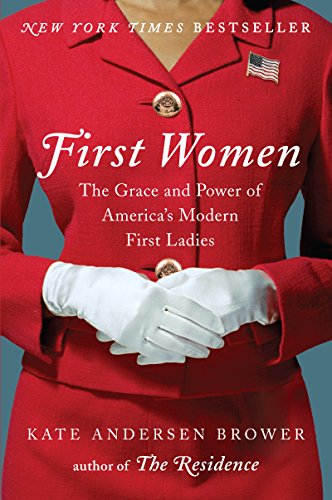
https://images-na.ssl-images-amazon.com/images/I/51fAW6YkErL.jpgHere's four excerpts from a book I recently read, "First Women: The Grace and Power of America's Modern First Ladies," by Kate Andersen Brower:


Jackie heard that the wives of Cabinet officials were preparing to leave Washington, knowing that it would be a target in the event of war. She would have none of it. “Please don’t send me anywhere. If anything happens, we’re all going to stay right here with you,” she told her husband. “Even if there’s no room in the bomb shelter in the White House . . . Please, then I just want to be on the lawn when it happens—you know—but I just want to be with you, and I want to die with you, and the children do too—than live without you.” The President promised her that he would not send her anywhere. Their relationship had grown closer in the White House than it had ever been before. The President’s personal doctor, Janet Travell, remembered seeing Kennedy walk from the West Wing to Marine One on the South Lawn shortly before the crisis began, trailed by his loyal aides. Then something strange happened. “The President reappeared in the doorway and descended the steps alone. How unusual, I thought. Then I saw why. Jackie, her hair wild in the gale of the rotors, was running from the South Portico across the grass. She almost met him at the helicopter steps and she reached up with her arms. They stood motionless in an embrace for many seconds.” 

During a private meeting with her Secret Service agent, Clint Hill, Hill reached out to Jackie and gently touched her elbow. “You know about the bomb shelter here, under the White House. I know that [Chief Usher] J. B. West gave you a brief tour of the facility a few months ago. . . . In the event . . . a situation develops . . . where we don’t have time to leave the area, we would take you and the children into the shelter for protection.” But Jackie had already made up her mind and she would not be told what to do. She abruptly pulled her arm away. “Mr. Hill, if the situation develops that requires the children and me to go to the shelter, let me tell you what you can expect.” She lowered her already soft, sweet voice into an even deeper whisper and said, “If the situation develops, I will take Caroline and John, and we will walk hand in hand out onto the south grounds. We will stand there like brave soldiers, and face the fate of every other American.” 

Hill was stunned. “Well, Mrs. Kennedy, let’s just pray to God that we will never be in that situation.”


Betty hit the campaign trail as her husband sought the presidency in 1976. His advisers considered her a potent weapon and were astounded to find that her candor led to approval ratings as high as 75 percent, even while her husband’s presidential approval rating dipped below 50 percent. At almost every campaign event there were women wearing buttons saying “Keep Betty in the White House” and “Betty’s Husband for President.” Still, Ford lost to Jimmy Carter. When Ford could not read his concession speech because his voice was weak, it was Betty Ford who read it. “She supported him wholeheartedly from beginning to end,” says Susan. “And he supported her from beginning to end, through her breast cancer and her drug and alcohol issues. They were true soul mates.” Betty Ford’s bravery earned her the Presidential Medal of Freedom in 1991, an astounding eight years before her husband was awarded his own medal. On the tenth anniversary of her founding of the Betty Ford Center, President Ford said, “When the final tally is taken, her contributions to our country will be bigger than mine.” And that was just fine with him.


It took Betty several days in treatment to acknowledge that she was not only dependent on pills, but also an alcoholic. “You’re trying to hide behind your husband,” Pursch said. “Why don’t you ask him if it would embarrass him if you say you’re an alcoholic?” She began to cry and her husband took her hand in his and said, “There will be no embarrassment to me. You go ahead and say what should be said.” She sobbed uncontrollably and that night, lying in bed, she wrote a statement revealing the whole truth for the first time. “I have found that I am not only addicted to the medications I have been taking for my arthritis, but also to alcohol.” Every evening the Fords would have a drink before dinner, but when Betty left treatment President Ford gave up his Jack Daniel’s Silver and replaced it with club soda with lime. Betty had supported him through all those years; now it was his turn to support her. 


After President Ford’s death in 2006, Betty was depressed and was having trouble coping with life alone. Ford was the first president to reference his wife in his inaugural address when he said, “I am indebted to no man, and only to one woman.” When Betty stayed at Blair House during her husband’s state funeral she cried herself to sleep each night. (President George W. Bush was in office, and he told a staffer who was planning the funeral, “Whatever they need, we’ll do.”) “Do you think this is going okay?” Betty asked her assistant Ann Cullen. “I’ve got to tell you,” Cullen replied, “I think you are doing absolutely a magnificent job.” Betty started to cry and said, “Well, I have to because I’m doing it for him.” President Bush, who was to escort Betty down the long aisle to her seat at Washington’s National Cathedral at the state funeral, asked her if she wanted to use her wheelchair. She was eighty-eight years old and frail, and would have to endure days of national mourning and ceremonies, but she refused. She told friends, “I just did what my husband would have wanted me to.” 

When she was at President Ford’s burial site at his museum in Grand Rapids, Michigan (Ford’s presidential library is in Ann Arbor), her family kept asking her if she wanted to use her wheelchair, but again, she refused. She had walked along the river with President Ford near the exact spot where he was to be buried, and she wanted to make the walk with him one last time. With everyone worried about her health, all she could think about was her husband and the deep love they shared for more than fifty-eight years of marriage. She insisted on making the long walk from the car to the burial site, and told anyone who objected, “This is the last time I’ll make this walk.” After the funeral, she kept white Christmas lights plugged in year-round on an olive tree in front of their house. She did it, she told friends and family, so that her husband could see her from heaven and know that she was all right. When the Fords’ personal chef, Lorraine Ornelas, saw Betty after her husband’s death, they sat on the edge of the Fords’ bed and Betty pushed a photo of her late husband closer to the edge of the nightstand toward them. “There he is,” she said wistfully. “I just want to go be with my boyfriend,” she told her children. “I don’t know why I’m still here, I don’t want to be here. I’m ready to go.”


Lorraine Ornelas was in her twenties when she met the Fords in the late 1980s. Ornelas was a chef at the Marriott Desert Springs when her employer staged an intervention and she went to the Betty Ford Center. Ornelas remembers sitting in a circle with a group of patients at the center when Betty Ford walked in. Everyone stood up, except Lorraine. She said she did not recognize the former first lady and at that low point in her life, she did not care. “I was pretty much lost and broken, I had a broken spirit.” Betty immediately noticed Lorraine, walked right up to her, stuck out her hand, and said, “Hi, I’m Betty Ford.” 

Betty had a broken spirit once, too. In 1977 Barbara Walters interviewed the Fords when they were in the White House. Betty’s speech was slow and slurred at times, and Walters decided to edit most of it out. Betty’s personal assistant, Nancy Chirdon Forster, said the First Lady’s staff had asked Walters to postpone the interview, but their pleas “did not seem to matter.” A decade later, Betty told Walters how hard it was to come to grips with her addiction. “The word ‘alcoholic’ to me had a meaning of being disheveled, drunk, all of those things. So how could I be an alcoholic?” The former first lady visited the clinic named in her honor nearly every day. 

Shortly after they first met, Betty told Lorraine that she was looking for a personal chef and that Lorraine should drop by the Fords’ house for an interview. When Lorraine met with the Fords she felt that, for the first time in years, she had hope for a brighter future. When Lorraine got the job, Betty told her that she would be more than an employee: she would be part of the Fords’ large family. Lorraine thought, Well, that’s a nice gesture, but I will be your employee. But she soon learned that Betty was not exaggerating. Lorraine, who was dyslexic and who had never finished high school, spent every holiday with the Fords for almost seven years and could tell Betty anything. Lorraine says that while Betty had an air of sophistication about her, there was a brokenness there, too. “When it was just her and I in this big house—I was lonely at the time, and I always have that in me. I felt the same from her, that deep down inside she was lonely too,” Ornelas recalled. In the beginning, Lorraine was still struggling with her addiction, and after two weeks on the job she took Betty aside and said, “I don’t think this is the job for me.” But Betty would not give up on her. “Let’s just wait two more weeks and see,” she said. The weeks turned into years. Lorraine relapsed once while she was with the Fords, and when she told Betty, the former first lady sat her down on the living room couch. “You can fire me if you want,” Lorraine said. “Absolutely not,” Betty told her, and put her hand on Lorraine’s knee. “You never have to be alone.”


1.16.2018

Leges Sine Moribus Vanae

http://mmicc.org/wp-content/uploads/2014/01/UPenn.gifThe Latin phrase that serves as the title of today's blog post is Penn's official motto.  Here's a blurb from the Penn website about what it means and where it comes from:


Q: What is the history and meaning of Penn's motto?
 
A: The motto of the University, Leges Sine Moribus Vanae, means "Laws without morals are useless (in vain)." It comes from the longer quotation from Horace, "Quid leges sine moribus vanae proficient" the sense of which is "of what avail are empty laws without (good) morals"


I first thought on this phrase during my senior year in high school, when part of my application to Penn was writing an essay about what the motto meant.  I have long forgotten what I wrote then, but have on and off thought about the motto's meaning through the years.  Today, I want to talk about what I think it means for today's pressing issues and the church's relevance and role in them.

One of the things that I think it means to be "woke" in this day and age is understanding the structural injustices that gave birth to yesterday's sins and today's inequities and that therefore must be accounted for when considering tomorrow's solutions.   And so, for instance, when one encounters gaping disparities in financial wealth and physical condition between one neighborhood and another, an informed interpretation about causes and remedies must include an awareness of the systemic racism that helped produce it, of which institutions which ought to be trustworthy, such as the federal government and large banks, were complicit.  So, to cite but one example, we are all aware of the historical practice of redlining, and the devastating and long-lasting effects it has had particularly on communities of color, and we rightly condemn any past and present manifestations of it.

When I take from Penn's motto, from Horace's quotation, is that any legislation that attempts to address, reverse, or otherwise remediate the ill effects of redlining must be accompanied by a requisite change in moral values if it is to be ultimately successful.  What do I mean by this?  When the federal government and large banks got together and decided how they would evaluate certain neighborhoods in terms of mortgage risk, their decision to do that based on race and ethnicity did not occur in a vacuum.  It was based in part on an existing climate of racism that denigrated certain communities and that preferred segregation from them. 

I am certainly not excusing redlining as a racist practice.  Nor am I saying that laws can't lead the effort in changing people's perspectives.  What I am saying is that if we are to point a condemning finger at redlining, we must also point a condemning finger at the prevailing racism that was held in the hearts of many in our nation at the time.  Redlining was, effectively, the law in this nation.  And it was birthed from a place of moral decay.  If we are to ever have any hope of reversing and redeeming these past grievances, which have caused ruin upon ruin in our communities, we must pass just laws, yes, but we must also birth justice in a million sinful hearts alongside.

Condemning past racist laws and advocating for future just laws is important and hard work.  But harder still is accepting that past racist laws were borne of our past racist society, and that future just laws don't stand a chance of making a difference if we don't fundamentally and morally change the remnant impulses of our past racist society.

There is an institution that ought to be trustworthy but has often not proven so, and that ought to be on the front lines of such a battle but often is not.  I am speaking of course of the church, which has in the past and present often been complicit in racism if not an outright conduit of racism.  For many, the church has ceded its moral authority and there is no going back. I for one have not yet lost hope.  But it will take some coming clean.  And it will take some prayer.  For that will extinguish any human, fallible aspect to the church's participation in this issue and other societal issues.  And it will give room for One who can set just laws and forge the moral setting for those laws to flourish.  He is in the business of extinguishing the moral decay that is in us that has created such division and ruin.  Will we who consider ourselves "of the church" play our part in being that proper vessel through which it - and He - can work out this important work? 

1.11.2018

Too Short for a Blog Post, Too Long for a Tweet 106

https://images.gr-assets.com/books/1375006308l/18007102.jpgHere's an excerpt from a book I recently read, "The World Until Yesterday: What Can We Learn from Traditional Societies?" by Jared Diamond.


Despite the excitement and the prestige of tribal fighting, tribespeople understand better than anyone else the misery associated with warfare, the omnipresent danger, and the pain due to the killings of loved ones. When tribal warfare is finally ended by forceful intervention by colonial governments, tribespeople regularly comment on the resulting improved quality of life that they hadn’t been able to create for themselves, because without centralized government they hadn’t been able to interrupt the cycles of revenge killings. Anthropologist Sterling Robbins was told by Auyana men in the New Guinea Highlands, “Life was better since the government had come because a man could now eat without looking over his shoulder and could leave his house in the morning to urinate without fear of being shot. All men admitted that they were afraid when they fought. In fact, they usually looked at me as though I were a mental defective for even asking. Men admitted having nightmares in which they became isolated from others in their group during a fight and could see no way back.” 

That reaction explains the surprising ease with which small numbers of Australian patrol officers and native policemen were able to end tribal warfare in the then-territory of Papua New Guinea. They arrived at a warring village, bought a pig, shot the pig to demonstrate the power of firearms, tore down village stockades and confiscated the war shields of all warring groups in order to make it lethally dangerous for anyone to initiate war, and occasionally shot New Guineans who dared to attack them. Of course, New Guineans are pragmatic and could recognize the power of guns. But one might not have predicted how easily they would give up warfare that they had been practicing for thousands of years, when achievement in war had been praised from childhood onwards and held up as the measure of a man. 

The explanation for this surprising outcome is that New Guineans appreciated the benefits of the state-guaranteed peace that they had been unable to achieve for themselves without state government. For instance, in the 1960s I spent a month in a recently pacified area of the New Guinea Highlands, where 20,000 Highlanders who until a decade or so previously had been constantly making war against each other now lived along with one Australian patrol officer and a few New Guinea policemen. Yes, the patrol officer and the policemen had guns, and the New Guineans didn’t. But if the New Guineans had really wanted to resume fighting each other, it would have been trivially easy for them to kill the patrol officer and his policemen at night, or to ambush them by day. They didn’t even try to do so. That illustrates how they had come to appreciate the biggest advantage of state government: the bringing of peace.

1.10.2018

Place Matters

I went to a very good public school in an upper-middle class neighborhood in Silicon Valley, and ran with a very intelligent and high-achieving crowd.  (Not that we didn't do our share of stupid stuff, but thank God YouTube didn't exist back then or we'd all be unemployed now.)  So when it came to college, my friends and I set our sights high.  We wanted to get into the very best schools, and did everything we could to get into them.

"Best" is of course a subjective thing, highly dependent on what each of us was looking for in a school.  But, by and large, my friends and I took our cues about "best" from national rankings such as the main one at the time from US News & World Report.  I was into business, and Wharton's undergraduate program was #1 so that was what I was gunning for.  (I also looked at Berkeley, Michigan, and MIT for the same reasons.)  My engineering friends had their sights set on Berkeley, CalTech, and Rice.  And so on and so forth.  Accordingly, we digested every piece of information possible about these institutions and worked every angle to position ourselves to get accepted.

You know what didn't do?  We didn't think too much about where these schools were actually located.  Obviously, there's a big difference for a suburban California kid to stay local versus fly out to Philly or Boston or Houston for school, so we thought about to what extent we wanted to be close to home or go far.  But we didn't think about Philly or Boston or Houston as cities we would be spending formative years in, let alone the specific neighborhoods that these universities were located in.  In other words, for us the physical setting of the school wasn't a factor in determining where we wanted to go.

I don't think anyone thinks like this anymore.  Today's aspiring college kids (at least the ones who have choices) think long and hard about the community context of the campus they will be spending several years of their lives.  This importance of place can come from one or more of the following (somewhat overlapping) factors:

1. Part of my college experience and my growing up is about connecting with a real place with real people, so I want to get to know and interact with the immediate neighborhood around my campus and with the city and region as a whole.

2. I want my first experience living on my own to get me out of my childhood bubble and into a place where I can get involved in matters of civic engagement, social justice, and community building.

3. Every neighborhood and city has a distinct character, and part of my thinking about where I want to go to school is which place resonates with my values and interests.

4. There is a specific amenity package that I need from a quality of life standpoint (e.g. retail, outdoor recreation, built form, transportation options), so I want to choose a location that will satisfy those needs.

This shift in how universities are selected and then how the university experience is consumed has a number of implications for universities.  For one, there is the need to invest in resources and marketing to scratch these itches, so that prospective students know they will get the amenities, access, and support they are seeking in a location.  It also shapes universities' relationships with their host communities and municipalities, as there is a shared sense that part of what the university is promoting to prospective students is the place in which it is located (with all of the attendant resources and services).  Philosophically, universities are shifting dramatically from ivory towers to engaged campuses, with implications for everything from curriculum and student life to real estate investment and facilities management.

Looking back on the 26+ years since I first left for college, I am struck by how much of my college experience (and, because I stayed in the neighborhood adjacent to Penn, how much of my post-college life) was shaped and continues to be shaped by the physical setting of my university.  Place matters, and I'm glad that today's aspiring college kids understand this far better than my friends and I did way back when.

1.09.2018

Too Short for a Blog Post, Too Long for a Tweet 105

Here are two excerpts from a book I just read, "Originals: How Non-Conformists Move the World," by Adam Grant:


Justifying the default system serves a soothing function. It’s an emotional painkiller: If the world is supposed to be this way, we don’t need to be dissatisfied with it. But acquiescence also robs us of the moral outrage to stand against injustice and the creative will to consider alternative ways that the world could work.

The hallmark of originality is rejecting the default and exploring whether a better option exists. I’ve spent more than a decade studying this, and it turns out to be far less difficult than I expected.

***

But don’t day jobs distract us from doing our best work? Common sense suggests that creative accomplishments can’t flourish without big windows of time and energy, and companies can’t thrive without intensive effort. Those assumptions overlook the central benefit of a balanced risk portfolio: Having a sense of security in one realm gives us the freedom to be original in another. By covering our bases financially, we escape the pressure to publish half-baked books, sell shoddy art, or launch untested businesses.

1.05.2018

2017 Car Usage

This is the ninth year I have tracked car usage, so I think it's safe to say this has become a habit. As has the nerdy tracking and graphing of it in Microsoft Excel. (You can check out 2016 here, 2015 here, 2014 here, 2013 here, 2012 here, 2011 here, 2010 here, and 2009 here.)

As before, the Philly totals represent, in order, number of trips, number of legs represented in those trips (i.e. going to and from my in-laws, making one stop to get gas, counts as three legs), and number of legs in which I was driven (rather than driving).

The other city totals represent, in order, number of times I was in that location, number of days I was in that location, number of trips, number of legs represented in those trips, and number of legs in which I was driven.  (Note how unnecessary a car is in northeastern cities like DC and Wilmington, vs. how often I drove in other cities like Richmond or Williamsburg.)


Jan 8/29/2 DC 2/2/0/0/0 Wilmington 1/1/0/0/0 Allentown 1/1/1/2/0 Miami 1/4/4/10/2 Chicago 1/1/0/0/0
Feb 8/39/0 Atlanta 1/2/0/0/10 Wilmington 2/2/0/0/0
Mar 19/60/0 Phoenix 1/1/0/0/3 Wilmington 1/1/0/0/0
Apr 19/58/2
May 11/41/2 Pittsburgh 1/1/1/6/0 Richmond 1/4/6/22/0
Jun 9/24/1 Baltimore 1/1/0/0/1 Atlanta 1/2/0/0/2 Wilmington 1/1/0/0/2
Jul 12/34/2 LA 1/2/1/4/0
Aug 5/18/1 Williamsburg 1/7/13/36/0 Wilmington 4/5/2/6/2 Hershey 1/1/1/3/0 DC 1/1/1/3/0 NYC 1/1/0/0/0
Sep 9/30/0 West Coast 1/8/6/17/5 Wilmington 3/3/0/0/2
Oct 13/40/0 State College 1/2/1/4/1 South Bend 1/1/1/6/0 Long Beach 1/2/0/0/2 Miami 1/4/4/8/2
Nov 15/47/0 Bethany Beach 1/1/1/3/0 Wilmington 1/1/0/0/1 Allentown 1/3
Dec 7/19/0 Las Vegas 1/2/0/0/3 Trenton 1/1/0/0/2 SJ 1/8/15/44/1


So my Philly total is 135 trips involving 439 legs, plus another 8 legs in which I was driven.  So that works out to about 13 car trips and 37 legs a month.  Slightly up from last year, so we are at a new equilibrium as a family due to our older kids' more complex extra-curriculars (gymnastics in Conshy, out of town swim meet).  Note also that 439 legs for 135 trips is about 3 and a quarter legs per trip, which means a lot of bundled trips.  (As opposed to an average closer to 2, if all the times you drive you go somewhere and come back and don't do anything in between.)  'Tis an interesting thing to track over time, to see how my life has evolved and my travel changes accordingly.

1.04.2018

Too Short for a Blog Post, Too Long for a Tweet 104

Here are a few excerpts from a book I recently read, "The Hidden Life of Trees: What They Feel, How They Communicate—Discoveries From a Secret World," by Peter Wohlleben:


But why are trees such social beings? Why do they share food with their own species and sometimes even go so far as to nourish their competitors? The reasons are the same as for human communities: there are advantages to working together. A tree is not a forest. On its own, a tree cannot establish a consistent local climate. It is at the mercy of wind and weather. But together, many trees create an ecosystem that moderates extremes of heat and cold, stores a great deal of water, and generates a great deal of humidity. And in this protected environment, trees can live to be very old. To get to this point, the community must remain intact no matter what. If every tree were looking out only for itself, then quite a few of them would never reach old age. Regular fatalities would result in many large gaps in the tree canopy, which would make it easier for storms to get inside the forest and uproot more trees. The heat of summer would reach the forest floor and dry it out. Every tree would suffer. 

Every tree, therefore, is valuable to the community and worth keeping around for as long as possible. And that is why even sick individuals are supported and nourished until they recover. Next time, perhaps it will be the other way round, and the supporting tree might be the one in need of assistance. When thick silver-gray beeches behave like this, they remind me of a herd of elephants. Like the herd, they, too, look after their own, and they help their sick and weak back up onto their feet. They are even reluctant to abandon their dead.


In the symbiotic community of the forest, not only trees but also shrubs and grasses—and possibly all plant species—exchange information this way. However, when we step into farm fields, the vegetation becomes very quiet. Thanks to selective breeding, our cultivated plants have, for the most part, lost their ability to communicate above or below ground—you could say they are deaf and dumb—and therefore they are easy prey for insect pests. That is one reason why modern agriculture uses so many pesticides. Perhaps farmers can learn from the forests and breed a little more wildness back into their grain and potatoes so that they’ll be more talkative in the future.


Students at the Institute for Environmental Research at RWTH Aachen discovered something amazing about photosynthesis in undisturbed beech forests. Apparently, the trees synchronize their performance so that they are all equally successful. And that is not what one would expect. Each beech tree grows in a unique location, and conditions can vary greatly in just a few yards. The soil can be stony or loose. It can retain a great deal of water or almost no water. It can be full of nutrients or extremely barren. Accordingly, each tree experiences different growing conditions; therefore, each tree grows more quickly or more slowly and produces more or less sugar or wood, and thus you would expect every tree to be photosynthesizing at a different rate. 

And that’s what makes the research results so astounding. The rate of photosynthesis is the same for all the trees. The trees, it seems, are equalizing differences between the strong and the weak. Whether they are thick or thin, all members of the same species are using light to produce the same amount of sugar per leaf. This equalization is taking place underground through the roots. There’s obviously a lively exchange going on down there. Whoever has an abundance of sugar hands some over; whoever is running short gets help. Once again, fungi are involved. Their enormous networks act as gigantic redistribution mechanisms. It’s a bit like the way social security systems operate to ensure individual members of society don’t fall too far behind.


But why don’t we see leaves as black? Why don’t they absorb all the light? Chlorophyll helps leaves process light. If trees processed light super-efficiently, there would be hardly any left over—and the forest would then look as dark during the day as it does at night. Chlorophyll, however, has one disadvantage. It has a so-called green gap, and because it cannot use this part of the color spectrum, it has to reflect it back unused. This weak spot means that we can see this photosynthetic leftover, and that’s why almost all plants look deep green to us. What we are really seeing is waste light, the rejected part that trees cannot use. Beautiful for us; useless for the trees. Nature that we find pleasing because it reflects trash? Whether trees feel the same way about this I don’t know, but one thing is for certain: hungry beeches and spruce are as happy to see blue sky as I am. 

The color gap in chlorophyll is also responsible for another phenomenon: green shadows. If beeches allow no more than 3 percent of sunlight to reach the forest floor, it should be almost dark down there during the day. But it isn’t, as you can see for yourself when you take a walk in the forest. Yet hardly any other plants grow here. The reason is that shadows are not all the same color. Although many shades of color are filtered out in the forest canopy—for example, very little red and blue make their way through—this is not the case for the “trash” color green. Because the trees can’t use it, some of it reaches the ground. Therefore, the forest is transfused with a subdued green light that just happens to have a relaxing effect on the human psyche.

Too Short for a Blog Post, Too Long for a Tweet 522

  Here are a few excerpts from a book I recently read, "Moby Dick," by Herman Melville. Again, I always go to sea as a sailor, bec...