7.30.2019

Too Short for a Blog Post, Too Long for a Tweet 188

Image result for the new jim crow by michelle alexanderHere are a few excerpts from a book I recently read, "The New Jim Crow: Mass Incarceration in the Age of Colorblindness," by Michelle Alexander.


What has changed since the collapse of Jim Crow has less to do with the basic structure of our society than with the language we use to justify it. In the era of colorblindness, it is no longer socially permissible to use race, explicitly, as a justification for discrimination, exclusion, and social contempt. So we don’t. Rather than rely on race, we use our criminal justice system to label people of color “criminals” and then engage in all the practices we supposedly left behind. Today it is perfectly legal to discriminate against criminals in nearly all the ways that it was once legal to discriminate against African Americans. Once you’re labeled a felon, the old forms of discrimination—employment discrimination, housing discrimination, denial of the right to vote, denial of educational opportunity, denial of food stamps and other public benefits, and exclusion from jury service—are suddenly legal. As a criminal, you have scarcely more rights, and arguably less respect, than a black man living in Alabama at the height of Jim Crow. We have not ended racial caste in America; we have merely redesigned it.


7.25.2019

Too Short for a Blog Post, Too Long for a Tweet 187

Image result for Soonish Ten Emerging Technologies That'll Improve and/or Ruin Everything by Kelly Weinersmith Zach WeinersmithHere are some excerpts from a book I recently read, "Soonish: Ten Emerging Technologies That'll Improve and/or Ruin Everything, by Kelly Weinersmith and Zach Weinersmith.


Frankly, it’s really freakin’ hard to tell you whether any of the technologies in this book will be realized in their fullest form in any particular time frame. New technology is not simply the slow accumulation of better and better things. The big discontinuous leaps, like the laser and the computer, often depend on unrelated developments in different fields. And even if those big discoveries are made, it’s not always clear that a particular technology will find a market. Yes, time travelers from the year 1920, we have flying cars. No, nobody wants them.


7.23.2019

Too Short for a Blog Post, Too Long for a Tweet 186

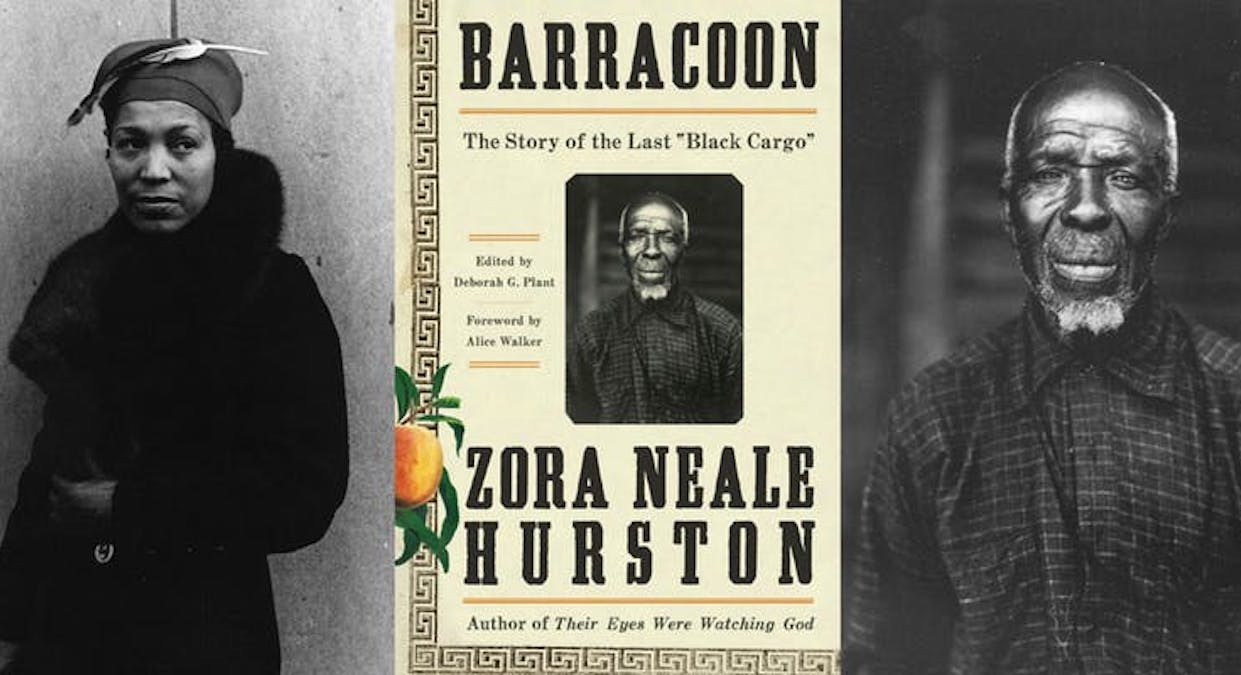
Image result for Barracoon: The Story of the Last "Black Cargo" (Hurston)Here is an excerpt from a book I recently read, "Barracoon: The Story of the Last 'Black Cargo,'" by Zora Neale Hurston.


Hurston’s manuscript is an invaluable historical document, as Diouf points out, and an extraordinary literary achievement as well, despite the fact that it found no takers during her lifetime. In it, Zora Neale Hurston found a way to produce a written text that maintains the orality of the spoken word. And she did so without imposing herself in the narrative, creating what some scholars classify as orature. Contrary to the literary biographer Robert Hemenway’s dismissal of Barracoon as Hurston’s re-creation of Kossola’s experience, the scholar Lynda Hill writes that “through a deliberate act of suppression, she resists presenting her own point of view in a natural, or naturalistic, way and allows Kossula ‘to tell his story in his own way.’”

Zora Neale Hurston was not only committed to collecting artifacts of African American folk culture, she was also adamant about their authentic presentation. Even as she rejected the objective-observer stance of Western scientific inquiry for a participant-observer stance, Hurston still incorporated standard features of the ethnographic and folklore-collecting processes within her methodology. Adopting the participant-observer stance is what allowed her to collect folklore “like a new broom.”  As Hill points out, Hurston was simultaneously working and learning, which meant, ultimately, that she was not just mirroring her mentors, but coming into her own. 

Embedded in the narrative of Barracoon are those aspects of ethnography and folklore collecting that reveal Hurston’s methodology and authenticate Kossola’s story as his own, rather than as a fiction of Hurston’s imagination. The story, in the main, is told from Kossola’s first-person point of view. Hurston transcribes Kossola’s story, using his vernacular diction, spelling his words as she hears them pronounced. Sentences follow his syntactical rhythms and maintain his idiomatic expressions and repetitive phrases. Hurston’s methods respect Kossola’s own storytelling sensibility; it is one that is “rooted ‘in African soil.’” “It would be hard to make the case that she entirely invented Kossula’s language and, consequently, his emerging persona,” comments Hill. And it would be an equally hard case to make that she created the life events chronicled in Kossola’s story.

7.22.2019

Lazy Linking, 219th in an Occasional Series

Stuff I liked lately on the Internets:

219.1 hummingbird wings + sunlight = rainbow goodness bit.ly/2xUFo3t @thisiscolossal


219.2 Alaska cutting univ funding to give its residents a higher dividend is a harbinger of the US shifting from being growth stock to dinosaur bloom.bg/2XPQw0Y @bopinion

219.3 5 yrs after the Ice Bucket Challenge went viral, @ALSAssociation is here to say "we made a lot of progress w/your money, and we need more money to keep it going" bit.ly/2GgJGXH @philanthropy

219.4 when I showed Amy this video of sandwiches where deli pickles are the "bread," she said "let's drive there now" bit.ly/2Of0mW6 @insiderfood

219.5 this article debunking Keanu's "Asian grandma" yields this (entirely unsurprising) nugget: black Asian actors are discriminated against bc Hollywood doesn't equate brown skin w/Asian roles bit.ly/2JX8FjE @inkstonenews


7.18.2019

Tackling the G Word


Image result for gentrification and displacementGentrification is the one topic that is guaranteed to, paradoxically, either shut down a conversation or enflame it.  Neighborhood change in cities like Philadelphia is fraught with dynamics that have significant historical and racial components to them, and it is rightly infuriating (and in some cases triggering) when people weigh in while being oblivious to these dynamics or willfully opting to ignore them.  (Have been guilty of this myself at times, I must confess.)  Sometimes it is appropriate to put a big red stop sign up when people act a fool by thinking you can address neighborhood change without respecting the existence of past and present institutional racism.
  
But sometimes it is appropriate to lean into a conversation about neighborhood change.  The Philadelphia Fed’s recent paper on how gentrification isn’t as bad as it’s made out to be, and in fact can produce benefits for the very households thought to be hurt the most by it, is such an opportunity.  I appreciated my friend and former co-worker Jonathan Tannen’s take on the matter, as expressed in this Twitter thread. 
  

7.16.2019

Too Short for a Blog Post, Too Long for a Tweet 185

Image result for order of time rovelliHere is an excerpt from a book I recently read, "The Order of Time," by Carlo Rovelli.

Here, the book becomes a fiery magma of ideas, sometimes illuminating, sometimes confusing. If you decide to follow me, I will take you to where I believe our knowledge of time has reached: up to the brink of that vast nocturnal and star-studded ocean of all that we still don’t know.

7.15.2019

Lazy Linking, 218th in an Occasional Series

Beaver activity on Rio Cebolla, New MexicoStuff I liked lately on the Internets:

218.1 The economics of sand are not looking good  go.nature.com/2Xos7iO @nresearchnews

218.2 Nothing to see here, just FBI/ICE scraping driver's licenses to improve their facial recognition efforts wapo.st/2G9prem @washingtonpost

218.3 We're a car-dominated culture not just by personal choice but also by force of policy choices bit.ly/2xFN8q9 @theatlantic

218.4 An extraordinarily gracious exchange btwn Naomi Osaka & Serena Williams demonstrates their awareness of the importance of the moment they shared bit.ly/2JJ7HHB @theroot

218.5 Re: landscapes, what have beavers done for us and how much can we learn from them? bit.ly/2JsoL68 @placesjournal


7.11.2019

Race Matters, Real Engagement Matters

Image result for black lives matters lawn signI was recently catching up with an old friend of mine, and the subject of our conversation turned to financial planning.  We met in our 20’s and are now in our 40’s, so how we approach money and what we spend it on has changed drastically in the span of our friendship.  We’re both fortunate that we were both taught well as kids, and have largely made good choices with our money. 

Plus neither of us is a big splurger or impulse buyer.  If anything, I’ve had to work hard to stop fretting over every little purchase: my dad’s parents grew up in a very poor part of Taiwan and carried that frugality into their parenting of their kids, which subsequently got passed on to me.  But I’m fortunate that I can go out with my kids and, after indulging their request for water ice on a sweltering summer day, shell out another $3 for a smoothie for myself.  Sounds utterly banal, but this represents progress for me.

7.08.2019

Lazy Linking, 217th in an Occasional Series

Stuff I liked lately on the Internets:

217.1 Really enjoying these takes on US/China issues by @econsultsolutns' Chinese partner @ANBOUND bit.ly/2FKOZhB

217.2 Fascinating to delve into the science of why plants don't get cancer, and to see what has sprouted up in Chernobyl since the humans left bit.ly/2YqlQ2x @ConversationUS

217.3 Nothing to see here, just that the Pentagon is working on a laser that can identify you by your heartbeat bit.ly/2XcUjVW @techreview

217.4 This map is more about population density than anything else, but it's still stark to see how sparser the concentration of government jurisdictions is in the west bit.ly/2YoOCko @governing

217.5 Some great info on how female presidents run universities differently than male presidents bit.ly/2J2GGQr @chronicle

7.04.2019

My Fellow Americans

Image result for fourth of july symbolsI have friends for whom kneeling for the national anthem is the height of disrespect, as well as friends who consider the American flag a symbol of naked imperialism and refuse to fly it.  You know what I call both kinds of friends?  I call them Americans.

What a country we live in, that we can disagree vehemently and in some cases violently, in which we must respect the totality of our honorable and despicable past in order to peaceably coexist in an uncertain and existing future.  Happy Fourth to all!

7.02.2019

Above All, Love One Another Deeply, Because Love Covers Over a Multitude of Sins

Image result for Above All, Love One Another Deeply, Because Love Covers Over a Multitude of SinsAs a follow-up to my last post, I want to reiterate how incredibly impressed I have been at the students I've met in our public schools while on the Philadelphia Board of Education.  When I watch them perform, talk to them about their aspirations, or just observe them in class, I feel incredibly bullish about the future of our city.

However, I want to be careful about ascribing too much attention to such highlights.  Because I want to say that our kids deserve the best not because they are smart or talented or hard working or well-behaved.  They deserve the best because they are inherently valuable, made by a brilliant Creator and with their whole lives ahead of them.  They deserve the best in spite of and because of all of the challenges they must overcome, some of which I am aware of and some of which are invisible on the surface, which threaten to swallow them whole but against which they demonstrate remarkable resiliency and courage.

In the Bible, Peter's first epistle really crescendos in the fourth chapter.  The whole book has an urgent tone to it, borne of the very real exhortation that the path forward will involve suffering but that despite and through such suffering great joy awaits.  Right in the middle of that chapter is this lovely turn of phrase: "Above all, love each other deeply, because love covers over a multitude of sins."  Let us love our children, not because they do or say things that please us, but because they are inherently worth loving.


Too Short for a Blog Post, Too Long for a Tweet 522

  Here are a few excerpts from a book I recently read, "Moby Dick," by Herman Melville. Again, I always go to sea as a sailor, bec...