12.28.2022

Too Short for a Blog Post, Too Long for a Tweet 357


Here are a few excerpts from a book I recently read, "Baby and Child Care," by Dr. Benjamin Spock.


Since there is no such thing as a 100 percent identification with one's own sex, it's better to let children grow up with the mixture of identifications, attitudes, and interests that have developed in them, as long as they can accept comfortably what they are, rather than make them ashamed and anxious because of parental disapproval.


I am making the point that independence comes from security as well as from freedom.


Don’t ask a child to eat to earn his dessert, or a piece of candy, or a gold star, or any other prize. Don’t ask him to eat for Aunt Minme, or to make his mother happy, or to grow big and strong, or to keep from getting sick, or to clean his plate. Let's state the rule more briefly: Don’t ask a child to eat."


12.26.2022

Too Short for a Blog Post, Too Long for a Tweet 356


Here are a few excerpts from a book I recently read, "The Education of Brett Kavanaugh: An Investigation," by Robin Pogrebin and Kate Kelly.


We realize that our readers will evaluate the results of our investigation through their own perspectives. In the course of our reporting, we saw how easy it was for observers to project onto the confirmation process whatever they wanted to believe. Even without a fuller sense of the facts, many had already made up their minds. 

It is hard—maybe impossible—to set aside personal history or political orientation when considering the questions about Kavanaugh. If Kavanaugh mistreated Ford and Ramirez but has conducted himself honorably in the past thirty-six years, does he deserve to be on the court? If there is not dispositive proof that Kavanaugh engaged in such misbehavior, were the accusations enough to eliminate him from consideration? Was his temperament during the last day of testimony in itself disqualifying? 

We leave those conclusions to our readers. No doubt they will be debated for many years to come.


Kavanaugh had worked his whole life toward a Supreme Court nomination. He had studied at prestigious schools, apprenticed himself to powerful mentors, mastered Washington politics. He had also remembered his origins, staying true to old friends and maintaining his Catholic traditions. But nothing had prepared him for the perils he would face in the next few weeks. Those would be an education of a very different kind.


Despite the structure and high expectations, however, Prep, like most high schools, also had its seamy side. Students could be cruel and combative, and competitive. Tensions sometimes became inflamed on the weekends because of excessive drinking. Many of the Prep boys were also ill-equipped for socializing with girls. An environment with limited sex education, no female students, and just a handful of female educators, some alumni say, became a breeding ground in the early 1980s for a casual brand of misogyny. 

Among Prep’s alpha males, there was a sense of entitlement—over girls, younger students, smaller boys, public school graduates, and non-athletes. A military-style social hierarchy was immediately evident to freshmen. First-years were treated like plebes, to be picked on and pushed around by the upperclassmen, some of whom had suffered the same hazing rituals. The more diminutive students were sometimes deposited into campus trash cans or stuffed into lockers. The bigger boys and those who had standing because of older brothers or ties to Mater Dei were inoculated.

Tom Downey, who was a larger kid but had a smart mouth, was taped to the front of a locker his freshman year after telling members of the wrestling team that their practice room smelled bad. William Fishburne, a petite boy who had come from public schools, was shoved from behind into one of the full-height gym lockers. He still remembers the sense of claustrophobia inside. 

The upperclassmen knew better than to harass freshmen when faculty members were around, given the threat of JUG, calls to their parents, and stern lectures from the dean of students or their coach. But in the more private corners of Prep’s campus, bullying was common.

“Violence in general was part of the culture,” said a member of the class of 1984, adding that faculty looked the other way. At one point, the alumnus said, a sophomore repeatedly put him into headlocks. “At first it was fun, then annoying,” the former student recalled. “I asked him to stop. He would not. The faculty and staff knew what was happening, and did nothing. It was understood that you had to ‘sort it out yourself.’ 

“So I did,” he continued. “The next time he tried to grab me, I connected with his nose, which exploded in blood. I was in tears, convinced I would be expelled. The next day, a teacher close to me said, ‘I understand you took care of something.’ Everyone knew, and nobody said a word. It was completely acceptable.”


Ford felt compelled to share her experience with officials in Washington. She wanted her memory of being assaulted by Kavanaugh to be considered in the decision-making process, even if the president and lawmakers ultimately concluded that her experience was too dated or irrelevant. 

“I just felt like I needed to tell them what happened,” Ford said later. “If this is the only bad thing he’s ever done, okay, people are going to decide what they’re going to decide. And I don’t know if this is the only bad thing. I wasn’t thinking, ‘Oh, he did this to me, therefore he shouldn’t be on the court.’ I wasn’t in that place at all. That wasn’t how I was thinking about it. 

“He did something to me when I was my kid’s age,” she continued, adding of government decision makers, “and I thought they should know, in case they care.” 

Ford realized that Kavanaugh’s conduct might not have continued after high school, that she had “no idea what he was like as an adult,” and “he could have been Mother Teresa.” But she believed that the assault she remembered should be disclosed nonetheless.


To someone with more life experience, thicker skin, or a stronger sense of self at the time, the encounter might have been unremarkable—juvenile behavior by a bunch of boys. Indeed, to Kavanaugh himself, it may well have been just a little harmless, drunken fun. But to Ramirez it was devastating, affirming the very self-doubt she had hoped to conquer by facing down Yale in the first place: that she wasn’t smart enough, pretty enough, rich enough, savvy enough, or tough enough to belong there.


In debating whether to cooperate with the New Yorker story, Ramirez ultimately realized she had two choices: come forward and join Ford or stay silent. “Which one can I live with?” Ramirez said she asked herself. “I knew I couldn’t live with my own self-judgment and blame of knowing I did nothing at all.” 

But while her initial motivation was to stand with another survivor, she ultimately realized she was also standing up for herself. “It wasn’t altruistic by the time it was done,” she said. “I was doing it for me, too.”


Ford was forced to walk that fine line commonly navigated by women: appearing firm and confident without coming across as strident, unlikable, or unstable. Ford prevailed. Her equanimity would later be contrasted with Kavanaugh’s overwrought delivery, which, ironically, was forgiven by many as understandable passion in the heat of self-defense.


In an odd coincidence, Kavanaugh’s mother, Martha, as a judge had been involved in a 1996 foreclosure case over the Blaseys’ house in Potomac; after the couple settled with their mortgage lender, Martha dismissed the case, enabling the Blaseys to keep their home. At another point, Ralph Blasey had been president of the Burning Tree Golf Club, an all-male establishment in Potomac, where Ed Kavanaugh was also an active member. 

Because of these ties to Kavanaugh’s world, Ford had avoided sharing her story with her parents as long as she possibly could. But now she could no longer protect them.


The exchange with Klobuchar, even in light of the Clinton reference and the Graham outburst, would be regarded by many as a new low point in the Kavanaugh hearings. As damaging as the Ford allegations were, as excruciating as it had been to watch her, and as exercised as Kavanaugh had been up to then, nothing had appeared quite so impertinent as him turning the tables on a senior female senator who had just opened up about her own family history with alcohol. 

Klobuchar, after all, was effectively interviewing Kavanaugh for a job as his superior in that context. She was using compassionate, deferential language and requesting honest answers. Yet Kavanaugh pounced on her, perhaps hoping to give her a sense of the personal anguish and humiliation he was experiencing. 

“You don’t go to where they are when they’re acting that way,” Klobuchar later said in an interview, likening her unruffled response to needing to “take away the keys” from an inebriated driver. As a prosecutor, she said, she was trained to let the witness continue talking rather than interrupt or assist. Still, “I just thought he would apologize to me,” she added, “because it was so bad.” 

After an unexpected break in the hearing, Kavanaugh did, in fact, apologize, looking tearful as he did so. “Sorry I did that,” he said. “This is a tough process. I’m sorry about that.”


Despite the occasional concessions—“Sometimes I had too many beers,” for example, and the apology to Renate Dolphin—many of Kavanaugh’s classmates from both Yale and Georgetown Prep felt he had shown a lack of candor. Like Ludington, they had observed Kavanaugh drunk and seemingly out of control at times. They had been that drunk themselves and believed they would admit it under the same circumstances. Anything less, these people felt, would be fundamentally dishonest—an unforgivable trait for a Supreme Court candidate. 

On September 30, the Sunday after the contentious hearings, Ludington put out a statement. “I do not believe that the heavy drinking or even loutish behavior of an 18- or even 21-year-old should condemn a person for the rest of his life. I would be a hypocrite to think so,” Ludington wrote. “However, I have direct and repeated knowledge about his drinking and his disposition while drunk. And I do believe that Brett’s actions as a 53-year-old federal judge matter.” 

He continued: “I can unequivocally say that in denying the possibility that he ever blacked out from drinking, and in downplaying the degree and frequency of his drinking, Brett has not told the truth.” 

It was important to Ludington—and other Yale classmates of Kavanaugh’s—to emphasize that he was not objecting to the drinking; he was objecting to the dissembling.


This was where the hearings came to feel like Rashomon. Was Kavanaugh a misogynist lush who lied under oath about how much he drank? Or was he simply a brainy frat boy? In the intensely tribal politics of 2018, there was no such thing as somewhere in between; Kavanaugh became a human Rorschach test. Depending on their ideological perspective, people projected onto Kavanaugh what they needed him to be—a tragic casualty of #MeToo run amok, or the consummate symbol of white male privilege, triumphing yet again.


There is a compelling argument to be made that—particularly in the age of #MeToo—a more empathic, enlightened response was called for from Kavanaugh. He perhaps could have acknowledged the possibility that he had been involved in the Ford incident but not remembered it. He could have apologized for any harm done to Ford, condemned sexual assault, and encouraged victims to come forward. 

But, particularly in the age of Trump, such a nuanced response would likely have doomed Kavanaugh’s nomination. President Trump—whose MO in the face of sexual misconduct charges was to fight them—was looking for a forceful blanket denial. There was no room for ambiguity or nuance; any cracks in the judge’s claims of innocence could allow Democrats to frame his words as an admission of guilt. He couldn’t be a flawed human being, apologize to people he may have hurt in the past, and vow that he’d grown up and perhaps seen the error of his ways. It had worked for George W. Bush in explaining on the campaign trail his decision to stop drinking at age forty. But in the age of Trump, it was no longer an option. 

“The only way this guy could survive was to go full Trump,” said Ben Rhodes, Obama’s former deputy national security adviser, who is now a writer and political commentator. “Once the bottom fell out, his only lifeline was to become a full-on Trump Republican. I saw that as a metaphor for what’s happened to the entire Republican Party: they try to keep their dignity, but when push comes to shove, they have to resort to Trump.


As people, our gut reaction was that the allegations of Ford and Ramirez from the past rang true. As reporters, we uncovered nothing to suggest that Kavanaugh has mistreated women in the years since. 

Ultimately, we combined our notebooks with our common sense and came to believe an utterly human narrative: that Ford and Ramirez were mistreated by Kavanaugh as a teenager, and that Kavanaugh over the next thirty-five years became a better person.


“Had it been in a different venue—privately, and without so much on the line as it relates to the political direction of this very country—then perhaps both of them could have been more genuine in terms of why they were there and why they were speaking about this incident,” said Joe Conaghan, a Prep classmate who signed a letter of support for Ford but nonetheless backed Kavanaugh’s confirmation. 

“And if I’m right about what I suspect was true, which is that she was telling the truth,” Conaghan added, “then perhaps Brett would have been able to render an apology to her that might have helped her heal in a real, genuine way. But as it stands in my mind, neither one was healed by the incident, because it was so politicized.”

12.21.2022

Life is Not a Popularity Contest


Growing up, high school was very much a popularity contest. We were all trying to fit in and stand out simultaneously, and being in the "in" crowd was something most of us coveted, staying in if in or climbing up if out. I was fortunate to go to a high school in which the cliques all generally got along and bullying was kept to a bare minimum. But there was no doubt that the most valuable currency around was popularity.

Fast forward to the present and I suspect popularity is still important, albeit maybe taking new forms. We desire for followers and high-fives on social media. Whether on such platforms or in real life, we say things that tickle the ears because we want to be accepted, liked, and adored, especially in today's hyper-divisive climate. Speaking of growing chasms, the worst possible thing for most people is to be ostracized by one's tribe, since sympathy or acceptance from "the other side" is an even worse fate.

All of which must be reconciled with the fact that, in life, there are many times that we have to elevate other things above popularity. Indeed, the very important things in life can require us to do downright unpopular things. Anyone who aspires to be a parent, a boss, a civic leader, or a change agent must come to grips with the fact that fulfilling those roles often necessitates that we say or do things that will not be rewarded with the instant gratification of pats on the back or heartfelt thanks, and in fact can be met with confusion and incredulity and resistance.

To compound things, we are all imperfect parents and bosses and civic leaders and change agents. Sometimes we don't know what is the right thing to do. Sometimes we do know but execute it poorly. Sometimes we have bad days. And sometimes we absolutely stick the landing and are met with apathy or outrage anyway.

It is not easy to be any of these things. And it is not easy to experience unpopularity in trying to lean into these things. So how to proceed? Going back to high school for a sec, what would it look like to not have popularity be one's north star? To prioritize becoming a person of integrity, to practice kindness in the face of opposition, to care more about being true to self than to squeeze into someone else's sense of how to be, to pursue justice even if it requires standing alone or being assailed.

We are all on a journey, and there is comfort in popularity. Sometimes our journey takes us to an uncomfortable and lonely place; we feel we must go a certain way, even if the external messaging doesn't seem to be reinforcing that it's the right way. If that is you, take heart and keep on.

12.19.2022

Too Short for a Blog Post, Too Long for a Tweet 355


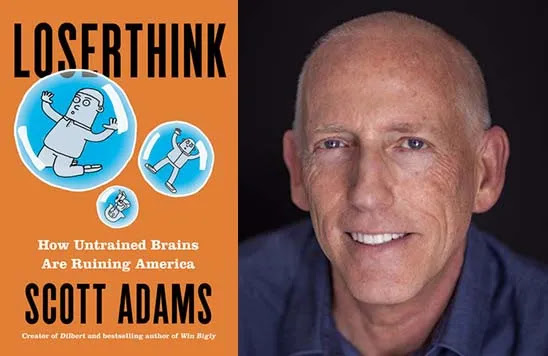
Here are a few excerpts from a book I recently read, "Loserthink: How Untrained Brains Are Ruining America," by Scott Adams.


If you are dismissing your critics with labels they would not assign to themselves, you might be engaged in loserthink. If you call people who want everyone to have good healthcare a bunch of socialists, or you call people who want strong immigration control racists, you are not part of the rational debate. People who have good arguments use them. People who do not have good arguments try to win by labeling.


My nomination for the most loserthinkish advice in history is: “Stay in your lane.” That is the sort of advice that is better served to an enemy, not a friend. If everyone followed that advice, you wouldn’t have civilization. The world as we know it was engineered, designed, and built by people who left their lane and tried something outside their temporary skill stack. They figured it out as they went.


If you defend your point of view by saying some version of “The other side does it too,” you are abandoning the adult frame and entering a child frame. Children say, “My sister did it too!!!” Adults say, “I made a mistake. This sort of mistake is too common. Here’s what I plan to do about it.”

Refusing to admit your errors, or your team’s errors, locks you into a team sport mentality. That’s a mental prison. It makes you appear small and it doesn’t advance anyone’s interests. You’re more focused on the fight than the fix.


Loserthink involves waiting until you know how to do something right before you do anything at all. That strategy makes sense only when it is physically or financially dangerous to make a mistake. For most ambitions in life, we can jump in, make some mistakes, and figure it out from there. If you get embarrassed in the process, good for you! It means you just learned that embarrassment doesn’t kill you. And that, my friends, is like a superpower.

12.15.2022

2022 Books I've Read


Here are my ratings for the 58 books I read in the past 12 months.  In case you've forgotten, the scale goes like this: 1 - pass, 2 - some good some bad, 3 - recommended, 4 - can't stop raving about it, 5 - fundamentally changed my worldview. 

Please weigh in with recommendations. Especially seeking to diversify into more fiction and more non-white and female authors. Also trying to sprinkle in longer reads and classics. Tell me your must-reads!

  1. The Curious Incident of the Dog in the Night-Time (Haddon) 4
  2. Maybe You Should Talk to Someone: A Therapist, HER Therapist, and Our Lives Revealed (Gottlieb) 4
  3. Your Brain is (Almost) Perfect: How We Make Decisions (Montague) 3
  4. Four Hundred Souls: A Community History of African America, 1619–2019 (Kendi, Blain) 4
  5. A Dutiful Boy: A memoir of secrets, lies and family love (Zaidi) 4
  6. Fifty Things That Aren't My Fault: Essays from the Grown-up Years (Guisewite) 4
  7. A Burst of Light and Other Essays (Lorde) 2
  8. Let Nobody Turn Us Around: An African American Anthology (Marable) 4
  9. Start with Why: How Great Leaders Inspire Everyone to Take Action (Sinek) 3
  10. Little Fires Everywhere (Ng) 4
  11. The Data Detective: Ten Easy Rules to Make Sense of Statistics (Harford) 3
  12. The Pattern Seekers: How Autism Drives Human Invention (Baron-Cohen) 3
  13. Somebody's Daughter: A Memoir (Ford) 3 
  14. Concrete Rose (Thomas) 4
  15. The Hate U Give (Thomas) 4
  16. Death at an Early Age: The Destruction of the Hearts and Minds of Negro Children in the Boston Public Schools (Kozol) 4
  17. On the Come Up (Thomas) 4
  18. 10 Days That Unexpectedly Changed America (Gillon) 3
  19. Inside Comedy: The Soul, Wit, and Bite of Comedy and Comedians of the Last Five Decades (Steinberg) 3
  20. The Secret to Superhuman Strength (Bechdel) 3
  21. Ain’t I a Woman (hooks) 4
  22. The Color Purple (Walker) 3
  23. The Fire Next Time (Baldwin) 3
  24. Surely You're Joking, Mr. Feynman: Adventures of a Curious Character (Feynman) 3
  25. Talking Back: Thinking Feminist, Thinking Black (hooks) 3
  26. The End of Gender: Debunking the Myths about Sex and Identity in Our Society (Soh) 3
  27. The Life-Changing Magic of Not Giving a F*ck: How to Stop Spending Time You Don't Have with People You Don't Like Doing Things You Don't Want to Do: A No F*cks Given Guide (Knight) 2
  28. Animal, Vegetable, Junk: A History of Food, from Sustainable to Suicidal (Bittman) 4
  29. Shaping Hearts and Minds: A Case For Classical Christian Education (Whatley) 2
  30. 30
  31. A Philadelphia Education: Tales, Trials, and Tribulations of a Serial Careerist (Goldsmith) 4
  32. The Introvert's Edge: How the Quiet and Shy Can Outsell Anyone (Pollard) 2
  33. How To: Absurd Scientific Advice for Common Real-World Problems (Munroe) 4
  34. Hearts Of Fire: Eight Women In The Underground Church And Their Stories Of Costly Faith (VOTM) 3
  35. The Myth of Closure: Ambiguous Loss in a Time of Pandemic and Change (Boss) 4 
  36. How You Say It: Why We Judge Others by the Way They Talk—and the Costs of This Hidden Bias (Kinzler) 4
  37. The Brothers Karamazov (Dostoyevsky) 4
  38. Do Good At Work: How Simple Acts of Social Purpose Drive Success and Wellbeing (Boccalandro) 3
  39. You Are Enough: Revealing the Soul to Discover Your Power, Potential, and Possibility (Desai) 3
  40. 1Q84 (Murakami) 4
  41. False Alarm: How Climate Change Panic Costs Us Trillions, Hurts the Poor, and Fails to Fix the Planet (Lomborg) 4
  42. Don Quixote (Cervantes) 4
  43. Index, a History of the: A Bookish Adventure From Medieval Manuscripts to the Digital Age (Duncan) 2
  44. Ida B. the Queen  The Extraordinary Life and Legacy of Ida B. Wells (Duster) 3
  45. Just As I Am (Tyson) 3
  46. Live Your Best Life: 219 Science-based Reasons to Rethink Your Daily Routine (Farrimond) 3
  47. Love Is an Ex-Country (Jarrar) 3
  48. Becoming Dr. Seuss: Theodor Geisel and the Making of an American Imagination (Jones) 3
  49. 21 Lessons for the 21st Century (Harari) 4
  50.  The Sense of Style: The Thinking Person's Guide to Writing in the 21st Century (Pinker) 3
  51. Why We Can't Sleep: Women's New Midlife Crisis (Calhoun) 3
  52. Atlas Shrugged (Rand) 3
  53. The Fountainhead (Rand) 3
  54. The Mothers and Daughters of the Bible Speak: Lessons on Faith from Nine Biblical Families (Bream) 3
  55. Loserthink: How Untrained Brains Are Ruining America (Adams) 3
  56. The Education of Brett Kavanaugh: An Investigation (Pogrebin, Kelly) 4
  57. Baby and Child Care (Spock) 3
  58. The Origin of Species (Darwin) 3

12.14.2022

New Year's Resolutions


Since 2011, I’ve posted my New Year’s resolutions at the end of each year.  It’s a good way to do a year-end check-up and see how I did and what I need to recommit to into the New Year.  So without further ado: 

1. Body - run 800 miles, swim 100 miles, lift 200 times, bike 2,000 miles; eat better.

Actual counts for 1st 11 months of 2022: run 682 miles, swim 104 miles, lift 186 times, bike 1,997 miles. Glad to have settled into a workout routine that keeps me in shape and gives me the energy boost I need to start every day. Also glad to have life-hacked my way to healthier eating by forcing myself to take and post pictures of all my meals. On the doorstep of 50, you have to do these things for everything else to fall into place. Grade: A

2. Civic – leverage skill/opportunity for maximum social impact, make a difference on the hard issues. 

Pleased to serve with good people at Missio Seminary, PIDC, and Penn’s Weitzman School, as well as to join the boards of Greater Philadelphia YMCA and Public Health Management Corporation and get more deeply involved in matters of wellness in the region. Makes for a full schedule and the occasional heartache, but civic engagement is also energizing and grounding. Grade: A

3. Friends and family – quality if not quantity, be there when needed. 

Schedule too busy and logistics too difficult to really invest in so many dear relationships that otherwise have longevity and meaning. Golf is forging a pathway for some new friendships, for which I’m grateful. Sunday Zoom calls with my dad and sister have been a lovely way to stay in touch. Grade: C

4. House – an ounce of prevention, making it a home. 

Home is a mess but the major things get tended to, which we’ll count as a W at this stage in our lives. Our rental portfolio now spans four places in four states – Philly, DC, OCNJ, and Miami Beach – and while each has had its hiccups this year overall I’m very pleased to be an owner, landlord, and aspiring real estate mogul. Grade: B 

5. Kids – 1-on-1 times each quarter. 

Really striving to find the time and then make the most of it. Trying to not leave things unsaid, and to have my actions line up with those words. Parenting is so hard and yet so rewarding. I fall short but am giving it all I got. Grade: B 

6. Marriage – three kid-free trips. 

Our two kid-free trips got wrecked, once my COVID and once by Asher getting kicked out of sleepaway camp. Working better together on the operations of the household, but falling short on making time for the relationship itself. Grade: C

7. Mind – read 50 books. 

Tomorrow I’ll post the 58 titles I read over the past 12 months.  Really trying to lean into a diversity of genres, lengths, and perspectives. Love the activity and what it yields. Grade: A.

8. Self – three hours per week of uninterrupted me time, three personal day getaways. 

Golf has proven to be great time away from work and parenting, whether solo or with friends. Scheduling personal days and fully enjoying them has been life-giving. I still run myself too hard but that makes these escapes all the more necessary. Grade: B.

9. Spiritual – 100 Bible memory verses, time each morning for Bible/prayer. 

Consistent in making the time, but too little time and too rushed with that time. Need to reclaim the importance of this morning routine.  Grade: C

10. Work – set the course for the firm. 

Being president of a professional services firm is a heavy load of taking care of staff, helping run the company, and bringing in business, alongside a full complement of project work itself.  I run our Universities & Hospitals practice as well as our Equity & Inclusion practice, and I’m proud of the work we did in both spaces. Eager to springboard into 2023 with an additional thrust towards prescriptive, forward-looking content.  Grade: B


12.12.2022

What Am I Working On


As has become my custom every few months, here's what I'm working on now at work. I won't repeat anything from last time that I happen to still be working on, and for confidentiality's sake I have to blur some of the details for some of these studies.

* Economic and social impact study for a state association of private colleges.

* Analysis of whether an innovation development that received tax subsidies has generated sufficient net new tax revenues for a jurisdiction.

* Local economic ramifications of successfully implementing a campaign focused on local food and good jobs.

* Economic and social impact study for health insurance provider.

* Facility needs assessment for a higher education institution.

* Research on how retailers institutionalize diversity, equity, and inclusion into their practices.

* Research on how to institutionalize diversity, equity, and inclusion into regional economic development strategies.

* Economic impact of a large university's innovation initiatives.

* Economic and social impact study for a state association of public university athletic programs.


12.07.2022

2023 Predictions Guaranteed or Your Money Back


Predictions are never easy but seem particularly challenging in these weird times. But where’s the fun in demurring when you can offer outlandish hot takes with no recrimination? First, a quick check-in on what I posted last year: 

1. Having risen to the very top of music (BTS) and TV (Squid Game), Korea now conquers…social media: Kakao goes global and viral.

Big nothingburger here.

2. Halfway to 2024, R’s retake Congress, Senate stays split, and the parties are already starting to consolidate behind Harris vs. DeSantis.

R's did take the House, D's have the Senate, and nothing is clear about 2024 but it's certainly not obviously Harris vs. DeSantis at this point.

3. Bitcoin shake-out as transition to mainstream stalls out.

Kinda true?

4. Creative cinemas re-tool and re-open, injecting interactivity, fun, and safety into the traditional viewing model; Americans flock back to the theaters in droves.

I still think this can happen but the focus has been on streaming because we all like to sit on our ass at home.

5. Shohei Ohtani will have an even better start to 2022 than his historic 2021, but alas a late-season injury means the beginning of the end of two-way play.

Thankfully for sports fans, he was injury-free and while not as sublime as 2021 still pretty darn good.

And now on to 2023 predictions: 

1. Despite rampant speculation, the D’s unite behind Biden-Harris. To be opposed by DeSantis-Youngkin.

2. Victor Wembanyama, widely regarded as the #1 pick in the 2023 NBA draft and a generational prospect, will miss his entire first season in the league due to injury. 

3. No recession, no inflation, no growth…just nothing newsworthy. Which I'd take!

4. Olivia Rodrigo will be announced as the performer for the 2024 Super Bowl halftime show. 

5. AI tipping point: a machine-generated book, album, and painting all hit the top of their respective charts.

12.05.2022

Lazy Linking, 240th in an Occasional Series (Interesting Points from Recent Reports Version)


Things I liked lately on the Internets:

240.1 Thinking about the intersection of hospitals and communities from a design standpoint (AIA Philadelphia)

240.2 PA state innovation funding down nearly two-thirds in real terms from 2003-2023 (Brookings Institute)

240.3 Relevant case law on government role in private religious education (Council for Christian Colleges & Universities)

240.4 Individuals represent two-thirds of the $485 billion in 2021 US charitable giving (CCS Fundraising)

240.5 Median time at current employer is 9.9 years for US workers age 55-64 vs. 2.8 for age 25-34 (Wharton Alumni Magazine)


Too Short for a Blog Post, Too Long for a Tweet 522

  Here are a few excerpts from a book I recently read, "Moby Dick," by Herman Melville. Again, I always go to sea as a sailor, bec...