2.28.2022

Too Short for a Blog Post, Too Long for a Tweet 319


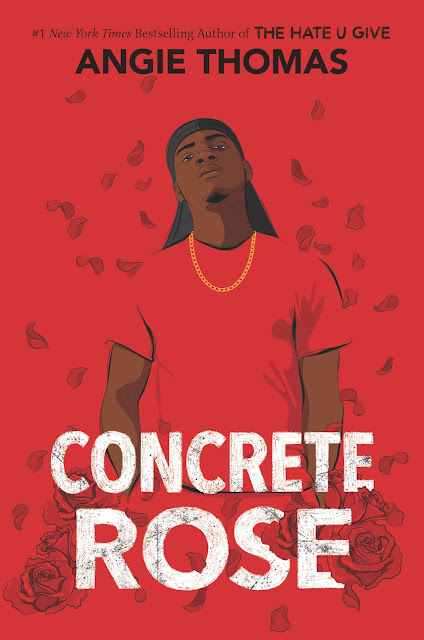
Here is an excerpt from a book I recently read, "Concrete Rose," by Angie C. Thomas.


They put a white sheet over him and left him in the street. He wasn’t a person no more. He was a crime scene.

2.23.2022

Too Short for a Blog Post, Too Long for a Tweet 318


Here are a couple of edits from a book I recently read, "Somebody's Daughter: A Memoir," by Ashley Ford.

One time a boy told me my mother was ugly, and I fought him so hard I ended up with a reputation. Ashley Ford will fight boys. I liked that. Fights were a big deal because they could get you kicked out of school, but they weren’t a big deal between students. You could beat somebody’s ass on Monday and be swapping notes on Tuesday. In most instances, whatever the problem had been between the two of you, the fight settled it.


I’d told myself before I got there, that I would refer to him as “Dad” because I was not a child. I was a grown woman, and I was pretty sure grown women didn’t call their fathers “Daddy.” But in that moment, I felt like someone’s little girl. And I’d been waiting a long time to feel like somebody’s daughter.

2.21.2022

Too Short for a Blog Post, Too Long for a Tweet 317


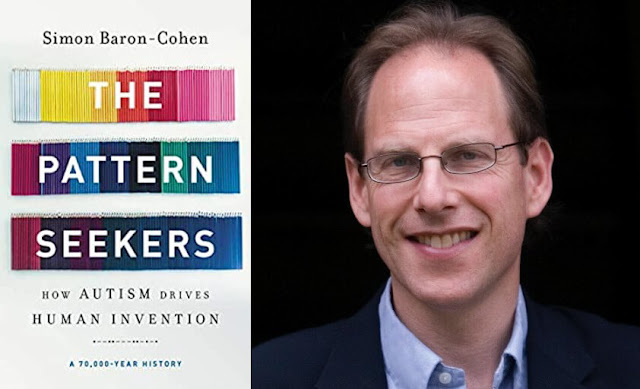
Here are a couple of excerpts from a book I recently read, "The Pattern Seekers: How Autism Drives Human Invention," by Simon Baron-Cohen.


His memory has the hallmark of hypermnesia (the opposite of amnesia)—it seems to know no limits. There are only a handful of documented individuals with hypermnesia, adults who can remember every day of their lives since at least age fourteen. With Jonah, his memory is for factual information about objects, and specifically plants. His recall is also extremely rapid. His family describe him as being able to “read” nature. Sometimes they demonstrate this to others by pointing to a random plant and seeing how many facts about it he can rattle off. But Jonah isn’t interested in showing off. He is simply driven to systemize plants accurately and comprehensively, interested in facts, patterns, and truth. For him, as for many autistic people, these three words all refer to the exact same thing.


“Did you want to die?” 

He nodded, and when I asked him why, he simply replied: 

“Nobody wants me. I don’t belong in this world.” 

I acknowledged his loneliness, aware that over 80 percent of young autistic adults still live with their parents.

I asked him: “What would make a difference, what would make life feel worth living?” 

Without looking up, he replied: “A job. To make me feel valued—to give me dignity. Why won’t anyone give me the chance to prove I can contribute, to make me feel included in society, and give me a wage, so I can have independence from my parents?” 

I nodded, feeling so sad for him and the millions of other autistic people who languish unemployed when they could be doing something meaningful for themselves while helping their employer and society.

2.18.2022

Too Short for a Blog Post, Too Long for a Tweet 316


Here are a few excerpts from a book I recently read, "The Data Detective: Ten Easy Rules to Make Sense of Statistics," by Tim Harford.


I worry about a world in which many people will believe anything, but I worry far more about one in which people believe nothing beyond their own preconceptions.


Many of us refuse to look at statistical evidence because we’re afraid of being tricked. We think we’re being worldly-wise by adopting the Huff approach of cynically dismissing all statistics. But we’re not. We’re admitting defeat to the populists and propagandists who want us to shrug, give up on logic and evidence, and retreat into believing whatever makes us feel good. 

I want us to do something different. I want to give you the confidence to pick up the telescope of statistics and use it to scrutinize the world. I want to help you understand the logic behind statistical truths and escape the grip of the flawed logic, emotions, and cognitive biases that shape the falsehoods.


The counterintuitive result is that presenting people with a detailed and balanced account of both sides of the argument may actually push people away from the center rather than pull them in. If we already have strong opinions, then we’ll seize upon welcome evidence, but we’ll find opposing data or arguments irritating. This biased assimilation of new evidence means that the more we know, the more partisan we’re able to be on a fraught issue.

2.16.2022

TV Diet


About three years ago, I listed the shows and movies I'd watched over the past three years, from Scandal in 2016 to You in 2019.  I guess it's time to do this again then.  This time I'll provide a grade, as well as commentary as warranted.  In alphabetical order:

Altered Carbon S2 8 x 45 min. B.

Better Call Saul S1-4 30 x 45 min. A.

Black Mirror S5 3 x 65 min. B.

Blacklist S6 22 x 43 min. B.

Breaking Bad S1-5 62 x 47 min. A.

Collateral S1 4 x 60 min. D. Unsatisfying ending.

Dark S2-3 16 x 55 min. B.

Designated Survivor S1-3 53 x 43 min A. Digging "24" right now, so I guess that makes me a Kiefer Sutherland fan.

El Camino 2hr. C.

Get Out 2 hr. A.

Glitch S1-3 18 x 54 min. B.

Heroes S1-4 77 x 45 min. A.

Homecoming S1 10x30min. D. Unsatisfying ending.

How To Get Away With Murder S5-6 30 x 43 min. B.

In the Shadow of the Moon 2hr. C.

Jessica Jones S3 13 x 50 min. C.

Lost S1-6 123 x 43 min. A.

Mile 22 2 hr. D.

Mindhunter S2 9 x 60 min. B.

Old Guard 2 hr. D.

Queen's Gambit S1 7 x 60 min. B.

Selma 2 hr. A.

Stranger Things 3 8 x 55 min. A.

The I Land S1 7 x 40 min. D.

The OA S1-2 16 x 60 min. B.

The Wire S1-5 60 x 60min. A+. It's likely that well before I get through all my wish-list I'll be watching this again.

Travelers S1-3 34 × 45min. A.

Umbrella Academy S1 10 x 50 min. B.

Us 2 hr. A.

V Wars S1 10 x 40 min. F. Truly awful.

Walking Dead S1-9 131 x 42 min. A.

I didn't do the math exactly but I think it works out to about 550-600 hours of viewing over the three-year period, or about 3 1/2 hours a week.  So many more shows to go, both ones from 5 to 15 years ago as well as ones hitting more recently.  Not sure I'll be able to up my viewing time much more for the foreseeable future, so it's likely the backlog will only grow over time.  Something to look forward to in retirement!


2.10.2022

Too Short for a Blog Post, Too Long for a Tweet 315


 Here are a few excerpts from a book I recently read, "Little Fires Everywhere," by Celeste Ng.


The more time they spent together, the more Moody began to feel he was in two places at once. At any given moment—every moment he could arrange, in fact—he was there with Pearl, in the booth at the diner, in the fork of a tree, watching her big eyes drink in everything around them as if she were ferociously thirsty. He would crack dumb jokes and tell stories and dredge up bits of trivia, anything to make her smile. And at the same time, in his mind, he was roaming the city, searching desperately for the next place he could take her, the next wonder of suburban Cleveland he could display, because when he ran out of places to show her, he was sure, she would disappear.


They were so artlessly beautiful, even right out of bed. Where did this ease come from? How could they be so at home, so sure of themselves, even in pajamas? When Lexie ordered from a menu, she never said, “Could I have . . . ?” She said, “I’ll have . . .” confidently, as if she had only to say it to make it so. It unsettled Pearl and it fascinated her.


She had, in short, done everything right and she had built a good life, the kind of life she wanted, the kind of life everyone wanted. Now here was this Mia, a completely different kind of woman leading a completely different life, who seemed to make her own rules with no apologies. Like the photograph of the spider-dancer, Mrs. Richardson found this perturbing but strangely compelling. A part of her wanted to study Mia like an anthropologist, to understand why—and how—she did what she did. Another part of her—though she was only vaguely aware of it at the moment—was uneasy, wanted to keep an eye on Mia, as you might keep your eye on a dangerous beast.

2.08.2022

Too Short for a Blog Post, Too Long for a Tweet 314


Here is an excerpt from a book I recently read, "Start With Why: How Great Leaders Inspire Everyone To Take Action," by Simon Sinek.

Value, by definition, is the transference of trust. You can’t convince someone you have value, just as you can’t convince someone to trust you. You have to earn trust by communicating and demonstrating that you share the same values and beliefs. You have to talk about your WHY and prove it with WHAT you do. Again, a WHY is just a belief, HOWs are the actions we take to realize that belief, and WHATs are the results of those actions. When all three are in balance, trust is built and value is perceived.

2.04.2022

Too Short for a Blog Post, Too Long for a Tweet 313


 Here are a few excerpts from a book I recently read, "Let Nobody Turn Us Around: An African American Anthology," edited by Manning Marable.


These social visions—integration, nationalism, and transformation—are not mutually exclusive but are in fact broad, overlapping traditions. Throughout the twentieth century, these tendencies have been present, to varying degrees, in virtually every major mass movement in which black people have been engaged, from the desegregationist campaigns of the 1950s to the anti-apartheid mobilization of the 1980s. Though some organizations and individuals may have exemplified one tendency or the other, organizations and movements usually displayed a spectrum of views. Individuals often began their activist careers with one set of perspectives and moved to another as they perceive limitations of that paradigm. This was the case with Hubert Henry Harrison, W. E. B. Du Bois, Martin Luther King, and Malcolm X.


Whereas the teaching of slaves to read and write, has a tendency to excite dissatisfaction in their minds, and to produce insurrection and rebellion, to the manifest injury of the citizens of this State: 

Therefore, Be it enacted by the General Assembly of the State of North Carolina, and it is hereby enacted by the authority of the same, That any free person, who shall hereafter teach, or attempt to teach, any slave within the State to read or write, the use of figures excepted, or shall give or sell to such slave or slaves any books or pamphlets, shall be liable to indictment in any court of record in this State having jurisdiction thereof, and upon conviction, shall, at the discretion of the court, if a white man or woman, be fined not less than one hundred dollars, nor more than two hundred dollars, or imprisoned; and if a free person of color, shall be fined, imprisoned, or whipped, at the discretion of the court, not exceeding thirty nine lashes, nor less than twenty lashes. 

II. Be it further enacted, That if any slave shall hereafter teach, or attempt to teach, any other slave to read or write, the use of figures excepted, he or she may be carried before any justice of the peace, and on conviction thereof, shall be sentenced to receive thirty nine lashes on his or her bare back.

(North Carolina General Assembly, 1830)


The propagators of the system, or their immediate ancestors, very soon discovered its growing evil, and its tremendous wickedness, and secret promises were made to destroy it. The gross inconsistency of a people holding slaves, who had themselves “ferried o’er the wave” for freedom’s sake, was too apparent to be entirely overlooked. The voice of Freedom cried, “Emancipate your slaves.” Humanity supplicated with tears for the deliverance of the children of Africa. Wisdom urged her solemn plea. The bleeding captive plead his innocence, and pointed to Christianity who stood weeping at the cross. Jehovah frowned upon the nefarious institution, and thunderbolts, red with vengeance, struggled to leap forth to blast the guilty wretches who maintained it. But all was vain. Slavery had stretched its dark wings of death over the land, the Church stood silently by—the priests prophesied falsely, and the people loved to have it so. Its throne is established, and now it reigns triumphant.

(Garnet, 1843)


This is why slavery of any kind is an outrage. It spoils the image of God as it strives to express itself through the individual or the race. As in the Kingdom of Nature, we see in her great organic types of being, in the movement, changes, and order of the elements, those vast thoughts of God, so in the great types of man, in the various races of the world, as distinct in character as in work, in the great divisions of character, we see the will and character and consciousness of God disclosed to us. According to this truth a distinct phase of God’s character is set forth to be wrought out into perfection in every separate character. As in every form of the inorganic universe we see some noble variation of God’s thought and beauty, so in each separate man, in each separate race, something of the absolute is incarnated. The whole of mankind is a vast representation of the Deity. Therefore we cannot extinguish any race either by conflict or amalgamation without serious responsibility.

(Blyden, 1890)


One of the most promising of the young Negro poets said to me once, “I want to be a poet—not a Negro poet,” meaning, I believe, “I want to write like a white poet”; meaning subconsciously, “I would like to be a white poet”; meaning behind that, “I would like to be white.” And I was sorry the young man said that, for no great poet has ever been afraid of being himself. And I doubted then that, with his desire to run away spiritually from his race, this boy would ever be a great poet.

(Hughes, 1926)


I said: “You may do what you will with Angelo Herndon. You may indict him. You may put him in jail. But there will come thousands of Angelo Herndons. If you really want to do anything about the case, you must go out and indict the social system. But this you will not do, for your role is to defend the system under which the toiling masses are robbed and oppressed. 

“You may succeed in killing one, two, even a score of working-class organizers. But you cannot kill the working class.”

(Herndon, 1933)

2.02.2022

Too Short for a Blog Post, Too Long for a Tweet 312


Here are a couple of excerpts from a book I recently read, "A Burst of Light and Other Essays," by Audre Lorde.


Racism. Cancer. In both cases, to win the aggressor must conquer, but the resisters need only survive. How do I define that survival and on whose terms?


Caring for myself is not self-indulgence, it is self-preservation, and that is an act of political warfare.

Too Short for a Blog Post, Too Long for a Tweet 522

  Here are a few excerpts from a book I recently read, "Moby Dick," by Herman Melville. Again, I always go to sea as a sailor, bec...