10.29.2021

Too Short for a Blog Post, Too Long for a Tweet 300


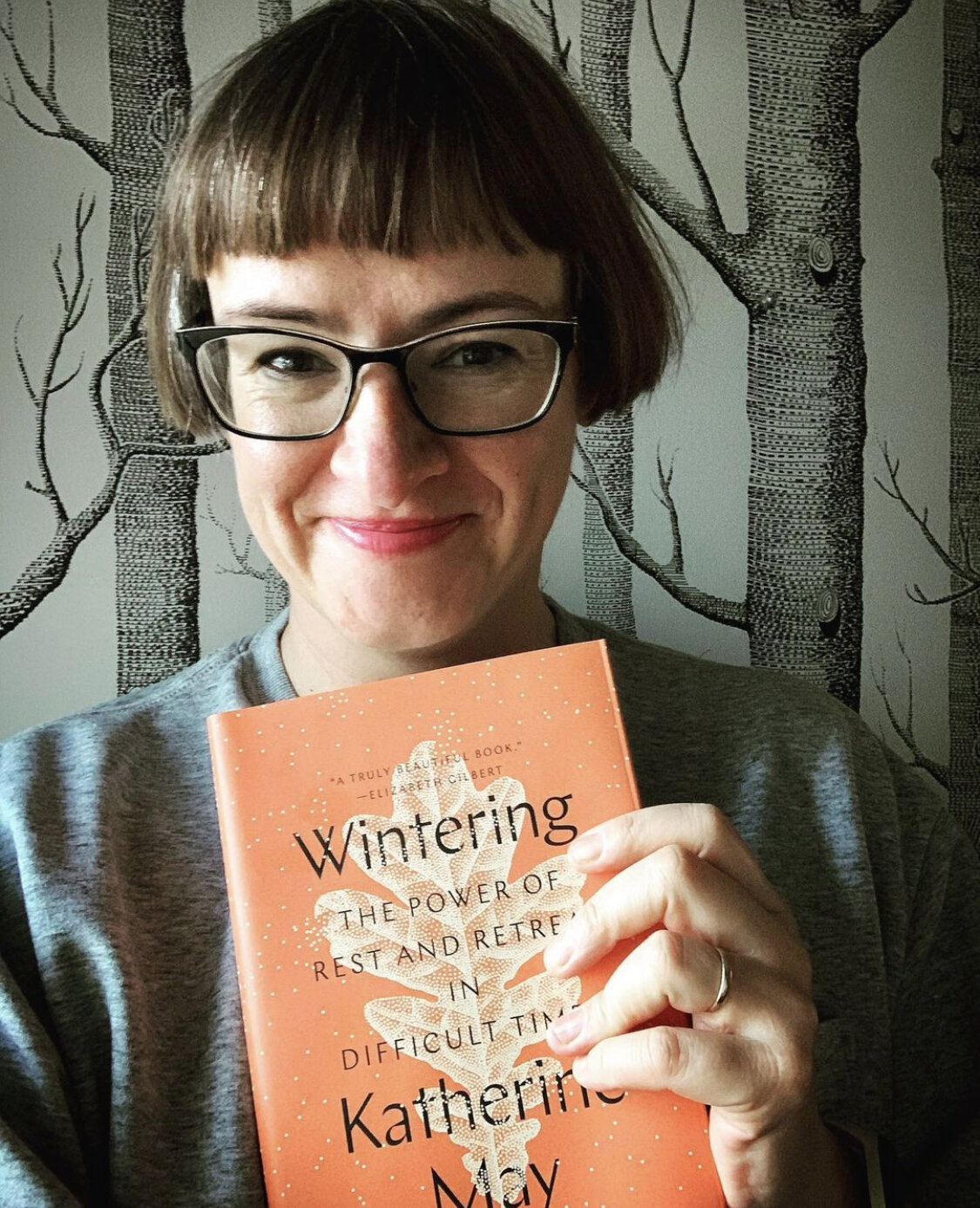
Here are a couple of excerpts from a book I recently read, "Wintering: The Power of Rest and Retreat in Difficult Times," by Katherine May.


A snow day is a wild day, a spontaneous holiday when all the tables are turned. This one had a bit of the spirit of Halloween and a little of Christmas. It was wild and cosy at the same time; rebellious and heartwarming. Here was yet another liminal space, a crossing point between the mundane and the magical. Winter, it seems, is full of them: fleeting invitations to step out of the ordinary. Snow may be beautiful, but it is also a very adept con artist. It offers us a whole new world, but just as we buy into it, it’s whisked away.


If only life were so stable, happy, and predictable as to produce ants instead of grasshoppers, year in, year out. The truth is that we all have ant years and grasshopper years—years in which we are able to prepare and save and years where we need a little extra help. Our true flaw lies not in failing to store up enough resources to cope with the grasshopper years, but in believing that each grasshopper year is an anomaly, visited only on us, due to our unique human failings.

10.27.2021

Missional


I'm pleased to announce that I've joined the board of trustees of Missio Seminary.  Formerly known as Biblical Theological Seminary, the institution made a huge move recently, both literally and figuratively, in relocating from its original Hatfield campus to a location in the heart of Philadelphia at 7th and Spring Garden Streets.

I lead with that piece of information because it so encapsulates the character of Missio, to boldly go and do as God leads and with a predisposition for engagement and action.  Even in the short time I've served on the board, I see a group of women and men who are humbly and passionately striving to journey where timeless truths intersect with contemporary struggles, and who have graciously and enthusiastically welcomed me into their community.  

I cannot neglect to sing the praises of some specific people who make up Missio.  I met President Frank James a few years back and have been constantly refreshed and challenged by our conversations and by his convictions.  Two key faculty members at Missio happen to be friends and former Penn InterVarsity Christian Fellowship leaders, Shannon and Dave Lamb, to whom I owe much of my understanding of God and of servant leadership.  And I'm humbled and honored to be joining the Missio board alongside Pastor Alyn Waller of Enon Tabernacle Baptist Church, who has been such a voice in this city on issues like racism, gun violence, and economic opportunity.

It will be rewarding to bring my faith and professional perspective into this service opportunity, and in turn to learn what it is like to have a stewardship role in a faith-based academic institution.  As you can tell, I'm excited!

10.21.2021

Too Short for a Blog Post, Too Long for a Tweet 299


Here are a couple of excerpts from a book I recently read, "What the Dog Saw," by Malcolm Gladwell.  


In the summer of 1997, Taleb predicted that hedge finds like Long-Term Capital Management were headed for trouble, because they did not understand this notion of fat tails. Just a year later, L.T.C.M. sold an extraordinary number of long-dated indexed options, because its computer models told it that the markets ought to be calming down. And what happened? The Russian government defaulted on its bonds; the markets went crazy; and in a matter of weeks L.T.C.M. was finished. Mark Spitznagel, Taleb’s head trader, says that he recently heard one of the former top executives of L.T.C.M. give a lecture in which he defended the gamble that the fund had made. “What he said was ‘Look, when I drive home every night in the fall I see all these leaves scattered around the base of the trees,’“ Spitznagel recounts. “‘There is a statistical distribution that governs the way they fall, and I can be pretty accurate in figuring out what that distribution is going to be. But one day I came home and the leaves were in little piles. Does that falsify my theory that there are statistical rules governing how leaves fall? No. It was a man-made event.’“ In other words, the Russians, by defaulting on their bonds, did something that they were not supposed to do, a once-in-a-lifetime, rule-breaking event. But this, to Taleb, is just the point: in the markets, unlike in the physical universe, the rules of the game can be changed. Central banks can decide to default on government-backed securities.

One of Taleb’s earliest Wall Street mentors was a short-tempered Frenchman who dressed like a peacock and had an almost neurotic obsession with risk. He would call Taleb from Regine’s at three in the morning, or take a meeting in a Paris night club, sipping champagne and surrounded by scantily clad women, and once he asked Taleb what would happen to his positions if a plane crashed into his building. Taleb was young then and brushed him aside. It seemed absurd. But nothing, Taleb soon realized, is absurd. Taleb likes to invoke Popper: “No amount of observations of white swans can allow the inference that all swans are white, but the observation of a single black swan is sufficient to refute that conclusion.” Because L.T.C.M. had never seen a black swan in Russia, it thought no Russian black swans existed.

Taleb, by contrast, has constructed a trading philosophy predicated entirely on the existence of black swans — on the possibility of some random, unexpected event sweeping the markets. He never sells options, then. He only buys them. He’s never the one who can lose a great deal of money if G.M. stock suddenly plunges. Nor does he ever bet on the market’s moving in one direction or another. That would require Taleb to assume that he understands the market, and he knows that he doesn’t. He doesn’t have Warren Buffett’s confidence. So he buys options on both sides — on the possibility of the market’s moving both up and down. And he doesn’t bet on minor fluctuations in the market. Why bother? If everyone else is vastly underestimating the possibility of rare events, then an option on G.M. at, say, forty dollars is going to be undervalued. So Taleb buys out-of-the-money options by the truckload. He buys them for hundreds of different stocks, and if they expire worthless he simply buys more. Taleb doesn’t even invest in stocks — not for Empirica and not for his own personal account. Buying a stock, unlike buying an option, is a gamble that the future will represent an improved version of the past. And who knows whether that will be true? So all Taleb’s personal wealth — and the hundreds of millions of dollars that Empirica has in reserve — is in Treasury bills. Few on Wall Street have taken the practice of buying options to such extremes. But if anything completely out of the ordinary happens to the stock market — if some random event sends a jolt through Wall Street and pushes G.M. to, say, twenty dollars — Nassim Taleb will not end up in a dowdy apartment in Athens. He will be very rich.


Panic, in this sense, is the opposite of choking. Choking is about thinking too much. Panic is about thinking too little. Choking is about loss of instinct. Panic is reversion to instinct. They may look the same, but they are worlds apart.

10.19.2021

Too Short for a Blog Post, Too Long for a Tweet 298


Here is an excerpt from a book I recently read, "The Antidote: Happiness for People Who Can't Stand Positive Thinking," by Oliver Burkeman.


I began to think that something united all those psychologists and philosophers – and even the occasional self-help guru – whose ideas seemed actually to hold water. The startling conclusion at which they had all arrived, in different ways, was this: that the effort to try to feel happy is often precisely the thing that makes us miserable. And that it is our constant efforts to eliminate the negative – insecurity, uncertainty, failure, or sadness – that is what causes us to feel so insecure, anxious, uncertain, or unhappy. They didn’t see this conclusion as depressing, though. Instead, they argued that it pointed to an alternative approach, a ‘negative path’ to happiness, that entailed taking a radically different stance towards those things that most of us spend our lives trying hard to avoid. It involved learning to enjoy uncertainty, embracing insecurity, stopping trying to think positively, becoming familiar with failure, even learning to value death. In short, all these people seemed to agree that in order to be truly happy, we might actually need to be willing to experience more negative emotions – or, at the very least, to learn to stop running quite so hard from them. Which is a bewildering thought, and one that calls into question not just our methods for achieving happiness, but also our assumptions about what ‘happiness’ really means.

10.14.2021

Too Short for a Blog Post, Too Long for a Tweet 297


Here are a few excerpts from a magazine article I recently read, "A COVID Serenity Prayer," in the October 10, 2021 issue of The Atlantic.


Human beings have always coexisted with threats to our health: violence, vehicular crashes, communicable diseases. And many of us have meandered through our perilous existence without thinking much about it. Sure, people may drive more cautiously at nighttime, use condoms with a new partner, and avoid walking through dark alleys alone. But before the pandemic, we didn’t lock down our lives to eliminate all risk. Schools didn’t close during flu season. Doctors didn’t preach abstinence for all in the face of herpes and HIV. We had accepted the inherent riskiness of being human, and we took reasonable precautions where possible.

But for many of us, the pandemic blew apart our complacency—at least when it came to the risk of contracting COVID. People rejiggered their lives with a singular goal in mind: Don’t get infected with the novel coronavirus.

Of course no one wants to get COVID. The Delta variant continues to take lives and cause lasting harm for many. But abstinence from living isn’t sustainable, nor is it healthy. In trying to contain COVID-19, we unleashed other health risks.


So what do we have to accept? We have to accept that there is no inoculum for uncertainty—that no human contact is risk-free, that no vaccine is perfect, that we can never guarantee safety in life.


Doctoring isn’t about walling off patients from certain exposures. It is about acknowledging our messy world and arming patients with tools to safely inhabit it. Right now, it’s about helping patients redefine health as more than simply not getting COVID. Health also means accepting that living is about more than simply not dying.

10.12.2021

Too Short for a Blog Post, Too Long for a Tweet 296


Here are a few excerpts from a book I recently read, "How to Lead Wisdom from the World's Greatest CEOs, Founders, and Game Changers," by David M. Rubenstein.


I had not thought that was possible, for Ronald Reagan would turn seventy shortly after becoming president. How could the American people elect such an old person? I was then thirty-one. I am now seventy-one. This age now seems a bit younger than I had once thought.

I was a junior leader around the White House one day, with the potential to be a senior leader. And the next day I was unemployed. Law firms were not dying to hire a thirty-one-year-old ex–Carter White House aide, with two years of law practice under his belt. Humility came quickly, and fortunately never left. 

It took me many months to find a law firm willing to take a chance. (I told my mother I had so many offers that I was just taking my time sifting through them.) When I finally found one, I realized why law firms were not dying to hire me. I was not experienced in practicing law; no one wanted insights on the Carter White House in the Reagan era; and, with no specialty or real legal training, I was likely to be an average lawyer, at best, for the remainder of my career.


And think about it—as a senior executive, what do you really get paid to do? You get paid to make a small number of high-quality decisions. Your job is not to make thousands of decisions every day. If I make three good decisions a day, that’s enough. Warren Buffett says he’s good if he makes three good decisions a year. I really believe that. 

All of our senior executives operate the same way I do. They work in the future, they live in the future. None of the people who report to me should really be focused on the current quarter. 

We’ll have a good quarterly conference call or something, and Wall Street will like our quarterly results. People will stop me and say, “Congratulations on your quarter,” and I say, “Thank you.” But what I’m really thinking is, “That quarter was baked three years ago.”


I told her she might also have a future as a presidential aspirant—she had all the requisite skills to be a compelling candidate—but I realized later, as she instinctively knew, that being Oprah was better than being president.


DR: You invented something that became known as the Powell Doctrine.
 
Colin Powell: Not quite. It was invented by a Washington Post reporter who came to see me one day, and he said, “I’m writing an article about the Powell Doctrine.” I said, “Great, what is it?”


DR: Subsequently, President Bush decided to invade Iraq, to topple Saddam Hussein. In hindsight, was that a mistake? Had you known that there were no weapons of mass destruction, would you still have gone forward? 

Condoleezza Rice: What you know today can affect what you do tomorrow, but not what you did yesterday. We simply believed, as all the intelligence agencies around the world did, that he had weapons of mass destruction, that he was reconstituting them, that he was doing it quickly. 

It was on that basis that we decided we finally had to do what the international community had been threatening to do, which was to have serious consequences. In retrospect, I don’t know, if we had known, what we would have done. 

I will say this: I still think the world’s better off without Saddam Hussein. He was a cancer in the region. And while Iraq went through an extraordinarily difficult time, the thing I would do differently is how we rebuilt Iraq. 

We made a lot of mistakes postwar. But I will say this: I would rather be Iraqi than Syrian today. Iraq has a chance now to be a stabilizing element of the new Middle East, because they have an accountable government. The Iraqi Kurds and Baghdad are finally finding some way of dealing with one another. It’s a very different place. 

The Arab Spring was going to happen, and I think Iraq would have made Syria look like child’s play. So you never know what you prevented. You’ll never be able to bring back the lives lost, and you’ll never be able to deal with that. But I think, in the long arc of history, Iraq will turn out okay.


(Nancy Pelosi) As I sat there—and President Bush was ever gracious, welcoming—all of a sudden it was so crowded on my chair I could barely acknowledge what he was saying, I was so distracted with what was happening. I realized that sitting there on that seat with me were Susan B. Anthony, Elizabeth Cady Stanton, Lucretia Mott, Sojourner Truth, Alice Paul, you name it. They were all there, right on that chair. I could hear them say, “At last we have a seat at the table.” And then they were gone, and my first thought was, “We want more. We want more.”


DR: When President Clinton became president, you were obviously somebody being considered. Then President Clinton talked to somebody who was pushing for your appointment, Daniel Patrick Moynihan. Clinton said, “Well, women don’t want her.” How could that have been the case when you were the leading lawyer in gender discrimination? Why would some women not have wanted you on the Supreme Court? 

Ruth Bader Ginsburg: Just some women. Most women were overwhelmingly supportive of my nomination. But I had written a comment on Roe v. Wade and it was not 100 percent applauding that decision. What I said was, the court had an easy target because the Texas law was the most extreme in the nation. Abortion could be had only if necessary to save the woman’s life. Doesn’t matter that her health would be ruined, that she was the victim of rape or incest. I thought Roe v. Wade was an easy case, and the Supreme Court could have held that most extreme law unconstitutional and put down its pen. 

Instead, the court wrote an opinion that made every abortion restriction in the country illegal in one fell swoop. That was not the way the court ordinarily operates. It waits till the next case, and the next case. Anyway, some women felt that I should have been 100 percent in favor of Roe v. Wade.
10.08.2021

Too Short for a Blog Post, Too Long for a Tweet 295


Here is an excerpt from an article I recently read, "Pepsi's Former CEO Shared the 1-Sentence Secret to Her Success as a Leader; It's the Opposite of What We've Been Told," in the October 6, 2021 issue of Inc. Magazine.


"When we talk about the future of work, we have to stop talking about technology and talk about families -- about women," said Nooyi. "We need them in the workplace, and we're going to build a system to support them."

Part of this is owning identity -- without shame. "Never hide what makes you, you," she said. And, to the many women who, in her words, "are increasingly producing the talent to keep the engines of the economy growing," she had this to say: "At the end of the day, don't forget you're a person, don't forget you're a mother, don't forget you're a wife, don't forget you're a daughter."


10.04.2021

Lazy Linking, 236th in an Occasional Series


Stuff I liked lately on the Internets:

236.1 On October 9 you'll get to hear Beethoven's 10th Symphony, completed w/the help of AI bit.ly/3urPpSg

236.2 One way to prioritize pedestrians over drivers is the so-called Dutch solution of having sidewalks override streets rather than the other way around bit.ly/3F5u71Q @NotJustBikes

236.3 Stanford students riding bikes outside on campus were more likely to be wearing masks than helmets bit.ly/3B21NuL @StanfordReview

236.4 TIL the ubiquitous Chinese takeout box started out as a solution to the at-the-time common need to carry oysters around bit.ly/3kXEbBU @TheDieline

236.5 "Cooperative overlap," which is talking with/over others can be seen as rude or affirming, depending on your cultural upbringing bit.ly/39TZbDm @AnilDash


Too Short for a Blog Post, Too Long for a Tweet 522

  Here are a few excerpts from a book I recently read, "Moby Dick," by Herman Melville. Again, I always go to sea as a sailor, bec...