9.30.2020

The Case for Reading Books

I was a great student in grade school and a good student in college, but reading books was neither a strong suit nor something I gravitated to.  And my 20's were characterized by a distracted attention span that never seemed to make room for sitting down to read a book.  But for a good chunk of time now, I've embraced reading books, to the point that even now that my life is packed to the gills with a demanding job, heavy civic responsibilities, and being a husband and a dad, I still clock in at about 50 to 60 books a year (this year I'm on pace for the lower bound of that range).  Ultimately devoting time to anything when you're busy is about deciding that that thing is so important that you're willing to make time for it, even at the expense of other desirable things.  So it begs the question: why do I spend so much time reading books?  Well, I'm glad I asked myself.


9.28.2020

Too Short for a Blog Post, Too Long for a Tweet 248

 Here are a few excerpts from a book I recently read, "The Warmth of Other Suns The Epic Story of America's Great Migration," by Isabel Wilkerson.
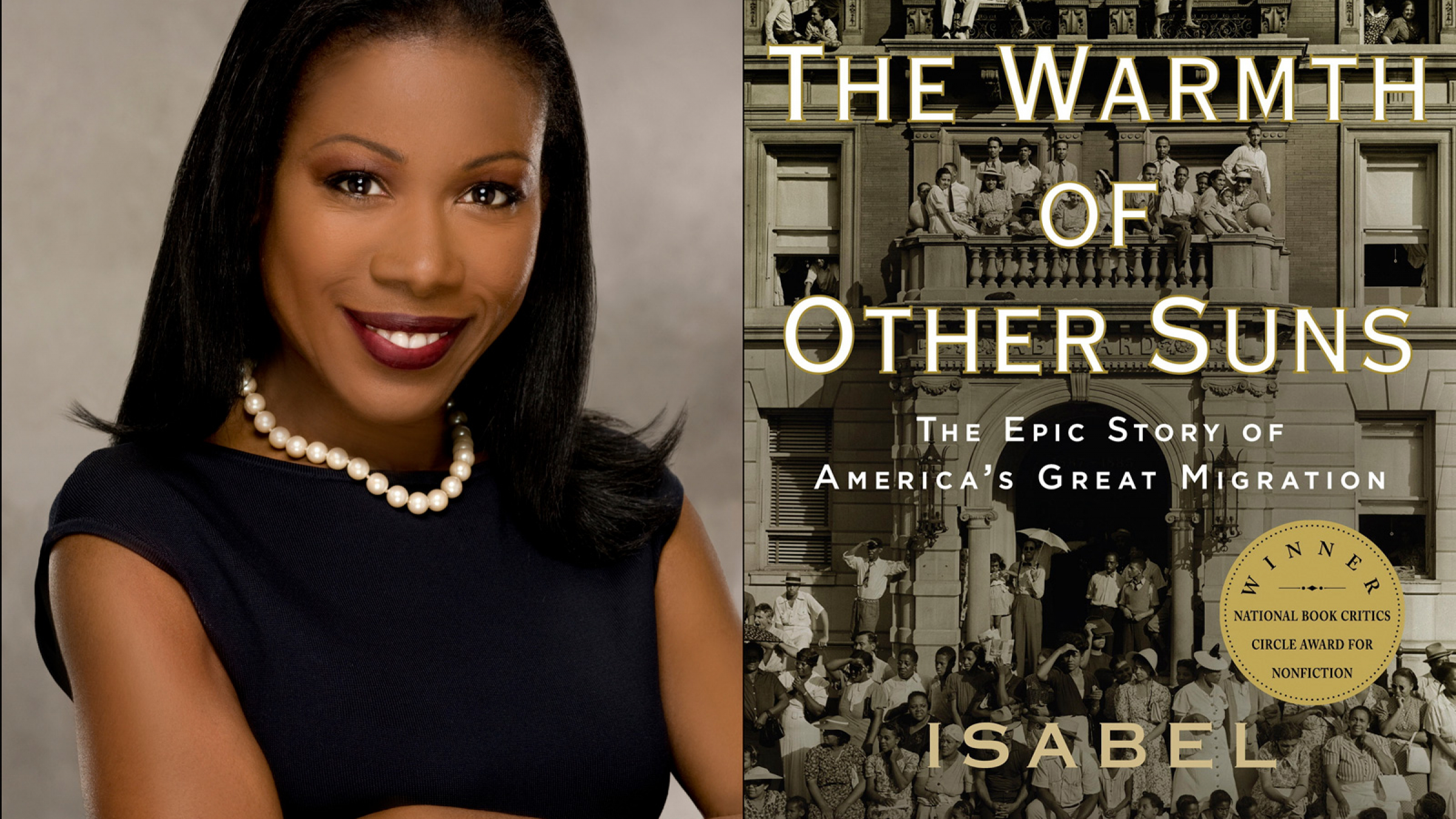

Isabel Wilkerson and The Warmth of Other Suns


Over the course of six decades, some six million black southerners left the land of their forefathers and fanned out across the country for an uncertain existence in nearly every other corner of America. The Great Migration would become a turning point in history. It would transform urban America and recast the social and political order of every city it touched. It would force the South to search its soul and finally to lay aside a feudal caste system. It grew out of the unmet promises made after the Civil War and, through the sheer weight of it, helped push the country toward the civil rights revolutions of the 1960s. 

During this time, a good portion of all black Americans alive picked up and left the tobacco farms of Virginia, the rice plantations of South Carolina, cotton fields in east Texas and Mississippi, and the villages and backwoods of the remaining southern states—Alabama, Arkansas, Florida, Georgia, Kentucky, Louisiana, North Carolina, Tennessee, and, by some measures, Oklahoma. They set out for cities they had whispered of among themselves or had seen in a mail-order catalogue. Some came straight from the field with their King James Bibles and old twelve-string guitars. Still more were townspeople looking to be their fuller selves, tradesmen following their customers, pastors trailing their flocks. 

They would cross into alien lands with fast, new ways of speaking and carrying oneself and with hard-to-figure rules and laws. The New World held out higher wages but staggering rents that the people had to calculate like a foreign currency. 

The places they went were big, frightening, and already crowded—New York, Detroit, Chicago, Los Angeles, Philadelphia, and smaller, equally foreign cities—Syracuse, Oakland, Milwaukee, Newark, Gary. Each turned into a “receiving station and port of refuge,” wrote the poet Carl Sandburg, then a Chicago newspaper reporter documenting the unfolding migration there. The people did not cross the turnstiles of customs at Ellis Island. They were already citizens. But where they came from, they were not treated as such. Their every step was controlled by the meticulous laws of Jim Crow, a nineteenth-century minstrel figure that would become shorthand for the violently enforced codes of the southern caste system. The Jim Crow regime persisted from the 1880s to the 1960s, some eighty years, the average life span of a fairly healthy man. It afflicted the lives of at least four generations and would not die without bloodshed, as the people who left the South foresaw. 

Over time, this mass relocation would come to dwarf the California Gold Rush of the 1850s with its one hundred thousand participants and the Dust Bowl migration of some three hundred thousand people from Oklahoma and Arkansas to California in the 1930s. But more remarkably, it was the first mass act of independence by a people who were in bondage in this country for far longer than they have been free. 

“The story of the Great Migration is among the most dramatic and compelling in all chapters of American history,” the Mississippi historian Neil McMillen wrote toward the end of the twentieth century. “So far reaching are its effects even now that we scarcely understand its meaning.” Its imprint is everywhere in urban life. The configuration of the cities as we know them, the social geography of black and white neighborhoods, the spread of the housing projects as well as the rise of a well-scrubbed black middle class, along with the alternating waves of white flight and suburbanization—all of these grew, directly or indirectly, from the response of everyone touched by the Great Migration. So, too, rose the language and music of urban America that sprang from the blues that came with the migrants and dominates our airwaves to this day. 

So, too, came the people who might not have existed, or become who they did, had there been no Great Migration. People as diverse as James Baldwin and Michelle Obama, Miles Davis and Toni Morrison, Spike Lee and Denzel Washington, and anonymous teachers, store clerks, steelworkers, and physicians, were all products of the Great Migration. They were all children whose life chances were altered because a parent or grandparent had made the hard decision to leave. 

The Great Migration would not end until the 1970s, when the South began finally to change—the whites-only signs came down, the all-white schools opened up, and everyone could vote. By then nearly half of all black Americans—some forty-seven percent—would be living outside the South, compared to ten percent when the Migration began.


9.24.2020

Consultants Behaving Badly

Can you trust consultants? | Magic words, Dilbert comics, Dilbert cartoon

Consultants get a bad rap, and alas since this is my profession I must say that all too often it is deserved.  Here are some of the bad behaviors that turn people against us, along with some commentary on what I'm trying to do combat that:


9.22.2020

Life is More Random and More Ordered Than We Think

The Glory of God In The Heavens | Via Emmaus

At the risk of offending both people who believe in an all-knowing and all-powerful God AND those who don’t, let me say this: life is both more random and more ordered than most of us think.


9.17.2020

Too Short for a Blog Post, Too Long for a Tweet 247

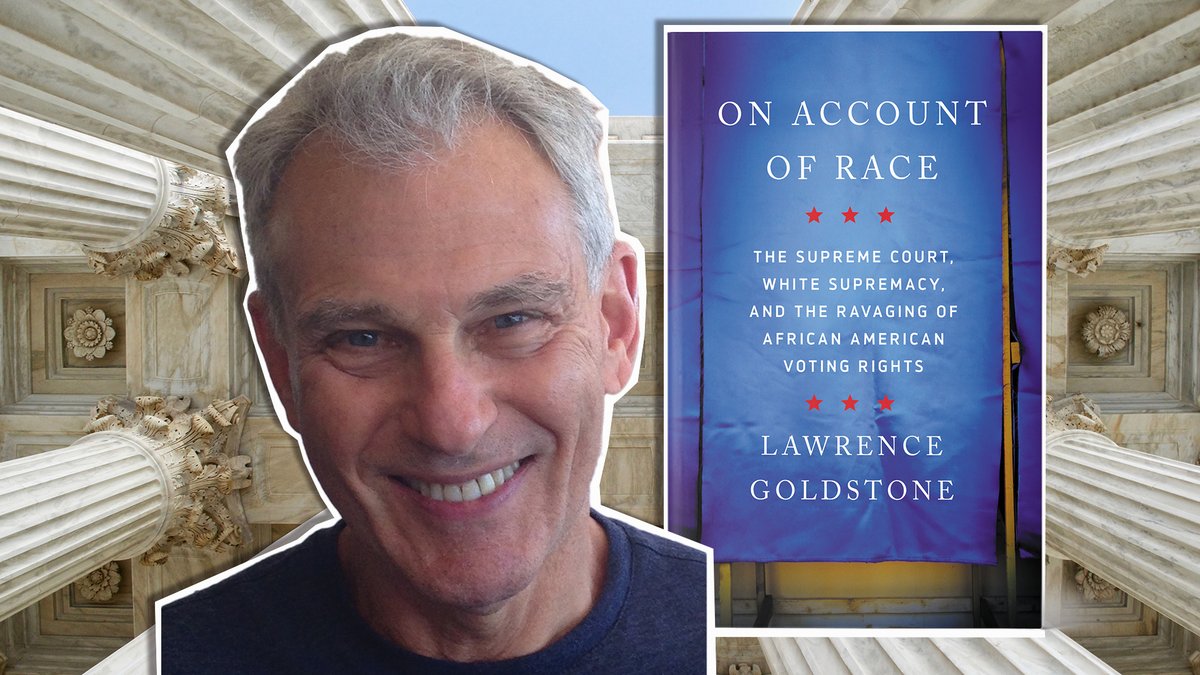
Here are a few excerpts from a book I recently read, "On Account of Race The Supreme Court, White Supremacy, and the Ravaging of African American Voting Rights," by Lawrence Goldstone.

Counterpoint Press on Twitter: "Happy pub day to Lawrence Goldstone!  🎉👏🎉👏🎉 ON ACCOUNT OF RACE: The Supreme Court, White Supremacy, and the  Ravaging of African American Voting Rights, his deeply researched look

What happened next has been a subject of debate among historians ever since. The most widely accepted version is the simplest and the most likely. “Reasonable men in both parties struck a bargain at Wormley’s Hotel. There, in the traditional smoke-filled room, emissaries of Hayes agreed to abandon the Republican state governments in Louisiana and South Carolina while southern Democrats agreed to abandon the filibuster and thus trade off the presidency in exchange for the end of Reconstruction.”  The “Compromise of 1877,” as it came to be known, made Rutherford B. Hayes the nineteenth president of the United States. As one of his first orders of business, the man who had run for president promising to defend the civil rights of black Americans ordered federal troops withdrawn from the South. Without the army to enforce fair voting, the intimidation, murder, and fraud that had come to characterize Southern elections could proceed undeterred. 

When the soldiers marched out of the South, they took Reconstruction with them.


9.14.2020

Lazy Linking, 233rd in an Occasional Series

AeroNabs' Promise Powerful, Inhalable Protection Against COVID-19 | UC San  Francisco

 Stuff I liked lately on the Internets, all-COVID edition:

233.1 The role of top-down AND bottom-up IT solutions in Taiwan’s success vs COVID bit.ly/2Zy3Fea @logic_magazine

233.2 NYC subway ridership back up over 1.5M/day for 1st time in 6mo, but still WAY below pre-COVID levels of 5.5M/day AND bus trips way down now that they’re no longer free bit.ly/3kmHHTt @nypost

233.3 @EdYong w/another thought-provoking analogy re: COVID in America: ants on a death spiral bit.ly/2Zsy2lW @theatlantic

233.4 Is our way out of the pandemic not masks or vaccines but sprayable “Aeronabs” (which bind to COVID & prevent it from infecting cells)? youtu.be/WjhbexLtYts @UCSF 

233.5 Libertarian take on NYC restaurants post-COVID: help is desperately needed, & the most effective type is regulatory relief bit.ly/35uz3xG @cityjournal

9.10.2020

Promoting My Company

 The big news this summer was me getting promoted to president, along with my dear colleague Peter Angelides.  But the bigger news for the firm was us working on eight new Practice Areas that will define our subject matter expertise going forward.  Looking forward to rolling these out over the next several weeks, but until then enjoy this promo video on us as a company.


9.09.2020

Too Short for a Blog Post, Too Long for a Tweet 246

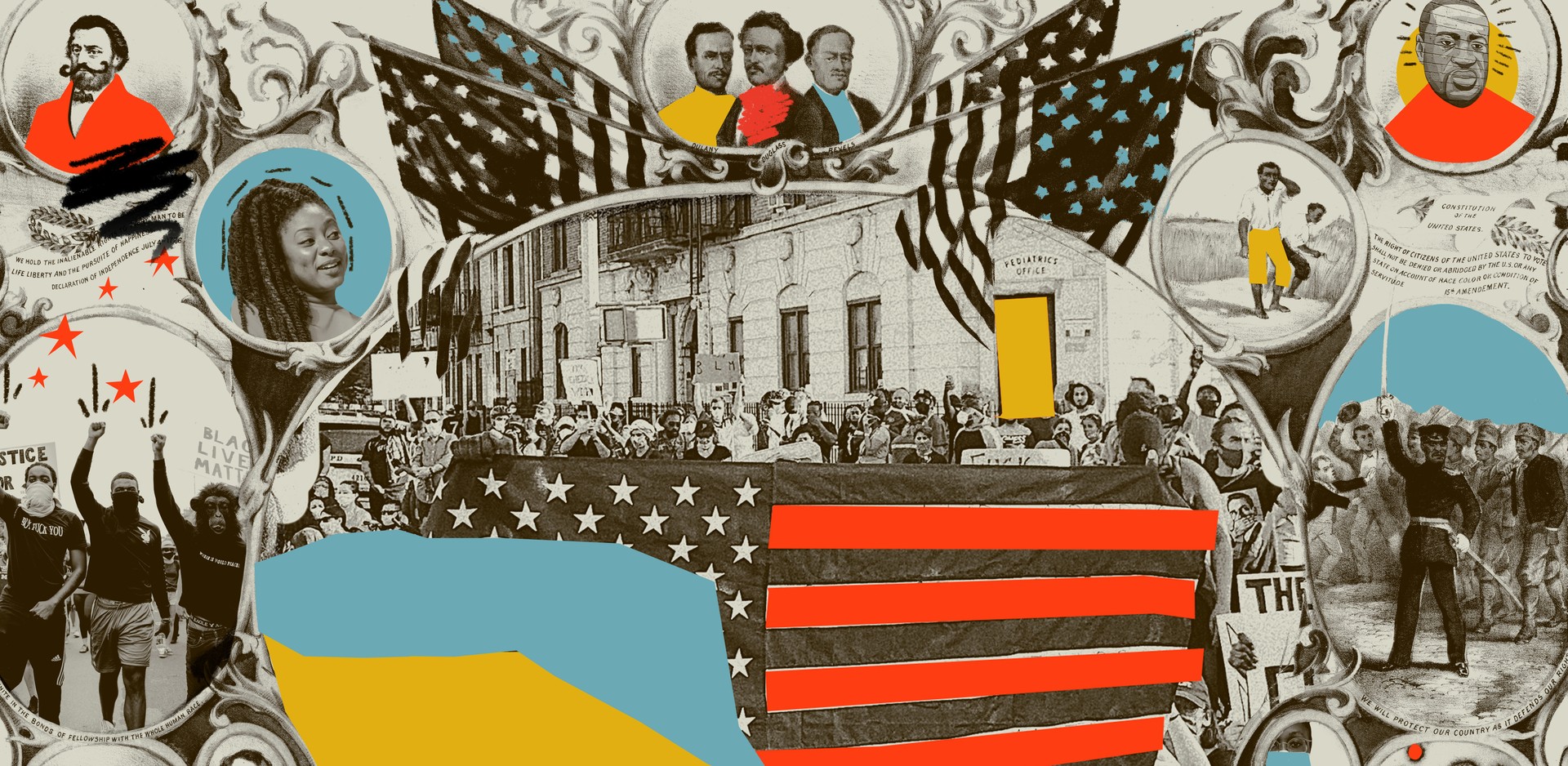
 Here are a couple of excerpts from a magazine article I recently read, "For the First Time, America May Have an Anti-Racist Majority," in the October 2020 issue of the Atlantic.


Believing in racial equality in the abstract and supporting policies that would make it a reality are two different things. Most white Americans have long professed the former, and pointedly declined to do the latter. This paradox has shown up so many times in American history that social scientists have a name for it: the principle-implementation gap. This gap is what ultimately doomed the Reconstruction project.


9.03.2020

Get Sh*t Done

How to prepare for 2018: The Year of the Crisis - The Business Journals

Politics obviously isn't the only way things get done - if you think so, the business, institutional, and not-for-profit sectors would like to have a word with you - but at the very least it creates the climate for things to get done, and in many cases it is in fact how things get done.  Plus, for all the hand-wringing about opacity and backroom deals, it is remarkably transparent - we know who's in charge, we know how they vote/act, and by and large we know their positions because they constantly tell us what they are.  

I am not as politically informed as I could or should be, and I'm certainly not as politically engaged as I could or should be.  But I'm not on the sidelines either.  And lately I've been even more frustrated than usual, without knowing exactly why.  But I think my irritation is coming into focus.  I think what irks me is that our political leaders don't get sh*t done.  And, worse, we the people have created the climate for that.

Too Short for a Blog Post, Too Long for a Tweet 522

  Here are a few excerpts from a book I recently read, "Moby Dick," by Herman Melville. Again, I always go to sea as a sailor, bec...