12.30.2013

2013 Resolutions, 9 of 10 and 10 of 10

http://www.diabetesmine.com/wp-content/uploads/2010/12/new-year-resolution-cartoon-1.jpg9. Spiritual – 100 Bible memory verses, one extra hour per week of praying.  I'm glad I've gotten in the habit of doing memory verses, but sobered by the fact that my head doesn't seem to be getting any better at actually memorizing them.  I did better in making time in the morning, although I wish I could say I was doing better in making longer times now and then to really soak in God, prayer, and Bible.  Grade: C.
10. Work - 10 quality reports.  I'm really fortunate I get to work on so many interesting things. Below I've listed a few noteworthy ones from 2013.  Grade: B.


Articulating the economic benefits of a regional trail in Georgia

Creating a model to estimate the impact of various tax rate changes on tax bases and tax revenues in Philadelphia

Identifying the economic benefits of preserving the historic Prentice Women's Hospital building

Quantifying the benefits of preserving open space near the Ardrossan Estate in Radnor Township

Measuring the economic footprint of the local food system in Detroit

Recommending local and regional policy actions to stimulate the manufacturing sector in Philadelphia

Stating the economic contributions of higher education institutions in Philadelphia

Discussing the economic impact of local spending by anchor institutions

Modeling the economic impact from waterfront greenway capital investments in Philadelphia

Making the economic case for casino development in Philadelphia

12.29.2013

2013 Resolutions, 7 of 10 and 8 of 10

http://www.diabetesmine.com/wp-content/uploads/2010/12/new-year-resolution-cartoon-1.jpg7. Mind – read 50 books.
Reading is for me both leisure activity, personal recharge, and mind exerciser.  So no matter how busy I get, I hope I always make time to stick my nose in between the pages.  Here’s what I got through, with my scores from 1 to 5 (1 being awful and 5 being transcendent). Grade: B.
 
Rich Mullins: An Arrow Pointing to Heaven (Smith) 3
Sex and the Supremacy of Christ (Piper) 4
Our Choice: A Plan to Solve the Climate (Gore) 3
Lincoln: The Biography of a Writer (Kaplan) 4
Made by Hand: Searching for Meaning in a Throwaway World (Frauenfelder) 3
The Age of Gold: The California Gold Rush and the New American Dream (Brands) 4
The Big Burn: Teddy Roosevelt and the Fire that Saved America (Egan) 4
SuperFreakonomics: Global Cooling, Patriotic Prostitutes, and Why Suicide Bombers Should Buy Life Insurance (Levitt) 3
Guns, Germs, and Steel: The Fates of Human Societies (Diamond) 4
A Short History of Nearly Everything (Bryson) 3
Leverage: Strengthening Neighborhoods through Design (Miller) 3
Create Your Own Economy: The Path to Prosperity in a Disordered World (Cowen) 3
What Women Want: The Global Market Turns Female Friendly (Underhill) 2
Garbage Land: On the Secret Trail of Trash (Royte) 3
The Other Barack: The Bold and Reckless Life of President Obama’s Father (Jacobs) 4
Good to Great: Why Some Companies Make the Leap and Others Don’t (Collins) 5
The Third Chimpanzee: The Evolution and Future of the Human Animal (Diamond) 4
The Baseball: Stunts, Scandals, and Secrets Beneath the Stitches (Hample) 3
Why a Curveball Curves: The Incredible Science of Sports (Vizard) 3
The Battle that Forged Modern Baseball: The Federal League Challenge and Its Legacy (Levitt) 3
The Last Lingua Franca: English Until the Return of Babel (Ostler) 3
Genius of Common Sense: Jane Jacobs and the Story of the Death and Life of Great American Cities (Lang) 2
The Perfection Point: Sport Science Predicts the Fastest Man, the Highest Jump, and the Limits of Athletic Performance (Brenkus) 4
Cod: A Biography of the Fish That Changed the World (Kurlansky) 3
Ed Bacon: Planning, Politics, and the Building of Modern Philadelphia (Heller) 3
All About the Beat: Why Hip-Hop Can't Save Black America (McWhorter) 2
Everything Must Change: Jesus, Global Crises, and a Revolution of Hope (McLaren) 2
Willie Mays: The Life, the Legend (Hirsch) 3
Common Wealth (Sachs) 2
Running the Books: The Adventures of an Accidental Prison Librarian (Steinberg) 3
The Book on the Book: A Landmark Inquiry into Which Strategies in the Modern Game Actually Work (Felber) 3
Strangers at the Gate: Asian American Immigration after 1965 (Takaki) 2
My Utmost for His Highest (Chambers) 3
The Mind of Bill James: How a Complete Outsider Changed Baseball (Gray) 3
Pete Rose: My Prison without Bars (Rose) 3
There's a Word for It: The Explosion of the American Language Since 1900 (Steinmetz) 3
New Ideas from Dead Economists: An Introduction to Modern Economic Thought (Buchholz) 3
The Faith Instinct: How Religion Evolved and Why it Endures (Wade) 4
The Master Plan of Evangelism (Coleman) 4
Fly Fishing with Darth Vader and Other Adventures with Evangelical Wrestlers,  Political Hitmen, and Jewish Cowboys (Labash) 3
Betsy Ross and the Making of America (Miller) 4
How the Other Half Lives (Riis) 3
Confessions of St. Augustine (Warner) 3
At the Children’s Gate (Gopnik) 3
LeBron’s Dream Team: How Five Friends Made History (James/Bissinger) 3
Eat That Frog: 21 Great Ways to Stop Procrastinating and Get More Done in Less Time (Tracy) 3
OK: The Improbable Story of America’s Greatest Word (Metcalf) 4
Hail Hail Euphoria: Presenting the Marx Brothers in Duck Soup, The Greatest War Movie Ever Made (Blount) 2
One Nation Under Sex: How the Private Lives of Presidents, First Ladies and Their Lovers Changed the Course of American History 4
Father’s Day: A Journey into the Mind and Heart of My Extraordinary Son (Bissinger) 4


8. Self – three hours per week of uninterrupted me time, three personal day getaways.  Had more opportunity for me, and while I usually wasted it, I did make sure to rest when I really needed it.  This one will be a lifelong resolution, since I'll always need the reminder.  Grade: C.

12.28.2013

2013 Resolutions, 5 of 10 and 6 of 10

http://www.diabetesmine.com/wp-content/uploads/2010/12/new-year-resolution-cartoon-1.jpg5. Kids – 15 minutes of reading per day, one-on-one times each month.  There was less reading together since the kids now have a slew of homework to do every day, but we still try to get our family bedtime stories and Bible lessons in.  The one-on-one times were a great thing for both the kids and I to look forward to each month, although some months I tried harder than others.  ("Hey Aaron, how about another bottle of juice from the restaurant down the street?")  Grade: B.

6. Marriage - at least one date night per month.  We did well here, finding a little window of time each Sunday morning after we drop the kids off for Sunday School but before the morning service started.  That and our Friday nights in watching TV made for some good times of just being together, not to mention countless heartfelt conversations at odd hours of the week.  Grade: B. 

12.27.2013

2013 Resolutions, 3 of 10 and 4 of 10

https://blogger.googleusercontent.com/img/b/R29vZ2xl/AVvXsEhz6_iRhLJ_6oR86fUsvaImZ4dmqRurzM4NT27Z_849WPinD8AO5Uml9gm_BvS-iL3o45vuqpS9Ldn6UVeNsL3nf81RP2Rr3K-6zTTVV04rpSWUF3itsMdeiaFKxahw7eeMd_wT/s1600/resolutions.jpg
3. Friends and family – shrink the time between contacts (varies by person).  I'm busier, so I have less time.  But I value family and friends all the more, so I have tried harder.  I'm glad this is a resolution because it's a useful reminder to invest in these relationships, since no matter how important they are to me I find they often slip through the cracks.  Grade: C.
4. House – finish the dining room, and start on the guest room and the master bedroom.  Dining room's coming along, master bedroom's deferred, and guest room is a real source of embarrassment.  Apologies to those guests we housed who had to co-exist with our kids' scooters, our brooms, and our coat rack.  I assure you we will do better in 2014 there, if only because it's impossible for us to do worse.  Grade: C.


12.26.2013

2013 Resolutions, 1 of 10 and 2 of 10

https://blogger.googleusercontent.com/img/b/R29vZ2xl/AVvXsEhz6_iRhLJ_6oR86fUsvaImZ4dmqRurzM4NT27Z_849WPinD8AO5Uml9gm_BvS-iL3o45vuqpS9Ldn6UVeNsL3nf81RP2Rr3K-6zTTVV04rpSWUF3itsMdeiaFKxahw7eeMd_wT/s1600/resolutions.jpgIt's been three years running that I've posted my assessment of how I did on my New Years' resolutions.  It's that time of the year, so here we go:

1. Body - run 500 miles, swim 50 miles, 150 upper body workouts, 150 ab workouts.Really digging the Y, and kicking myself for not joining earlier.  Though I was much busier this year, I'm happy to report I was pretty consistent with my workout routine: I cut a lot of runs short but very rarely skipped.  My final counts for 1/1/13-11/30/13: ran 450 miles, swam 40 miles, did 120 upper body workouts, did 120 ab workouts.  Grade: B.

2. Civic - join 1-2 boards.  Came off The Enterprise Center; stayed on Spruce Hill Community Association; and joined Sustainable Business Network of Greater Philadelphia, Welcoming Center for New Pennsylvanians, and Community Design Collaborative.  It's made for a busier schedule but I've thoroughly enjoyed getting to these organizations and their staff and board, and have welcomed making my contribution to their issues.  Grade: B.

12.22.2013

Indignation about Indignation

http://janepollak.files.wordpress.com/2013/05/finger-pointing.jpgI admit it: I look at my Facebook feed at least once a day.  Admit it: you do too.  It's a fun and time-efficient way to hear about good news, goo and gah over kid pics, chuckle over snarky remarks, roll eyes at the calamity that is our friends' lives sometimes, and every once in a while get a link to an article that either makes our day or informs our worldview. 

Another common entry into the feed is when people talk about or link to something that makes them indignant.  It could be a pop star acting like an idiot, a public figure demonstrating incompetence or insensitivity, or someone being out and out racist/sexist/ageist/homophobic/sociopathic/mean. (Wow, I just described Kanye West.) 

What is that makes us share these things that make us shake our heads in shame?  (Indeed, such posts often include the abbreviation "smh" for "shaking my head.")  Are we trying to remind our friends that there is still stupidity, ignorance, and hatred out there in the world?  Do we secretly delight in exposing someone as fraudulent, malicious, or uninformed?  Or are such posts ways that we signal (to ourselves and others) just how caring, progressive, and saintly we are?

I don't need to go back and look at my posts this year (although, helpfully, Facebook did give me my "Year in Review," which made going back pretty easy) to know that all three have been motives of mine.  I'd like to say that it's mostly the first, and to be sure there have been times I have honestly tried to shed light on an issue or a line of thinking that I feel is undeservedly under-examined.  But there's also been a lot of poking fun at others just to score some easy points, and there's been a lot of "look at how great I am and look at how good I feel when I point out how backwards this is." 

Well, that sounds like the musings of an unrepentant bully and an insecure megalomaniac.  It certainly doesn't sound like someone who adheres to the concept of sin and falling short and mercy and salvation and redemption and unmerited favor. I am feeling convicted.

Maybe there is a place for indignation.  Obviously we should never lose our sense of shame, and if something is shameful we should shame it.  But maybe we need to check ourselves, too, lest we puff ourselves up at the expense of others and become the very kind of thing that warrants indignation: oblivious, sanctimonious know-it-all's who get off on putting down others and don't take the time to think about the other side of things.

12.20.2013

Deciding When 100% is Worth Pursuing

Since I am trained as an economist, it will not come as a surprise to you that I think about life in terms of trade-offs.  But so does everyone else, I think.  It doesn't mean we go around doing an actual cost-benefit calculation every time we make a decision.  Except that, it kind of does mean that.

Maybe not with numbers, but in a broader sense, we weigh the trade-offs in our live all the time.  Deciding whether and where to go out tonight, picking a major in college, sleeping in or waking up early...in life, in the big and small things, we're constantly thinking about how best to spend our scarce time, energy, and money.  We may not be maximizing our financial bottom line, but we're maximizing something: the long-term good we can do in the world, the pleasure we can enjoy right now in the moment, the enhancement of our reputations, the minimization of discomfort or embarrassment.

With that framework in mind, consider that for the vast majority of us, our lives consist of a lot of different things.  We are workers and fathers and citizens and baseball fans and recreational tennis players and lovers of Scandal and the list goes on and on and on and on.  We invest a little bit of time in a lot of things because to do the opposite - invest a vast majority of our time into one or two things - is seen as sub-optimal in whatever way we are trying to maximize our lives.

Perhaps that is because doing only one or two things in life is considered boring.  But perhaps that is because of another economics concept, that of diminishing returns.  (Yes, I've managed to throw "cost-benefit" and "diminishing returns" into a blog post in the first four paragraphs.  I'm astounded that you've read this far.)  Diminishing returns says that if I spend an hour a day exercising, good for me; two hours a day, even better, but at some point adding hours doesn't do so much more for me that it's worth spending that hour.

In life, we spend time on things up to a certain point, and then we back off, because we only have a finite number of hours, and we decide that that next hour is better spent on something else, where our gain will be greater, than on something we've already spent a sufficient amount of time on.  And that's a good thing, because we're happier and better for it.  For example, if I spend too much time at work, at some point I stop being a good dad; that extra hour spent at work might be better deployed getting a good night's sleep, having quality time with my wife, or making my daughter's Christmas musical.

This may seem painfully obvious.  But if you grew up with any sort of impulse towards achieving 100% success in something, it can be jarring to realize that going from 90% to 100% may be so time-consuming that it is actually better to be satisfied with 90% and then to devote the extra time it would've taken you to get to 100% towards something else in life that will give you happiness as well.  In other words, going from 90% to 100% may be an incredibly inefficient and wasteful expenditure of time and effort.

I am reminded of this perspective when I read in Wired Magazine about what it will take to completely eradicate polio from the world.  Polio vaccination is one of modern times' truly great achievements: as recently as 1988, there were 350,000 cases of polio, and today there are only 223 (that's a 99.94% drop in 25 years).  But to get all the way to zero will require a Herculean effort and billions of dollars of investment.

I am not necessarily arguing that it is worth it to expend those resources to get to zero; I know very little about public health writ large to be able to say that that's where we should focus.  I am saying that sometimes we have to make choices to be OK with 90% so that we can be deployed elsewhere.  And sometimes we have to make choices to be wildly inefficient and wasteful so that we can get all the way to 100% because 100% is just that eternally important. 


12.18.2013

The Future of Our Economy

http://media.cmgdigital.com/shared/lt/lt_cache/thumbnail/610/img/photos/2013/03/02/9e/4d/ddn030213robotics049.jpgThis recent Business Week article noted the rapid increase in business expenditures on software rather than hardware to improve business profitability; rather than machines or buildings, the pathway to a more successful venture now lies in algorithms and data mining.  The takeaway of the article is that the Federal Reserve's typical approach to stimulating business activity by lowering interest rates may become less and less effective because the shift in things businesses want to spend money on mean that cheaper money doesn't necessarily matter as much. 

Another takeaway is to look at this trend in terms of future labor markets.  Where I swim geographically and socially, there is a great longing for the glory days of manufacturing's dominance, where a good job could be had with very little formal education or computer knowledge.  Rapid technological advancement has led to what some deem a barbell economy in terms of distribution of jobs: lots of high-paying, high-end jobs, and lots of low-paying, low-end jobs, and not a lot in the middle.  And with this shift has come a huge desire to try to squeeze that barbell on both ends so that there is more in the middle, whether by soaking the rich through taxes or pushing wages up on the low end through a higher minimum wage.

My thoughts today are not on the efficacy or moral rightness of either of those categories of actions, but rather on the blazing computer advancements that have created such a distribution of labor need.  It is not hard to be uncomfortable with how fast technology is moving, whether that discomfort lies in new moral quandaries that didn't exist just decades ago, displacement of jobs from automation, or an overall sense that the way our labor markets exist now seems inherently unjust.

To be sure, economic inequality is a valid concern.  But we have always had richer and poorer, as well as a hard road for anyone poor trying to become rich.  And our glory days weren't so universally glorious when we poke around a little: there was much more discrimination back then, power was much more concentrated, and the poor and marginalized were much more likely to suffer and die back then from ailments that are now exceedingly rare if not completely vanquished.

At any rate, we're not going back to our industrial age or our agricultural age.  We're not even still in the initial era of information technology, when we first sent a man to the moon and started seeing computing power on every desktop.  No, we are now firmly in a brave new world, albeit at the very beginning of the phase, where driverless cars and DNA sequencing and artificial intelligence hold the promise of unimaginable efficiency, medical breakthroughs, and unknowable economic tumult.

This may be scary to some and entirely distasteful for others.  But it is where we are going, for better or worse, no matter how hard we may want to wish it gone or face away from it.  And it's best that we think long and hard about the implications and prepare ourselves and others accordingly.  Because there could be some incredibly good that comes out of all of this.  And that which might be bad, we ought to consider what that is and figure out how to mitigate or stop it. That seems a better use of our energy than closing our eyes and wishing it away, or figuring out how to cripple or stop it in destructive ways.

12.16.2013

Lazy Linking, 104th in an Occasional Series

http://colleges.usnews.rankingsandreviews.com/img/college-photo_817._445x280-zmm.jpgStuff I liked lately on the Internets (all links via @theatlantic):

104.1 You zig, we zag: Moneyball A's now investing in...good ol'-fashioned scouting http://bit.ly/1ck3KD4

104.2 Flip the script: Spelman College cuts all NCAA sports to fund campus-wide fitness http://bit.ly/193A4vg

104.3 A cyborg telemarketer?  Stranger than that: a human responding w/pre-recorded messages http://bit.ly/1dAZMVb

104.4 How we commute to work, in 1 graph (hint: way, way, way mostly by solo driving) http://bit.ly/18soCJ2

104.5 NE rules the US: 1/2 of the top 75 counties by median HH income are in the mega-region btwn DC & Boston http://bit.ly/1bDxmdu

12.11.2013

What's Life For

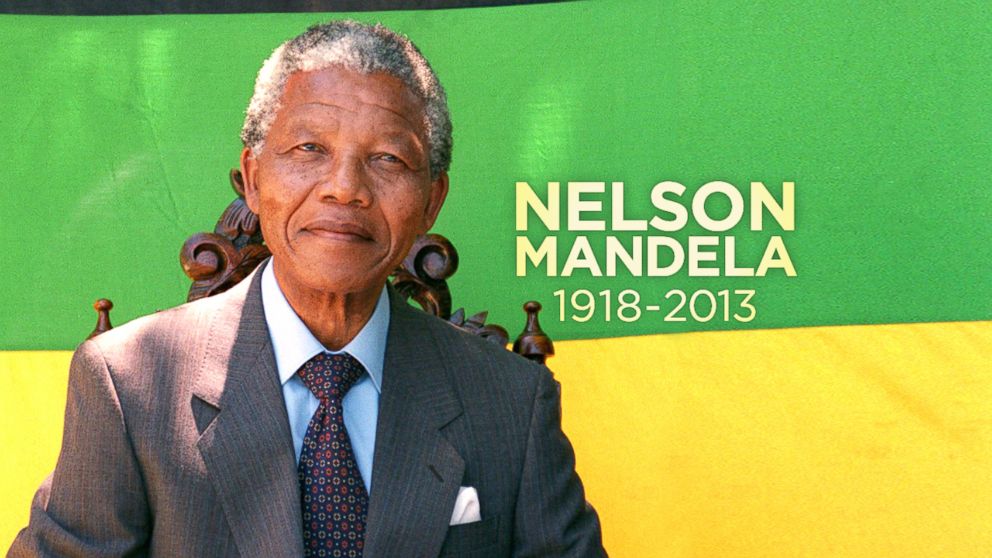
http://a.abcnews.com/images/International/OBIT_NelsonMandela_1918_2013_131205_16x9_992.jpg"Death is something inevitable. When a man has done what he considers to be his duty to his people and his country, he can rest in peace. I believe I have made that effort and that is, therefore, why I will sleep for the eternity.” - Nelson Mandela

I was at the Y the morning after Nelson Mandela's passing last week, and the deejays were marveling at the faith, courage, and will that he had to summon to suffer for his people and his country.  The deejays paid rightful homage to one of our generation's greatest humans with not a little incredulity in their voices: "What possesses a man to give up his freedom and face decades of imprisonment, not for his own personal gain but for the pursuit of justice for his fellow man?" 

It takes your breath away to think of how innately selfish we all are, and yet how much admiration we extend to those who are so selfless.  Perhaps this is not surprising: it is because we are often so selfish that we honor those who are better than us in being able to sublimate themselves in exchange for fighting for others.  We are reminded, perhaps convicted, that we are not as we ought to be, and that we ought to get out of ourselves more often and get into helping others.  (I am mindful that all of this contemplating is taking place during the holiday season, which was once a time for reflection but for many of us has become a time of stress, consumption, and commercialism.)

If this life is all there is, why is it that we are so disgusted at our own selfishness and so captivated by one who lived such a selfless life?  If there's no prize at the end for a life well-lived, shouldn't we seek to maximize individual happiness, and shouldn't selfless acts seem an unappealing diversion? 

If you don't think this way, you are not as selfish as I am.  Or maybe you have reconciled yourself to the fact that living for others is what will allow you to feel good about how you lived your life when you get to the end of your life, as per the quote at the beginning of this post.  Or maybe helping others is how you maximize happiness - not just something you to feel at peace or get a reward, but something that is itself an opportunity to feel and be happy.

Christians, and many other religious folks, believe in life after life, and in the relationship between how you live your life now and what that life after life will be like.  I cannot speak as well for other faiths, but I know that Christianity centers on a God who demonstrated His love for us in dying for others.  And it is a faith that is full of faithful people who lived their lives accordingly to promises that they themselves did not get to see the fulfillment of; they persevered, suffered, and even died based on the assurance that what they persevered, suffered, and died for would eventually come to pass.

And yet, all too often we who identify with this faith are completely self-focused, considering not the many earthly reasons to be selfless, let alone the overriding heavenly ones.  If we consider God's promises it is in a self-serving way, and at the first sign of discomfort we turn back in self-preservation.  Shame on us for being so.  Nelson Mandela was a great man and he deserves our admiration.  But our response to his life, and his recent death, should extend beyond acts of admiration.  We should also reflect, examine why we live and what we are living for, and then live accordingly.

"All these died in faith, without receiving the promises, but having seen them and having welcomed them from a distance, and having confessed that they were strangers and exiles on the earth. For those who say such things make it clear that they are seeking a country of their own. And indeed if they had been thinking of that country from which they went out, they would have had opportunity to return. But as it is, they desire a better country, that is, a heavenly one. Therefore God is not ashamed to be called their God; for He has prepared a city for them...And all these, having gained approval through their faith, did not receive what was promised, because God had provided something better for us, so that apart from us they would not be made perfect." - Hebrews 11:13-16, 39-40

12.09.2013

Lazy Linking, 103rd in an Occasional Series


http://www.canhighways.com/MI/I/96/dg-i96wb-livernois_ave-lg.jpgThe Great Bell in its proposed location in the Christ Church garden | Image: Moto Designshop
Stuff I liked lately on the Internets:

103.1 Ugh….3 most dangerous neighborhoods in US are all in Detroit http://bit.ly/IWiRIu @nhoodscout

103.2 Who says "ax" instead of "ask"? Modern inner city kids and...Chaucer http://n.pr/1beWtmF @nprcodeswitch

103.3 An old and historic bell in Philadelphia to be displayed and rung in 2014 (no, not THAT bell) http://bit.ly/1bnjLn8 @hiddencityphila

103.4 Will driverless cars and drones make urban real estate more or less valuable? Discuss http://bit.ly/IYcft4 @freakonomics

103.5 There’s more than one way to be an entrepreneur…here’s 4 alternative models http://bit.ly/1hEor0d @penelopetrunk

12.06.2013

Predictions Guaranteed or Your Money Back


http://api.ning.com/files/5P*GLQ56ECVv93wANaDLl7tJ22zgiYUkzu7-ez1kT7ooeagjOR-y3qM93BstpYIDCM-65R8a2rdqpFspSijcw27C7plUib63/futurecrystalball.jpgIt’s time for another edition of crazy predictions based on, well, nothing, since I consume fewer and fewer data points by the year.  Just to clarify, these aren’t necessarily things I want, nor are they things I think will definitely happen, but rather represent possibilities that I’m keeping my eye out for.  But first, an assessment on last year’s predictions:

1. Having conquered sports and politics, analytics makes a big mainstream splash in farming and casting.  I assume this is true, since analytics has pushed its way into darn near everything.  Well, except the Phillies’ front office.

2. One of the big automakers announces a future date by which some of its models will have a driverless mode.  Has this happened?  I have to believe it has.  My daughter is convinced she won’t need to learn how to drive.

3. Bryce Harper makes the leap, both in his play and in his outspokenness about his faith.  Not nearly as many catchy quotes this year as last.  And, a relatively pedestrian .274/20/58/11sb line.  But give him time: he’s only 21, so he should be in Double A.

4. Bullish on: Turkey, Israel, Chile, Iran.  Bearish on: England, China, South Africa, Russia.  Turkey -14.1% Israel +21.3% Chile -19.4% Iran +121.3% England +12.7% China -0.6% South Africa -2.9% Russia -5.2%.  Hey, for once, not too bad.

And now onto 2014:

1. Barack Obama just never gets it going: Obamacare gets whittled away, another lofty campaign theme gives way to sloppy mismanagement, and foreign policy initiatives languish as a result of a loss of trustworthiness. 

2. 23andme wins its battle against the FDA, and by the end of the year “spit kits” go for $9.99.

3. Despite having legions of haters, Justin Bieber and Miley Cyrus still top the charts.  Has to do with the fact that they actually have talent in spades. 

4. After the 2013-2014 season, LeBron stays in South Beach.  So does Chris Bosh.  No one else in the Miami Heat’s main rotation does.  

12.04.2013

42 Down, 8 to Go

https://d3373c9sxdao7y.cloudfront.net/content/product/large/3797MD.jpgI'll be flying to Arkansas later this month for a kickoff meeting for a new gig.  I'm looking forward to meeting our client and our partners.  I'm also excited to cross Arkansas off my list of states I've never been to.  That list is now down to 8:

Alaska
Maine
New Hampshire
North Dakota
Kansas
Nebraska
Oklahoma
Tennessee

How many states have you been to?

12.02.2013

Huang Family Newsletter, November 2013

Photo: Not "Gross Clinic" but "Agnew Clinic," a later work by EakinsPhoto: Bedtime stories!Another busy month for the Huangs.  Amy is feverishly juggling consultations at work with responsibilities at home.  Lee’s workload continues to grow – good news for a professional services firm! – and served on the host committee for a park advocacy group’s annual fundraiser.  The kids continue to enjoy school, swimming, and gymnastics, and Jada is digging the violin and online math games.  We did Thanksgiving at Amy’s parents’ house and hit downtown later that weekend for holiday shows and Christmas shopping.Photo: Same height (4'1") but Aaron is 2lb heavier (57 vs 55)

A Nation of Process, A Nation of Action

    A central point of the controversial book, “Abundance,” by Ezra Klein and Derek Thompson, is that the modern Democratic Party has beco...