7.31.2024

***Cringe***


A casualty of the pervasiveness of social media in teens' lives (including the two that live under my roof) is that excellence comes across as ubiquitous and effortless. Business success, athletic achievement, and performing arts alike are presented in carefully polished ways, to the point that we are harder to dazzle and further distanced from what it takes to accomplish those things. 

Of course, excellence in the real world takes time and effort. It also takes failure and awkwardness. Our young generation is often accused by us old heads of being unwilling to put in the reps to get good at something, which is either coded or directly stated as "lazy." I posit that fear of being seen doing anything that isn't perfect is the greater barrier.

Not only perfect. Perfectly flawless, and done with an ease of care and an economy of effort, because even if you're perfect, if you have to put sweat into it then it falls short, at least when compared to the content that our youth are consuming. 

I worry that this fear of doing something "cringe" is keeping people from putting in the time and effort to get good at things. Anything worth doing cannot be done easily at first. Indeed, the greats endured many failures to achieve that effortless performance. And it's not just past tense: they continue to toil, bearing many attempts behind the scenes in order to maintain their greatness.

I hope my kids and other young people will have the desire to be great. And I hope they will be willing to be "cringe" to get there. I would hate for them to either think that greatness should come naturally, or not try at all and live the life of a consumer rather than a producer. But I'm not sure how things will play out.

7.29.2024

Too Short for a Blog Post, Too Long for a Tweet 442


Here are a few excerpts from a book I recently read, "Black AF History: The Un-Whitewashed Story of America," by Michael Harriot.


7.24.2024

Succession


Leadership transition has obviously been in the news a lot. This month brought endless speculation and strategizing at the highest levels of power. July was also when my firm successfully took a big step in setting in motion a thoughtful and sustainable process for on-ramping, elevating, and off-ramping principals. 

The details of our succession plans are left for private conversations and future announcements. Today I just wanted to muse on this notion of stepping down from leadership, since it is something I have myself done, as well as observed with great interest in the worlds of politics, business, and athletics.

Sports analogies are easy to come by, at least for me, so we'll start there. There is a sense in which a long-time vet, who has poured their heart and soul into the team's success, deserves to be able to go out on their own terms. They may still be among the league's elite. They may still have their A+ fastball. Or even if they've lost a few MPH on that fastball, they can more than make up for it with the craftiness, wisdom, and gamesmanship that comes from the accumulated years of experience. From a performance standpoint (wins and losses) and from a business standpoint (fans in seats, TV revenue), it can be hard to see your meal ticket phase down.

On the other hand, performance at the highest levels is cruelly unforgiving. That few MPH lost on one's fastball can be the difference between elite results and mediocre results. And there are a finite number of spots on a team roster, and a finite number of games in which starters can play, so trotting one person out there every five days can mean fewer opportunities for others. Just as there are a finite number of windows of opportunity for teams to contend for a championship, given how ephemeral it is to retain a core talent base in light of alternatives those individuals may have in a few years.

You can see how hard it is for someone on top to move off the top, and just as hard for an organization to initiate let alone consummate the process of moving them off the top. And yet oftentimes the necessary things are the hard things. And yet oftentimes the hard things get left undone and create worse problems down the road.

There are no easy solutions to the challenge of succession. But they must be identified, explored, and executed. In sports there is a saying that "time is undefeated," meaning that no matter how dominant an athlete is, eventually they will "lose" to the vagaries of getting older. 

In sports, an athlete's prime, even their entire career, is cruelly short. We have longer in business and politics, but it's not forever. Succession is not easy to pull off. There is a reason there is a show called "Succession" on Max that is full of enough drama and intrigue to pull in millions of viewers per show. In the real world, leadership transition can be messy, unpopular, and rancorous. But the option of doing nothing is the worst of all. 


7.22.2024

College Was and Still is Beneficial


The value of a college degree has been under great scrutiny of late. Which is good, because we should carefully examine things that are important and expensive, and not assume that yesterday's model should be tomorrow's or that there is never a better path to the same outcome. 

There is time and place to probe this issue from every angle. I will take a shallower, lazier approach today, in rebutting the wholesale dismissal of college, particularly when it comes from people who have benefitted so much from it but may have either forgotten or cannot connect the dots as to how it was so important.

Again, we can question whether college should be so expensive. And, we can support the many alternative paths to a successful career and happy life. But, we who had the opportunity to go to college ourselves, whether fortunate enough to directly or indirectly afford it, should not flippantly dismiss the role that stage in our lives played in forming who we are today

It irks me when people dismiss their college years as of little utility to their present success and happiness. I submit to you that the entirety of the experience is profoundly influential. And I mean everything: classroom, dorm, parties, sports, and so on. Being away from home, absorbing contemporary world events with others, connecting to the pulse of campus life. We were impressionable at this point in our lives, and whether we put effort into it or not we were shaped by the years.

I do not wish to go back in time, either to relive past glories or make different decisions. But, I do look back fondly and gratefully for my college years. I like who I am today, and I am who I am because of my time in college.

7.17.2024

Too Short for a Blog Post, Too Long for a Tweet 441


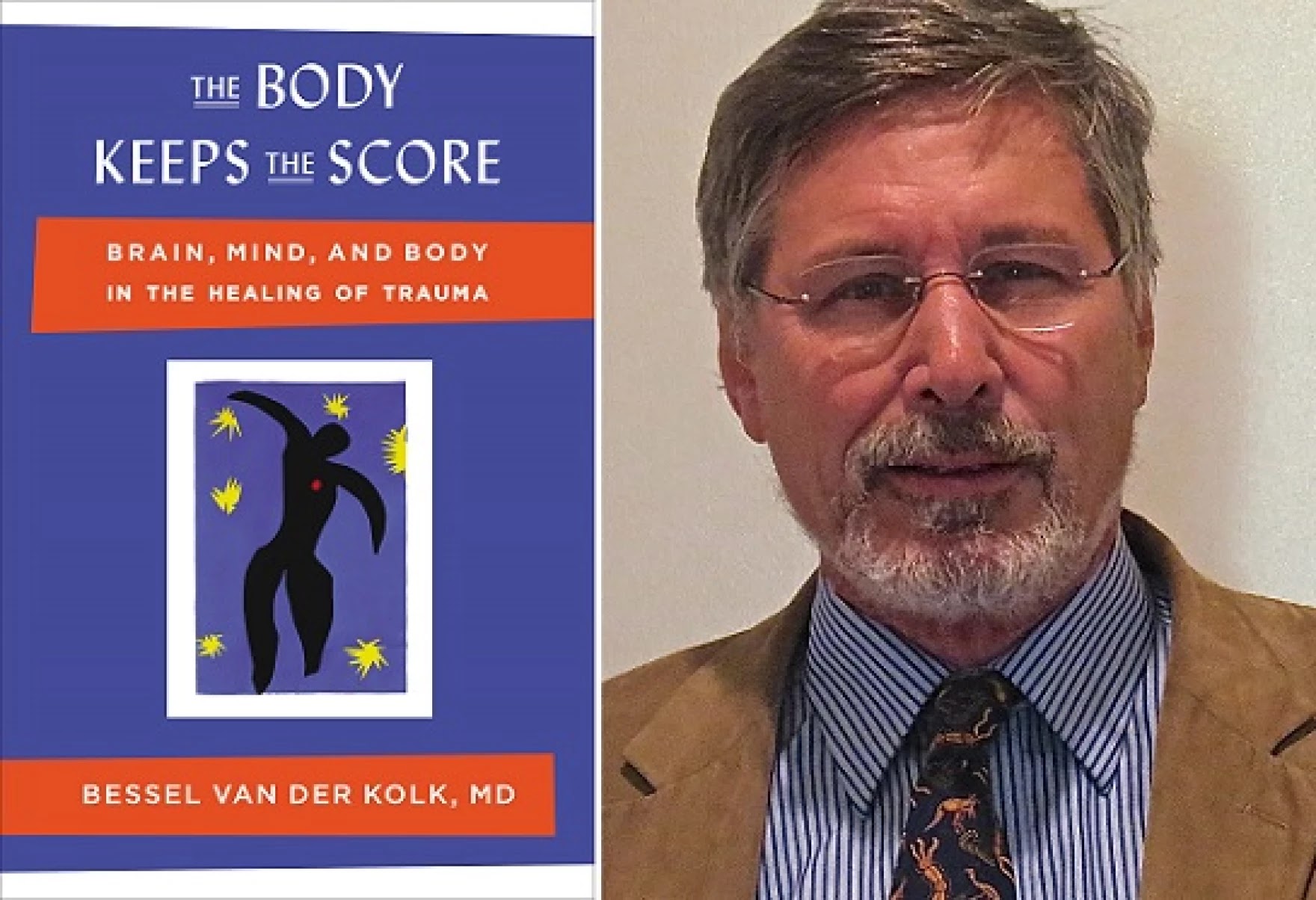
Here are a few excerpts from a book I recently read, "The Body Keeps Score: Brain, Mind, and Body in the Healing of Trauma," by Bessel Van Der Kolk.


Research from these new disciplines has revealed that trauma produces actual physiological changes, including a recalibration of the brain’s alarm system, an increase in stress hormone activity, and alterations in the system that filters relevant information from irrelevant. We now know that trauma compromises the brain area that communicates the physical, embodied feeling of being alive. These changes explain why traumatized individuals become hypervigilant to threat at the expense of spontaneously engaging in their day-to-day lives. They also help us understand why traumatized people so often keep repeating the same problems and have such trouble learning from experience. We now know that their behaviors are not the result of moral failings or signs of lack of willpower or bad character—they are caused by actual changes in the brain.


Our most surprising finding was a white spot in the left frontal lobe of the cortex, in a region called Broca’s area. In this case the change in color meant that there was a significant decrease in that part of the brain. Broca’s area is one of the speech centers of the brain, which is often affected in stroke patients when the blood supply to that region is cut off. Without a functioning Broca’s area, you cannot put your thoughts and feelings into words. Our scans showed that Broca’s area went offline whenever a flashback was triggered. In other words, we had visual proof that the effects of trauma are not necessarily different from—and can overlap with—the effects of physical lesions like strokes. All trauma is preverbal.


In 1922 the British government issued the Southborough Report, whose goal was to prevent the diagnosis of shell shock in any future wars and to undermine any more claims for compensation. It suggested the elimination of shell shock from all official nomenclature and insisted that these cases should no more be classified “as a battle casualty than sickness or disease is so regarded.” The official view was that well-trained troops, properly led, would not suffer from shell shock and that the servicemen who had succumbed to the disorder were
undisciplined and unwilling soldiers. While the political storm about the legitimacy of shell shock continued to rage for several more years, reports on how to best treat these cases disappeared from the scientific literature.

 In the United States the fate of veterans was also fraught with problems. In 1918, when they returned home from the battlefields of France and Flanders, they had been welcomed as national heroes, just as the soldiers returning from Iraq and Afghanistan are today. In 1924 Congress voted to award them a bonus of $1.25 for each day they had served overseas, but disbursement was postponed until 1945.

By 1932 the nation was in the middle of the Great Depression, and in May of that year about fifteen thousand unemployed and penniless veterans camped on the Mall in Washington DC to petition for immediate payment of their bonuses. The Senate defeated the bill to move up disbursement by a vote of sixty-two to eighteen. A month later President Hoover ordered the army to clear out the veterans’ encampment. Army chief of staff General Douglas MacArthur
commanded the troops, supported by six tanks. Major Dwight D. Eisenhower was the liaison with the Washington police, and Major George Patton was in charge of the cavalry. Soldiers with fixed bayonets charged, hurling tear gas into the crowd of veterans. The next morning the Mall was deserted and the camp was in flames. The veterans never received their pensions.


In the “normal” group key parts of the brain worked together to produce a coherent pattern of filtering, focus, and analysis. In contrast, the brain waves of traumatized subjects were more loosely coordinated and failed to come together into a coherent pattern. Specifically, they did not generate the brainwave pattern that helps people pay attention on the task at
hand by filtering out irrelevant information. In addition, the core information-processing configuration of the brain was poorly defined; the depth of the wave determines how well we are able to take in and analyze new data. This was important new information about how traumatized people process nontraumatic information that has profound implications for understanding day-to-day information processing. These brainwave patterns could explain why so many traumatized people have trouble learning from experience and fully engaging in their daily lives. Their brains are not organized to pay careful attention to what is going on in the present moment.

7.15.2024

Mid-Life Moment


Ah, the early fifties...a time for one or more of the stereotypical acts of a middle-aged man: earring, sports car, or affair. I had a middle school teacher who did earring and sports car at the same time (I didn't know him well enough to ask if he'd completed the trifecta). Realizing that there's likely less life ahead of than behind you can possess a man to shake things up, chase thrills, or otherwise add some spice. 

But there's another thing that can happen in this mid-life moment. You can realize that things are really great. And you know else is great, is being content that things are great, rather than grasping for more or being apologetic with what you do have.

I feel very, very blessed. Sure, I have regrets and envy and shoot-for-the-moon aspirations. But I realize that, as if life were one big Monte Carlo simulation, if I ran it back a million times, I'm probably living in the 1 percent of outcomes that could've transpired in my life. I am aware of that and I am deeply appreciative of that.

Contentment in mid-life does take intention, though, hence today's post. Time doesn't permit a full accounting, but as I contemplate how I feel about myself, the following happy thoughts come to mind:

1. I like the family I have assembled. There's no doubt we have our highs and lows, our joys and our sorrows. But I would not trade Amy, Jada, Aaron, or Asher for all the gold in the world. 

2. I like what I've accomplished in my career. There's more I want to do, for sure, but I'm not haunted by a sense I should've done more nor bashful to take pride in what I have done. My work life could've gone a thousand different ways throughout the years, but I don't really wish for any of those alternate realities because I'm content with the path I did take and the experiences I did have along the way.

3. I'm comfortable in my own skin, literally. I joke that I'm at the age where if I work out harder I'll injure myself, and if I ease up I'll fall out of shape, so it feels like a bit of a hamster wheel. But, that's too dour an outlook to represent how I really feel about my health and fitness. What I really feel is that things are just right. I don't want to get more ripped, nor do I want to let myself go. I'm happier with my body now than I have ever been in my life.

4. I'm comfortable in my own skin, figuratively. My teens are at the age where everything I do is, as they say, "cringe." Well, I don't care. I do all the stereotypical "dad" behavior - corny jokes, packing snacks, chatting up restaurant workers - and love every minute of it. Obviously it feels better to be liked than not. But you know what feels even better? Just being, without caring whether you are liked or not.

5. I have a good relationship with money. I don't aspire for way more, and I don't care to show off what I do have. I'm more comfortable spending it, and just as happy to retain many frugal habits. 

6. I have a good relationship with golf. I no longer apologize to my playing partners that I'm terrible, not because I'm not terrible but because I know that even if I play bad I'm not going to hold them up. It's taken just as much energy to work on my mental game as the physical aspects, but I'm in a good place in terms of celebrating the good shots and not cursing at myself over the bad ones.

Perhaps a mid-life crisis is still looming for me. But for now, I'm feeling the opposite of what often drives men to mid-life crisis responses. Rather than shame, envy, or covetousness, I feel grateful. And, if it makes any sense, I feel grateful to feel grateful. Meaning that I recognize I have it good, and I recognize that gratitude is the appropriate response to that, and I recognize that it is good that I am feeling that appropriate response. Life is good, at this moment.

7.10.2024

Too Short for a Blog Post, Too Long for a Tweet 440


Here are a few excerpts from a book I recently read, "Thicker Than Water: A Memoir," by Kerry Washington.


Why was it that weekends at Nana Jackson’s felt like a world apart? Maybe because, dressed in old ball gowns, I traveled with the sun patch across the floor of the suburban New Jersey neocolonial and soaked in more light and luxe than my parents’ West Philadelphia apartment could ever offer. Delight and time, the wide-armed, fragrant mimosa to climb in summer, the fireplace to stoke in winter, and choices all the day long—“whatever your little heart desires.” 


Yes, yes, yes, I knew that I was being spoiled, that word that obsessed black grown-ups, and even kids. What could be worse than to be spoiled, ruined by indulgence, incapable of withstanding hardship as we had done and would do in future? We were brought up by hand as surely as Pip in Great Expectations, and much prouder of it than he. “You spoiled!” could get you a corrective beatdown. Fast. Besides, everybody needed to respect authority, learn limits, and above all, to know that older people valued you, that they loved your undeserving black behind enough to bring you back from wrong to right. I knew myself to be a wimp, a failure in the toughness category, which was why I went insane with terror at the sound of my mother coming for me, or my father reaching for the threatened, though seldom used, belt. If a kid down the street got a beating—and in our cheek-by-jowl row houses we heard each one—I’d be good for a month! 

So, believe you me, as my mother would say before administering some firm guidance by hand, I knew good and well that my whole Nana deal was off-the-charts spoiling. Which was why, with peers, I kept it to myself. What happened in West Collingswood stayed in West Collingswood. Nana’s weekend abundance did not feel unconditional, by any means. Our contract was that I would “occupy myself” while she got things done, and then she’d spoil me. But the time alone felt more like Sabbath, as if God visited me occasionally in those sun patches and let me curl up to Its presence.


And yet this person who provided kindness and delight to my sister and me was at the same time the woman of whom my father, her only child, once said, “She never loved me.” As I moved into adulthood, Nana showed me more sides of herself, enough so that I understood, even as I grieved, why she and my father, who had seemed inseparable, had stopped speaking. What was love among them or us? Had it ever been real? 

I’m writing to find out. I want not to forget, but to recall, how the end of my grandmother’s life pulled into focus her hundred and one years on earth, the part we shared as well as the earlier life she brought with her into ours. I want to keep company with other families who have lived through and are living in the intense and demanding time of hospice. We underwent a mash-up of fear and mortality—she was dying, then living again, then dying—and memory and love. 

Nana hinged angrily between ancestors coming close and descendants she was about to leave. Her story required me to learn more about the father she’d referred to with pride, but only glancingly, and it took me into the halls of Congress and the Jim Crow South he brought his family north to escape. It brought me closer to her son, my father, and drove me farther from him. Death up close and personal meant my husband and daughters, and my sister and her family, riding with Nana in family sidecars through her alt-universe of dreams and visions, and our own, through truth and lies, business and money, and communal and racial memory.


I do not know how long they were happy together. As early as I can remember, a leitmotif of tension played through our shiny clean apartment with its thrift-store books and good nutrition. Often anger. Sometimes rage. I loved them so much, and I was afraid of them, individually and together. It felt correct and also very wrong to learn that love and fear was also how I was to feel about God.


I told myself that this would be good for our daughter Zoë, who was still in middle school when Nana came. Our older daughter, Laura, had gone to Iowa with us when we helped my father-in-law at the end of his life. I told myself that death in the context of family, age, love, and care, rather than war and violence, was a fact of life that we should share with young people, or else how could they grow into their own stewardship of life?


Nana’s bedtime ritual lasted thirty minutes, unless some particular story had to be repeated. When the environment was juuuust right, as she used to say about Goldilocks and the porridge, she smiled and burrowed happily into the bedclothes and mommy blanket. We were taking such good care of her, she liked to say, she couldn’t die.

7.08.2024

Too Short for a Blog Post, Too Long for a Tweet 439


Here are a couple of excerpts from a book I recently read, "The Loneliness Files," by Athena Dixon.


I am overwhelmingly lonely. And I cannot believe that doesn’t matter and I will not believe there are not scores of others like me. I know there are those who feel the world is always just a little too far away or a little too close—never comfortable in either situation. Those who would love to be a part of all life has to offer fully, but something just doesn’t click. Those people who crave the smallest of touches but get lost in the fear of what could go wrong, not all that could be right.


You know those stories about the solo humpback whale? She roams the ocean alone because the pitch of her call doesn’t match the others and they can’t hear her/connect with her. That’s what I feel like. Like I’m shouting into the void and my voice is getting sucked into the abyss.

7.03.2024

Losing the Match, Winning in Life


Over the weekend, 22-year-old professional golfer Akshay Bhatia valiantly battled to a 2nd place finish at the Rocket Mortgage Classic. But the news coverage focused on the short putt he missed on the final hole that cost him a chance for 1st place.

Leave aside that 2nd place in a major tournament is a great achievement, it's cruel but natural that the media and fans would harp on his costly mistake. If there's anything more memorable than coming up in the clutch with the championship on the line, it's flubbing it with the opportunity presents itself for all the glory.

To Bhatia's credit, he took the loss and the error in stride, attending the post-match interview and speaking frankly about how much it sucked to blow the short putt. Here's a link to the presser.

Sports is such a good life teacher, which is why we parents spend time and money to put our kids in them. Teamwork, hard work, playing within the rules...these are all good things to know in life that we often gain in tangible form for the first time in the context of some sport. 

I submit to you that learning how to win and lose graciously is the most important of those life lessons. In life, we will win some and we will certainly lose some. Some wins will feel better than others. Some losses will be devastating. 

Neither wins nor losses define who we are as people. Our worth is far more inherent and far greater than a win-loss record or a trophy case or a ticker tape parade.

Kudos to Bhatia, at an age when I still felt like an overgrown kid, to not only take public questions while reeling from a stinging defeat, but to speak candidly about said defeat. When I grow up, I want to be as anchored as he is.


7.01.2024

Too Short for a Blog Post, Too Long for a Tweet 438


Here are a few excerpts from a book I recently read, "Shoe Dog: A Memoir by the Creator of Nike," by Phil Knight.


The best teacher I ever had, one of the finest men I ever knew, spoke of that trail often. It’s our birthright, he’d growl. Our character, our fate—our DNA. “The cowards never started,” he’d tell me, “and the weak died along the way—that leaves us.”


At twenty-four I did have a Crazy Idea, and somehow, despite being dizzy with existential angst, and fears about the future, and doubts about myself, as all young men and women in their midtwenties are, I did decide that the world is made up of crazy ideas. History is one long processional of crazy ideas. The things I loved most—books, sports, democracy, free enterprise—started as crazy ideas. 

For that matter, few ideas are as crazy as my favorite thing, running. It’s hard. It’s painful. It’s risky. The rewards are few and far from guaranteed. When you run around an oval track, or down an empty road, you have no real destination. At least, none that can fully justify the effort. The act itself becomes the destination. It’s not just that there’s no finish line; it’s that you define the finish line. Whatever pleasures or gains you derive from the act of running, you must find them within. It’s all in how you frame it, how you sell it to yourself. 

Every runner knows this. You run and run, mile after mile, and you never quite know why. You tell yourself that you’re running toward some goal, chasing some rush, but really you run because the alternative, stopping, scares you to death. 

So that morning in 1962 I told myself: Let everyone else call your idea crazy… just keep going. Don’t stop. Don’t even think about stopping until you get there, and don’t give much thought to where “there” is. Whatever comes, just don’t stop. 

That’s the precocious, prescient, urgent advice I managed to give myself, out of the blue, and somehow managed to take. Half a century later, I believe it’s the best advice—maybe the only advice—any of us should ever give.


Perhaps nothing ever revealed my mother’s true nature like the frequent drills she put me through. As a young girl she’d witnessed a house in her neighborhood burn to the ground; one of the people inside had been killed. So she often tied a rope to the post of my bed and made me use it to rappel out of my second-floor window. While she timed me. What must the neighbors have thought? What must I have thought? Probably this: Life is dangerous. And this: We must always be prepared. 

And this: My mother loves me.


Driving back to Portland I’d puzzle over my sudden success at selling. I’d been unable to sell encyclopedias, and I’d despised it to boot. I’d been slightly better at selling mutual funds, but I’d felt dead inside. So why was selling shoes so different? Because, I realized, it wasn’t selling. I believed in running. I believed that if people got out and ran a few miles every day, the world would be a better place, and I believed these shoes were better to run in. People, sensing my belief, wanted some of that belief for themselves. 

Belief, I decided. Belief is irresistible.


“This is—the moment,” I said. “This is the moment we’ve been waiting for. Our moment. No more selling someone else’s brand. No more working for someone else. Onitsuka has been holding us down for years. Their late deliveries, their mixed-up orders, their refusal to hear and implement our design ideas—who among us isn’t sick of dealing with all that? It’s time we faced facts: If we’re going to succeed, or fail, we should do so on our own terms, with our own ideas—our own brand. We posted two million in sales last year… none of which had anything to do with Onitsuka. That number was a testament to our ingenuity and hard work. Let’s not look at this as a crisis. Let’s look at this as our liberation. Our Independence Day.
 
“Yes, it’s going to be rough. I won’t lie to you. We’re definitely going to war, people. But we know the terrain. We know our way around Japan now. And that’s one reason I feel in my heart this is a war we can win. And if we win it, when we win it, I see great things for us on the other side of victory. We are still alive, people. We are still. Alive.”


I’d never witnessed anything quite like that race. And yet I didn’t just witness it. I took part in it. Days later I felt sore in my hams and quads. This, I decided, this is what sports are, what they can do. Like books, sports give people a sense of having lived other lives, of taking part in other people’s victories. And defeats. When sports are at their best, the spirit of the fan merges with the spirit of the athlete, and in that convergence, in that transference, is the oneness that the mystics talk about.


On New Year’s Eve, 1977, I went around my new house, putting out the lights, and I felt a kind of fissure deep within the bedrock of my existence. My life was about sports, my business was about sports, my bond with my father was about sports, and neither of my two sons wanted anything to do with sports.


I think of the countless Nike offices around the world. At each one, no matter the country, the phone number ends in 6453, which spells out Nike on the keypad. But, by pure chance, from right to left it also spells out Pre’s best time in the mile, to the tenth of a second: 3:54.6.


In one sense our campus is a topographical map of Nike’s history and growth; in another it’s a diorama of my life. In yet another sense it’s a living, breathing expression of that vital human emotion, maybe the most vital of all, after love. Gratitude. 

The youngest employees at Nike seem to have it. In abundance. They care deeply about the names on the streets and buildings, and about the bygone days. Like Matthew begging for his bedtime story, they clamor for the old tales. They crowd the conference room whenever Woodell or Johnson visits. They’ve even formed a discussion group, an informal think tank, to preserve that original sense of innovation. They call themselves The Spirit of 72, which fills my heart. 

But it’s not just the young people within the company who honor the history. I think back to July 2005. In the middle of some event, I can’t recall which, LeBron James asks for a private word. 

“Phil, can I see you a moment?” 

“Of course.” 

“When I first signed with you,” he says, “I didn’t know all that much about the history of Nike. So I’ve been studying up.” 

"Oh?” 

“You’re the founder.” 

“Well. Cofounder. Yes. It surprises a lot of people.” 

“And Nike was born in 1972.” 

“Well. Born—? Yes. I suppose.” 

“Right. So I went to my jeweler and had them find a Rolex watch from 1972.” He hands me the watch. It’s engraved: With thanks for taking a chance on me. 

As usual, I say nothing. I don’t know what to say. 

It wasn’t much of a chance. He was pretty close to a sure thing. But taking a chance on people—he’s right. You could argue that’s what it’s all been about.

Too Short for a Blog Post, Too Long for a Tweet 522

  Here are a few excerpts from a book I recently read, "Moby Dick," by Herman Melville. Again, I always go to sea as a sailor, bec...