4.27.2022

Too Short for a Blog Post, Too Long for a Tweet 328


Here is an excerpt from a book I recently read, "Surely You're Joking, Mr. Feynman: Adventures of a Curious Character," by Richard Feynman.


When I was an undergraduate at MIT I loved it. I thought it was a great place, and I wanted to go to graduate school there too, of course. But when I went to Professor Slater and told him of my intentions, he said, “We won’t let you in here.” 

I said, “What?” 

Slater asked, “Why do you think you should go to graduate school at MIT?” 

“Because MIT is the best school for science in the country.” 

“You think that?” 

“Yeah.” 

“That’s why you should go to some other school. You should find out how the rest of the world is.” 

So I decided to go to Princeton.

4.25.2022

Socially Acceptable


This article made the rounds earlier this month - ironically, by being posted on various social media platforms. There's a lot there so if it's TL;DR I'll summarize by saying it posits that the big social media companies have been complicit in the divisive, deceptive, and dumbed-down discourse that has come to define this generation. 

I'll leave for others whether this is true, and if so what if anything we as a society can do about it. Today let's focus on what we as individuals should do with social media. It is clearly a potentially dangerous presence in our lives, with the potential to ruin our health, self-esteem, relationships, and career. So we should tread carefully if at all. But what exactly does that mean?

First, let me "out" myself as being decidedly positive about Facebook, Instagram, Twitter, and the like. What a wonderful way to share your life story with others, unintrusively follow others (and very publicly offer much-deserved applause or condolences when appropriate), and even as a source for news and commentary (more on this later). Sure, as with all things, we need to practice moderation, and addiction can be real. But on net, if you gave me the choice to have it or not have it, I consider the former to be far superior to the latter.

But perhaps I am more suited than others to take the good while minimizing the bad:

* My personal faith anchors my self-worth in the divine and eternal, in ways that buffer me (not always successfully, I will admit) from the pernicious influence social media can have on our sense of body image and contentedness and inner peace.

* My background in debate and in economics gives me a healthy appreciation that there are multiple sides to every argument and that where you stand depends on where you sit. Which means that I can take in information that is contrary, false, or inflammatory without getting riled up or sucked in. Indeed, I consider it a matter of deep personal importance that I see, digest, and evaluate such material on a regular basis.

* My ambition as well as my personality is such that I do not readily default to FOMO (fear of missing out) or JOMO (joy of missing out). So I can easily choose into and out of whatever is on my feed, without feeling sorry that I was left out or got myself into deep.

Modern life is fraught, and we all have to take our precautions. Some things are not worth the risk. Others are, especially if you can mitigate the downsides. Whether or not we're getting stupider, meaner, or more divided as a society, each of us has to chart a path forward that works for them that is respectful of and beneficial to others. Social media is no different. It may seem more overwhelming, more all-encompassing, and more toxic; but all the more to take care rather than to just blindly rush in or tune out.

4.20.2022

The Gift of Friendship


A big plus of my two teens going to an elite public school is that they are making friends from a diverse pool of students from around the city, who are all smart and generally good kids. While I try to respect their boundaries, I am genuinely interested in who they socialize with, a little bit to surveil but mostly to celebrate that they have good friends and are enjoying life with them.

When I got to their age, friends became everything. First it was parents, then it was activities, and by high school it was all about my crew. I went to a high school with a graduating class of about 275, big enough for multiple overlapping cliques and small enough that you basically knew everyone. My guys went about 12 deep, and I spent many waking hours outside of school and extra-curriculars with them.

I can now appreciate how lucky I was back then. I am still in touch with more than half of them. And, by the way, more than half of them ended up in some form of ministry for at least part of their adult lives, so they were truly good and righteous and edifying brothers. My mom saw what I could not fully grasp, which is that I ran with a good squad. It’s what I hope for for all my kids, and so far they’re off to a pretty good start.

But while “dad” is a big part of my identity, let’s take a step back from that. “Friend” is a weird thing once you leave settings like high school and college. It’s harder to maintain friendships, make new friends, and enjoy friend time when you get to be my age.

But this is not a lament for the younger innocent days when a weekend seemed to extend forever in time and possibility, so long as you were with your guys. That topic is well trod so I won’t go there. What I’m interested in exploring today is how compartmentalized and fragmented the “friendship” part of my identity is at this stage in my life. Back then, I had my dudes, and sure I had other friends at school and in other places, but if you asked me about “friends” it was about my crew: late nights that stretched into the morning, coming up with stupid ideas to video ourselves doing (thankfully for our careers, none of the footage survived), and pranks that I might get in trouble with the law if I offered more detail.

“Friend” today is far more diffuse, a function both of my station in life and in how we navigate connections in an era of social media. Consider all of these categories (and I’m sure I’m forgetting some), in no particular order:

  • My old friends, from high school and college, who I was once super tight with yet no longer see on a regular basis or perhaps hardly at all. But give us five minutes and we fall right back into a level of intimacy that suggests we’ve known each other for decades. Which I guess we have, despite the geographic distance and time gap.
  • Friends who you’re closer to on social media than in real life. These are either passing acquaintances who you’ve connected to on social or people you first met via social, where the intensity of engagement on that platform makes up for the fact that you didn’t and don’t interact with them in person. I wouldn’t necessarily characterize these as less shallow, just different, and to me equally enriching.
  • Friends who you know only in person and in no other context. The opposite of the previous case, this might be neighbors, or fellow parents you see at your kids’ extra-curricular activities. Weirdly, it’s often the case you are not connected with them on social, may not know what they do for a living, and might not even know their last name.
  • Friends I’ve made at and through work or church or other activities like that. Which at some point you cross over from being acquaintance to close colleague to true friend, usually because frequency of meetings leads to letting people into the aspects of your life outside of work, and that’s when you have a real friend.

In that last category, sometimes people are lucky enough that those friends become exceptionally close. After enough heart-to-hearts, you’re graced with the sort of cherished place that was once effortless in your high school and college days. For most of us adults, that blessing is exceedingly rare, especially if you keep a busy schedule or live in a place where there is a lot of turnover (or you yourself are the one moving around).

I have chosen into a crazy schedule that does not afford much time to make friends or cultivate friendships. I enjoy what I get out of all of the categories above. I do hope that there will be a time in the not so distant future when free time is greater and opportunities are ripe for friends, both new and old. I am reminded as I vicariously enjoy my teens’ enjoyment of their friends that friendships are to be invested in and treasured.

4.18.2022

Sports-Centered

The Best Streaming Service for Sports 2022 | Reviews.org


Much of my childhood was wrapped up in sports. Whether school teams or playground, playing baseball or basketball or football took up a good deal of my free time and made up a good deal of my social circle. But the truly deep dive for me was not playing sports but watching it, and not just watching it but following it in the form of poring over box scores and memorizing stats and replaying highlights. 

Did I know the minutiae of a team's roster because I was a smart kid, or did I become a smart kid digesting such granular information? Who knows? All I know is that my brain took to sports, and so I devoted a prodigious amounts of time to consuming it.

Fast-forward to the present and it is truly unbelievable to consider just how little I follow or know. Not for lack of interest, alas it is all for lack of time and space to spare. Did I watch the game? When asked that question, I can only offer that I don't even know which game must be such a big deal that it can be referred to as "the game." Or if I am aware, then no I did not watch the game, nor did I usually have time to catch the highlights or even peripherally read about it.

As a thought experiment, I went to ESPN and tried to think about whether I could even name any players in entire sports, let alone know their stats like I once did. In basketball and football, coverage is vast enough and I do catch snippets here and there, that I could probably easily name a good 50 or more players in each league. But even in baseball, my first love, I don't think I could even do that, which my childhood self would find impossible since at that age I am certainly could regularly fit every single team's starting line-up in my head and then some.

Here's a little test: how many baseball players could you name, recognize their face, and know what team they're currently on? As for me, circa April 2022, it would only be 27:

  • Orioles - 0
  • Red Sox - 0
  • Yankees - Judge, Cole
  • Rays - 0
  • Jays - Bichette, Guerrero Jr.
  • White Sox - 0
  • Guardians - 0
  • Tigers - 0
  • Royals -Witt Jr.
  • Twins - 0
  • Astros - Altuve, Verlander
  • Angels - Ohtani, Trout
  • A's - 0
  • Mariners - 0
  • Rangers - 0
  • Braves - Acuna Jr.
  • Marlins - 0
  • Mets - deGrom, Lindor
  • Phillies - Harper, Nola, Realmuto, Wheeler, Hoskins, Schwarber
  • Nationals - Soto
  • Cubs - Suzuki
  • Reds - 0
  • Brewers - 0
  • Pirates - 0
  • Cardinals - 0
  • Diamondbacks - 0
  • Rockies - 0
  • Dodgers - Bellinger, Betts, Freeman, Kershaw
  • Padres - Machado, Tatis Jr.
  • Giants - Posey

Look at all those zeroes, too: more than half of the teams where I couldn't even name a single player! Including my once-beloved A's, although admittedly I heard they just had a fire sale so maybe even a more serious fan might have trouble following their new line-up card. But still!

Like most kids, I followed the big three sports of baseball, basketball, and football much more than anything else. But I dabbled in many other leagues back then when I had more time. Nowadays my knowledge has gotten exceedingly scarce. Off the top of my head this is who I could come up with in other sports whose names  I know and I could pick them out of a lineup:

  • All Summer Olympics events (men and women) - Biles, Ledecky
  • All Winter Olympics events (men and women) - 0
  • All soccer leagues (men and women) - Ertz, Messi, Mbappe, Morgan, Neymar, Rapinoe, Ronaldo
  • Boxing, MME, et al - 0
  • College basketball (men and women) - Banchero, Bueckers, Holmgren, Love
  • College football - Young
  • All other college sports - 0
  • Golf (men and women) - Woods
  • Hockey - 0
  • NASCAR, F1, et al - 0 
  • Tennis (men and women) - Djokovic, Nadal, Osaka, Williams
  • WNBA - Bird, Della Donne, Griner, Parker, Stewart, Taurasi 

That's 25 athletes total in the whole world! That's all I have space for in my head right now. This would have blown my childhood mind away. Someday I'll get back to combing the back of baseball cards and being able to recite entire team rosters. Just not anytime soon.

4.13.2022

Too Short for a Blog Post, Too Long for a Tweet 327

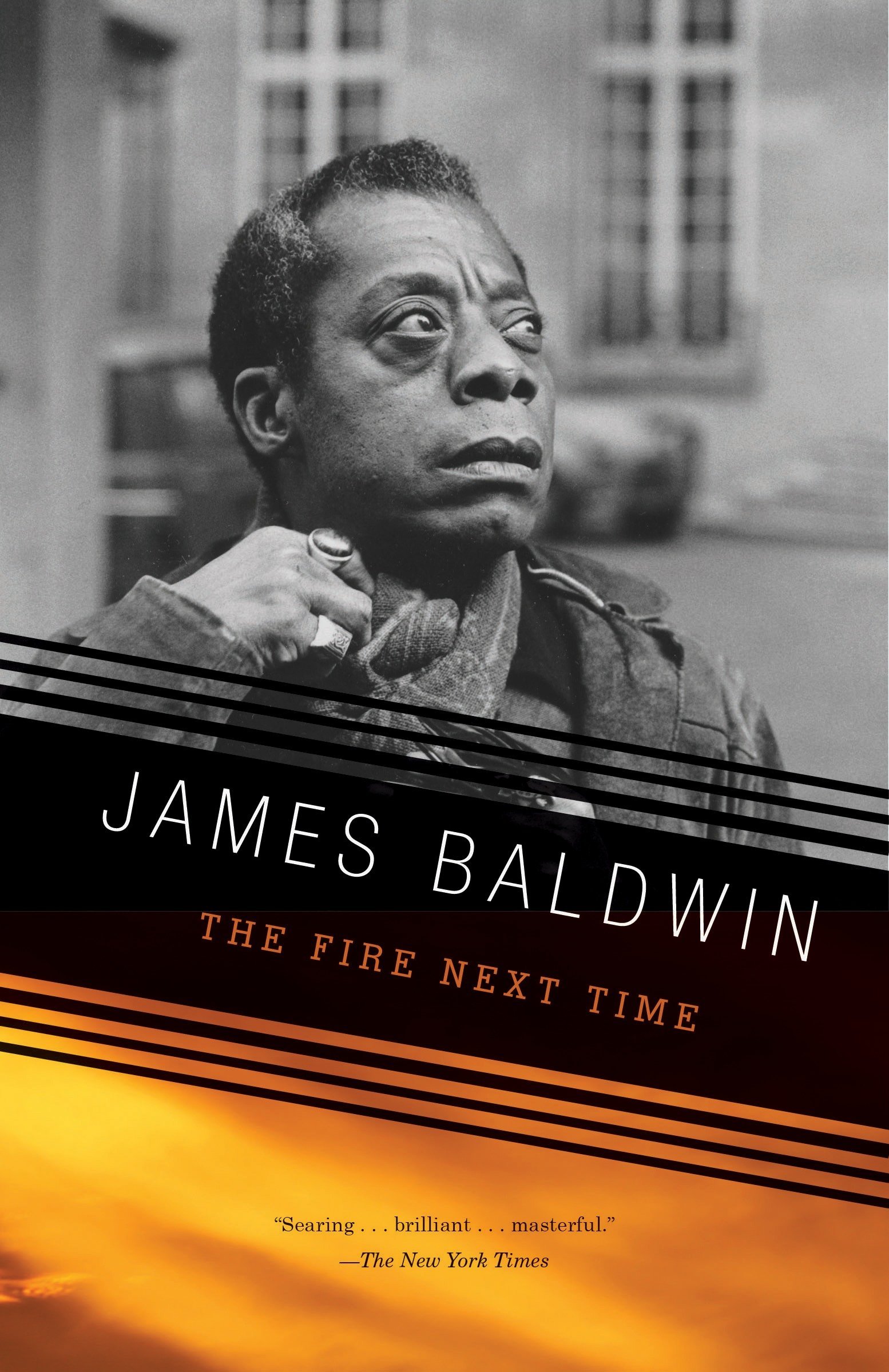
The Fire Next Time: Baldwin, James: 9780679744726: Amazon.com: Books


Here are a couple of excerpts from a book I recently read, "The Fire Next Time," by James Baldwin.


This innocent country set you down in a ghetto in which, in fact, it intended that you should perish. Let me spell out precisely what I mean by that, for the heart of the matter is here, and the root of my dispute with my country. You were born where you were born and faced the future that you faced because you were black and for no other reason. The limits of your ambition were, thus, expected to be set forever. You were born into a society which spelled out with brutal clarity, and in as many ways as possible, that you were a worthless human being. You were not expected to aspire to excellence: you were expected to make peace with mediocrity.


The American Negro is a unique creation; he has no counterpart anywhere, and no predecessors. The Muslims react to this fact by referring to the Negro as “the so-called American Negro” and substituting for the names inherited from slavery the letter “X.” It is a fact that every American Negro bears a name that originally belonged to the white man whose chattel he was. I am called Baldwin because I was either sold by my African tribe or kidnapped out of it into the hands of a white Christian named Baldwin, who forced me to kneel at the foot of the cross. I am, then, both visibly and legally the descendant of slaves in a white, Protestant country, and this is what it means to be an American Negro, this is who he is—a kidnapped pagan, who was sold like an animal and treated like one, who was once defined by the American Constitution as “three-fifths” of a man, and who, according to the Dred Scott decision, had no rights that a white man was bound to respect. And today, a hundred years after his technical emancipation, he remains—with the possible exception of the American Indian—the most despised creature in his country. Now, there is simply no possibility of a real change in the Negro’s situation without the most radical and far-reaching changes in the American political and social structure. And it is clear that white Americans are not simply unwilling to effect these changes; they are, in the main, so slothful have they become, unable even to envision them.

4.11.2022

Too Short for a Blog Post, Too Long for a Tweet 326

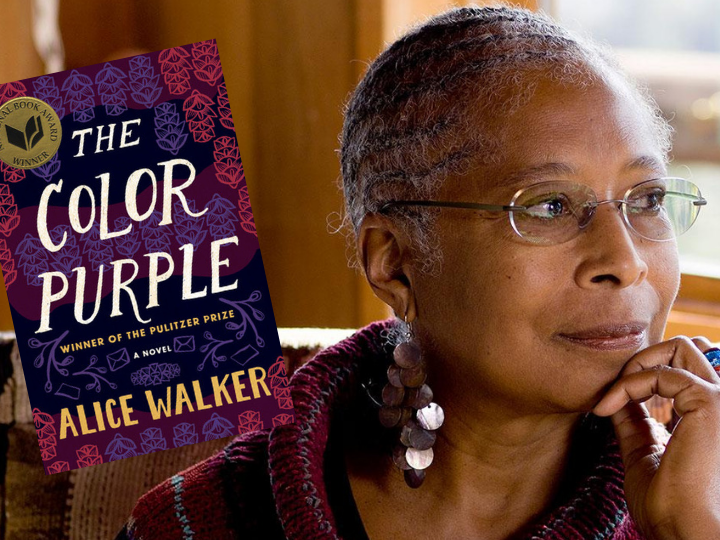
Revisiting an old classic: Alice Walker's The Color Purple


Here are a few excerpts from a book I recently read, "The Color Purple," by Alice Walker.


Dear God, I am fourteen years old. I am I have always been a good girl. Maybe you can give me a sign letting me know what is happening to me.


Don’t let them run over you, Nettie say. You got to let them know who got the upper hand. 

They got it, I say. 

But she keep on, You got to fight. You got to fight. 

But I don’t know how to fight. All I know how to do is stay alive.


I say, Write. 

She say, What? 

I say, Write. 

She say, Nothing but death can keep me from it. 

She never write.

4.06.2022

Too Short for a Blog Post, Too Long for a Tweet 325


Here are a few excerpts from a book I recently read, "ain't i a woman: black women and feminism," by bell hooks.


At a time in American history when black women in every area of the country might have joined together to demand social equality for women and a recognition of the impact of sexism on our social status, we were by and large silent. Our silence was not merely a reaction against white women liberationists or a gesture of solidarity with black male patriarchs. It was the silence of the oppressed—that profound silence engendered by resignation and acceptance of one’s lot. Contemporary black women could not join together to fight for women’s rights because we did not see “womanhood” as an important aspect of our identity. Racist, sexist socialization had conditioned us to devalue our femaleness and to regard race as the only relevant label of identification. In other words, we were asked to deny a part of ourselves—


and we did. Consequently, when the women’s movement raised the issue of sexist oppression, we argued that sexism was insignificant in light of the harsher, more brutal reality of racism. We were afraid to acknowledge that sexism could be just as oppressive as racism. We clung to the hope that liberation from racial oppression would be all that was necessary for us to be free. We were a new generation of black women who had been taught to submit, to accept sexual inferiority, and to be silent.


Usually, when people talk about the “strength” of black women they are referring to the way in which they perceive black women coping with oppression. They ignore the reality that to be strong in the face of oppression is not the same as overcoming oppression, that endurance is not to be confused with transformation.


During that time I expressed to white feminists my concern that so few black women were willing to support feminism. They responded by saying that they could understand the black woman’s refusal to involve herself in feminist struggle because she was already involved in the struggle to end racism. As I encouraged black women to become active feminists, I was told that we should not become “women’s libbers” because racism was the oppressive force in our life—not sexism. To both groups I voiced my conviction that the struggle to end racism and the struggle to end sexism were naturally intertwined, that to make them separate was to deny a basic truth of our existence, that race and sex are both immutable facets of human identity.


Scholars have argued further that by not allowing black men to assume their traditional patriarchal status, white men effectively emasculated them, reducing them to an effeminate state. Implicit in this assertion is the assumption that the worst that can happen to a man is that he be made to assume the social status of woman. To suggest that black men were de-humanized solely as a result of not being able to be patriarchs implies that the subjugation of black women was essential to the black male’s development of a positive self-concept, an idea that only served to support a sexist social order.


The popular notion that black men desire white women because they are so much more “feminine” than black women has been used to place responsibility for black male desire for white female companions onto black women. In sexist terms, if black men are rejecting black women and seeking other companions, then surely black women must be doing something wrong since men are always right. The truth is—in sexist America, where women are objectified extensions of male ego, black women have been labeled hamburger and white women prime rib. And it is white men who have created this race-sex hierarchy, not black men. Black men merely accept and support it. In fact, if white men decided at any given moment that owning a purple female was the symbol of masculine status and success, black men in competition with white men would have to try and possess a purple female. While I believe it is perfectly normal for people of different races to be sexually attracted to one another, I do not think that black men who confess to loving white women and hating black women or vice versa are simply expressing personal preferences free of culturally socialized biases.


The extent to which black men absorbed this ideology was made evident in the 60s black liberation movement. Black male leaders of the movement made the liberation of black people from racist oppression synonymous with their gaining the right to assume the role of patriarch, of sexist oppressor. By allowing white men to dictate the terms by which they would define black liberation, black men chose to endorse sexist exploitation and oppression of black women. And in so doing they were compromised. They were not liberated from the system but liberated to serve the system. The movement ended and the system had not changed; it was no less racist or sexist.

4.04.2022

Too Short for a Blog Post, Too Long for a Tweet 324

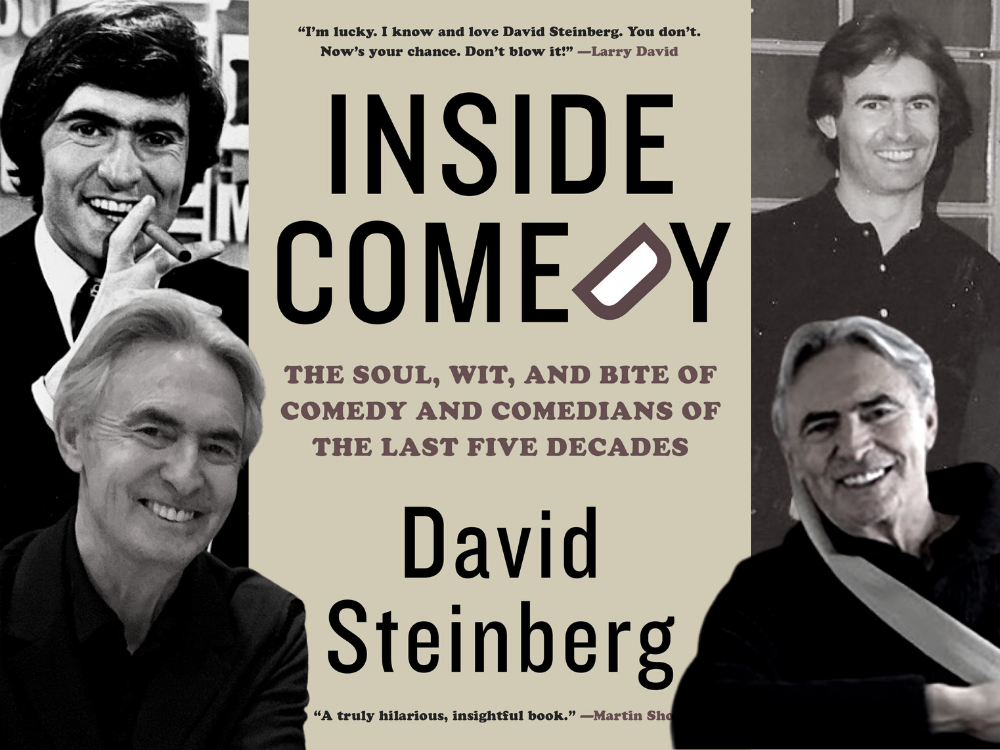
David Steinberg Talks About His New Book With Comedian John Poveromo - The  Interrobang 


Here are a couple of excerpts from a book I recently read, "Inside Comedy: The Soul, Wit, and Bite of Comedy and Comedians of the Last Five Decades," by David Steinberg.


Insecurity combined with arrogance is good DNA for a comedian.


So most of this you sort of know. Comedic icon. Woman ahead of her time. You might identify her comedy as “slapstick”—but that kind of sells it short. Her comedy, which was choreographed down to the smallest gesture, came from Lucy [Lucille Ball] being one of the most disciplined comedians I ever knew. Her comedy seemed free-form, and in a way it was, because it was spontaneous, unafraid, and just truly funny, except that she knew every single thing she was doing, and all those gestures—hands and legs and especially those captivating eyes, the hair tossing, and the uproarious laughs—were rehearsed and written to the tiniest detail.

Too Short for a Blog Post, Too Long for a Tweet 522

  Here are a few excerpts from a book I recently read, "Moby Dick," by Herman Melville. Again, I always go to sea as a sailor, bec...