9.28.2021

Too Short for a Blog Post, Too Long for a Tweet 294


Here are a few excerpts from a book I recently read, "The Signal and the Noise: Why So Many Predictions Fail-but Some Don't," by Nate Silver.


We have to view technology as what it always has been—a tool for the betterment of the human condition. We should neither worship at the altar of technology nor be frightened by it. Nobody has yet designed, and perhaps no one ever will, a computer that thinks like a human being. But computers are themselves a reflection of human progress and human ingenuity: it is not really “artificial” intelligence if a human designed the artifice.”


Poker is sometimes perceived to be a highly psychological game, a battle of wills in which opponents seek to make perfect reads on one another by staring into one another’s souls, looking for “tells” that reliably betray the con­tents of the other hands. There is a little bit of this in poker, especially at the higher limits, but not nearly as much as you’d think. (The psychological factors in poker come mostly in the form of self-discipline.) Instead, poker is an incred­ibly mathematical game that depends on making probabilistic judgments amid uncertainty, the same skills that are important in any type of prediction.


Play well and win; play well and lose; play badly and lose; play badly and win: every poker player has experienced each of these conditions so many times over that they know there is a difference between process and results.

9.24.2021

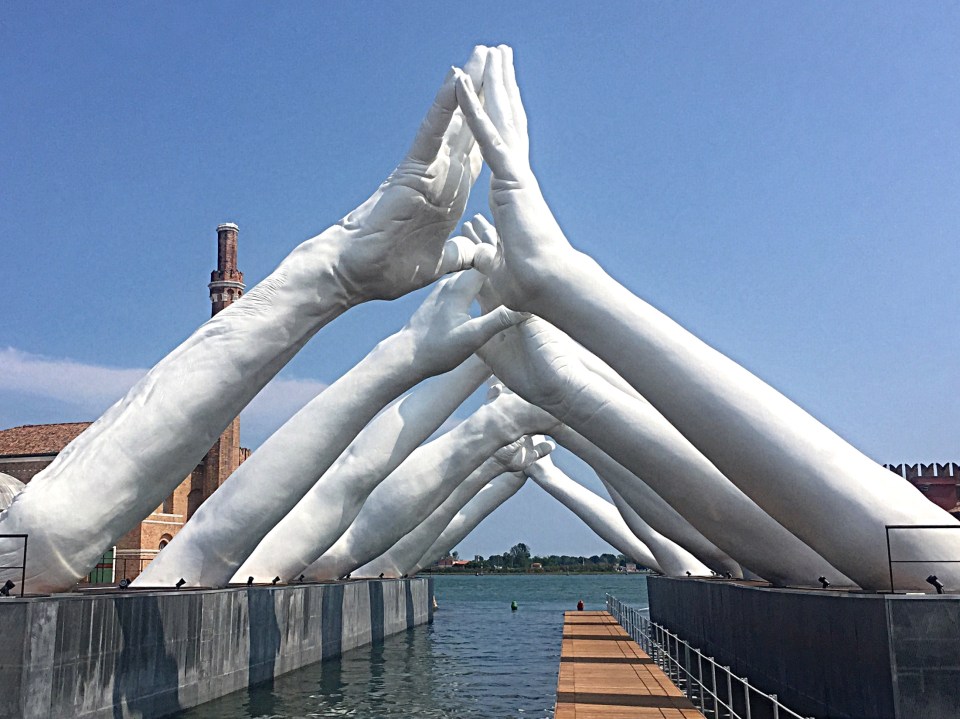
Building Bridges or Enjoying Islands


In my early twenties, as a church youth group volunteer, I attended a conference devoted to the subject of racial reconciliation.   The speaker said something I'll never forget ( which I believe is a quote from a famous social justice activist but I cannot place the attribution so please let me know if you know who first said this): "The thing about being a bridge is that sometimes it means you get walked on by both sides."  

In today's particularly divisive times, this saying rings all the more true.  To extend the analogy, nobody wants to go to the other side, even if only to observe let alone to enjoy, so a bridge is seen as unnecessary.  Even worse, some people don't event want anyone on the other side to come to them, so not only is a bridge unnecessary, it is dangerous or infuriating.  

It seems I've had the good fortune of connecting with people who are dear to me, who in addition to being people who I hold in the highest regard, understand that they serve as a bridge and carry out that role with distinction and devotion.  It is clear from their confiding to me that they don't do it for the accolades, for if there are any such good words they are disproportionate to the good that my colleagues are doing to earn them, and are easily outnumbered by not so pleasant words and worse from folks who neither appreciate nor want such a bridge in their lives.

I am all for absolutes.  The notion of absolutes is essential to the faith I hold.  Parenting is complex, with a million small and big decisions and all sorts of nuances that complicate those decisions, but it all hangs together only if you believe in some non-negotiables.  And while my job involves seeing all the greys in a world that desires black-and-white simplicity, doing my job successfully requires unwavering commitment to a path that can substantiate why what my client is asking for makes sense and yields good outcomes.

But it is because of the importance of absolutes that we must have bridges in our lives, cross them often, and serve as them if they don't exist.  Without bridges, we all hold partial truths, where fuller truths are forged by expanding your perspective through observation, experience, and even changing your mind.  Things that can only happen with bridges.

My colleagues who are bridges tell me that they know they are being impactful when they get a little "walked on" by both sides.  That tells them they are literally bridging the gap, is that the evidence of that is a little friction.  What a commendable commitment, to bear pain in order to help others cross over.  

You may argue that the other side is evil, ignorant, or both.  Or that you're tired of having to help someone who refuses to be helped.  I respect that.  But I maintain my belief that the world, and each participant in it, is better off for having bridges that allow us to cross over and engage.  And I'm thankful for the bridges in my life who have fulfilled that critical role with a sense of purpose that supersedes the discomfort they encounter in fulfilling that role.

9.20.2021

Too Short for a Blog Post, Too Long for a Tweet 293


Here are a  few excerpts from a book I recently read, "The Millionaire Next Door: The Surprising Secrets of America's Wealthy," by Thomas J. Stanley.

The large majority of these millionaires are not the descendants of the Rockefellers or Vanderbilts. More than 80 percent are ordinary people who have accumulated their wealth in one generation. They did it slowly, steadily, without signing a multimillion-dollar contract with the Yankees, without winning the lottery, without becoming the next Mick Jagger. Windfalls make great headlines, but such occurrences are rare.


Also note that the average American buyer of a new motor vehicle paid more than $21,000 for his most recent acquisition. This is not much less than the $24,800 paid by millionaires! Moreover, not all of these millionaires purchased new vehicles. How many indicated that their most recent vehicles was used? Nearly 37 percent. In addition, many millionaires indicated that they traded down recently - that is, purchased lower-priced vehicles than they had before.


Most of these millionaires' high-income, low-net worth neighbors make the wrong assumption.  They assume that by focusing their energy on generating high incomes, they will automatically become affluent. They play excellent offense in this regard. Most are positioned in the top 3 or 4 percent of the income distribution for all U.S. households. Most look the part of millionaires. Yet they are not wealthy. They play lousy defense. They conclude, “It’s much easier in America to earn a lot than it is to accumulate wealth.” Why is that the case?  Because we are a consumption-oriented society.

9.13.2021

Too Short for a Blog Post, Too Long for a Tweet 292


Here are a few excerpts from a book I recently read, "Grand Pursuit: The Story of Economic Genius," by Sylvia Nasar.


The notion that man was a creature of his circumstance, and that those circumstances were not predetermined, immutable, or utterly impervious to human intervention is one of the most radical discoveries of all time. It called into question the existential truth that humanity was subject to the dictates of God and nature. It implied that, given new tools, humanity was ready to take charge of its own destiny. It called for cheer and activity rather than pessimism and resignation. Before 1870 economics was mostly about what you couldn’t do. After 1870, it was mostly about what you could do.


“The juxtaposition between rich and poor was rendered more striking by the exodus of the middle classes to the suburbs and, more significant in the minds of observers, by the universal assumption that London presaged the future of society.  Poverty was not, of course, new. But in the country, hunger, cold, disease, and ignorance appeared to be the work of nature. In the great capital of the world, misery seemed to be man-made, almost gratuitous. Wasn’t the means to relieve it at hand, actually visible in the form of elegant mansions, elaborate gowns, handsome carriages, and lavish entertainments?’


Again and again, the president hammered home his theme that the foundation for a lasting peace was not the defeat of gangster regimes alone but also rising living standards. Economic security was the supreme responsibility of democratic governments. He was determined not to repeat the mistakes made by the Allies after World War I that he believed had helped lead to the current war. Maintaining that the welfare state and individual liberty went hand in hand, he warned, “People who are hungry and out of a job are the stuff of which dictatorships are made.” Roosevelt called on Congress to support postwar economic recovery at home and abroad. His major domestic proposal was for an “economic Bill of Rights”—namely, government guarantees of jobs, health care, and old age pensions.

9.10.2021

#AspiringRealEstateMogul


It started so innocently, with a simple thought, in 2018.  Given the big gap between Aaron and Asher, by 2029 our two older kids would have graduated from college while Asher was still in the nest just starting high school.  At that point, we didn't necessarily need a six-bedroom house.  And the advantage of our present location allowing our kids to go to a great neighborhood K-8 school would at that point no longer be relevant to our family situation.  If so, why couldn't we downsize by then?  And, if we wanted to downsize to a smaller place by then, why couldn't we hunt for that place now, giving ourselves a huge negotiating advantage since we had such a long buying window?

That window opened wide open over a year later, when we found the unit on the Delaware River that we closed on in June 2019.  I learned a lot during that initial house-hunting period, thanks to a great realtor who not only showed me all sorts of places all over the city but oriented me on how to process both facts and emotions when making such a huge financial and life decision.  

I now carry that approach to a seemingly constant hunt in many more locations that just our current city.  I'm embarrassed to say just how many alerts I have on Redfin.  And for privacy's sake I'll withhold naming which cities those alerts are tracking.  But each one represents an idea, however practical or fanciful, which if a place comes up that checks all the boxes, it's worth a good hard look to see if it's worth going for it.  

Earlier this year, we were lucky to find a great place in the Adams Morgan neighborhood of Washington DC, which will hopefully generate revenue continuously and be available for us to live in here and there when we're older.  Other places may open up and drive our future life and travel plans, and vice versa: the desires of our senior years may come into greater focus, or any number of life events may drive us to one place or another, which will then dictate our real estate wishes and actions.

I use the hashtag #AspiringRealEstateMogul, but it's mostly in jest. Despite my tracking comps in so many different places, I don't really aspire to own an empire, retire early on its income, or crave the status that comes from sharing pics of opulent living rooms and sunset views.  My constantly combing Redfin is all in fun but is mostly practical.  It will fall well short of an empire, but I do seek a portfolio, which will accomplish a number of things for me.  In no particular order:

1. Financial.  The numbers have to work, meaning that I have to cover annual costs with rental revenue while minimizing downside exposure in case everything goes to rot and I'll left holding the bill.  That means being very judicious about how much I pay for something, which in many markets means sticking to small places and avoiding the highest-premium locations.

2. Fun.  In real estate, it's location location location.  The trick for my searches is that the location has to work for us, and since I have to think about rental revenue it has to work for others too.  To cite one example, I've spoken often of the allure of Miami.  There are certain things Amy and I like about Miami, and other things that aren't as important.  But if we buy a place there, we have to be mindful of both where we'd want to be and the site has to work for others whose preferences are different than ours.

3. Flexibility.  Who knows when we'll retire and to where, as well as where we or our kids might need a place temporarily or indefinitely.  A portfolio of places expands our choices and is therefore worth the headache of hunting for them.  

For the amount of time I spend on all this, it can neither be described as fanciful or practical.  If I wanted to be more fanciful, I wouldn't be so grounded in where I'm hunting and what I'm seeking.  And if I wanted to be more practical, I'd realize I'm spending way more time than is justified by the resulting pay-off.  Call it all an innocent pastime, with reasonable aspirations and practical implications.  Just help me by taking away my phone if I start to go too far down the rabbit hole.

9.07.2021

How I Spend My 10 Hours a Day of Free Time


The pandemic, while upending the whole world and mine, has strangely lent a bit of consistency to my schedule.  Pre-COVID, I didn't travel all the time, but enough that it kept me on my toes to have to figure out how to handle my work and home responsibilities in light of going away for hours or days at a time.  And during those days, while I wasn't out every night, increasingly I'd have a work meeting here and a networking event there that scrambled my ability to be home for dinner and bedtime.

Far less nowadays.  So there's less that knocks me off my usual routine and responsibilities.  The one main piece, which everything is built around, is our littlest one.  Asher is usually up by 6am, and I leave him after bedtime stories a little after 8pm.  In between, those 14 hours are basically either work, Asher, chores, or errands, and quite often more than one of those things at a time, and quite often at breakneck speed.  Seven days a week, almost without fail.  (Kid-free long weekends with Amy once or twice a year have been a blessed relief.)

Of course, that leaves 10 hours a day, and in fact nowadays it is somewhat unusual (not totally rare) for one or more of those other things to intrude on the 8pm to 6am time block.  So the time is all mine, and for posterity's sake I would like to record how I spend that discretionary time at this exact stage in my life.  

I wish I could say I used seven or even eight of those hours to sleep, but honestly it's closer to six, generally from 10pm to 4am.  Which breaks the remaining free time into two two-hour blocks: the two hours before I go to bed, and the two hours after I wake up.  

The evening block, I'll have to walk back a previous statement, in that work more often than not is the first use of that ten-hour span, since I almost always have to catch up on work emails I didn't get to during the day, which on most days means just about all emails.  And/or I knock out random chores around the house that piled up during the day or over multiple days, like picking up from the whirlwind that is each day in our household and tending to a semi-urgent house fix.  But at a certain point, I have to call it a night even if there are still emails to answer and house detritus to put away, and I'm usually pretty good about setting that limit (except of course on days when an impending work deadline means I can't).  

That leaves a good chunk of time, usually about an hour, for leisure reading.  This year I've been back into physical books, which I read before I get into bed, but when I read on my phone I read in bed.  Either way, reading is such a rejuvenating activity for this introvert who has had to act extroverted all day: a quiet and private moment to be completely in my own head in the form of a good read.  What a luxurious feeling.  Then it's light's out, metaphorically and literally, and I rarely take more than a few minutes to completely conk out.

The morning hours are similarly serene albeit packed.  Prayer, Bible, email, social, blogging, planning out the day - all in the stillness of the morning before anyone else is up.  The only stressful things might be if a landlord-related issue has come up that I have to figure out how to deal with.  Other than that, it's all good.

I wish I had more time for those things, but soon enough it's out of the house for another necessary self-care habit, which is exercise.  I alternate between running and then ending up at the Y to lift, or biking to the Y to lift and then swim.  Then it's back home to shower, put on clothes, and await the start of my Asher shift as indicated by him calling for me to come help him with his clothes.  Once I hear that howl, I know it's another 14 hours until I get my next 10-hour block of free time again.  Such is my life right now.

9.03.2021

Too Short for a Blog Post, Too Long for a Tweet 291


Here are a few excerpts from a book I recently read, "A Promised Land," by Barack Obama.


I still like writing things out in longhand, finding that a computer gives even my roughest drafts too smooth a gloss and lends half-baked thoughts the mask of tidiness.


Once, I took her to an organizing workshop I was conducting, a favor for a friend who ran a community center on the South Side. The participants were mostly single moms, some on welfare, few with any marketable skills. I asked them to describe their world as it was and as they would like it to be. It was a simple exercise I’d done many times, a way for people to bridge the reality of their communities and their lives with the things they could conceivably change. Afterward, as we were walking to the car, Michelle laced her arm through mine and said she’d been touched by my easy rapport with the women. 

“You gave them hope.” 

“They need more than hope,” I said. I tried to explain to her the conflict that I was feeling: between working for change within the system and pushing against it; wanting to lead but wanting to empower people to make change for themselves; wanting to be in politics but not of it. 

Michelle looked at me. “The world as it is, and the world as it should be,” she said softly. 

“Something like that.”


“I won’t be wading in early,” Teddy [Kennedy] said. “Too many friends. But I can tell you this, Barack. The power to inspire is rare. Moments like this are rare. You think you may not be ready, that you’ll do it at a more convenient time. But you don’t choose the time. The time chooses you. Either you seize what may turn out to be the only chance you have, or you decide you’re willing to live with the knowledge that the chance has passed you by.”


In many ways, my problems were a direct outgrowth of the buzz we’d generated, and the expectations that came with it. As Axe explained, most presidential campaigns by necessity start small—“Off-Broadway,” he called it; small crowds, small venues, covered by local networks and small papers, where the candidate and his or her team could test lines, smooth out kinks, commit a pratfall, or work through a bout of stage fright without attracting much notice. We didn’t have that luxury. From day one, it felt like the middle of Times Square, and under the glare of the spotlight my inexperience showed.


“Your problem,” he said, “is you keep trying to answer the question.” 

“Isn’t that the point?” I said. 

“No, Barack,” Axe said, “that is not the point. The point is to get your message across. What are your values? What are your priorities? That’s what people care about. Look, half the time the moderator is just using the question to try to trip you up. Your job is to avoid the trap they’ve set. Take whatever question they give you, give ’em a quick line to make it seem like you answered it…and then talk about what you want to talk about.” 

“That’s bullshit,” I said. 

“Exactly,” he said.


Among the principals, only Joe Biden voiced his misgivings. He had traveled to Kabul on my behalf during the transition, and what he saw and heard on the trip—particularly during a contentious meeting with Karzai—had convinced him that we needed to rethink our entire approach to Afghanistan. I knew Joe also still felt burned by having supported the Iraq invasion years earlier. Whatever the mix of reasons, he saw Afghanistan as a dangerous quagmire and urged me to delay a deployment, suggesting it would be easier to put troops in once we had a clear strategy as opposed to trying to pull troops out after we’d made a mess with a bad one.


With these thoughts came another: Was that unity of effort, that sense of common purpose, possible only when the goal involved killing a terrorist? The question nagged at me. For all the pride and satisfaction I took in the success of our mission in Abbottabad, the truth was that I hadn’t felt the same exuberance as I had on the night the healthcare bill passed. I found myself imagining what America might look like if we could rally the country so that our government brought the same level of expertise and determination to educating our children or housing the homeless as it had to getting bin Laden; if we could apply the same persistence and resources to reducing poverty or curbing greenhouse gases or making sure every family had access to decent day care. I knew that even my own staff would dismiss these notions as utopian. And the fact that this was the case, the fact that we could no longer imagine uniting the country around anything other than thwarting attacks and defeating external enemies, I took as a measure of how far my presidency still fell short of what I wanted it to be—and how much work I had left to do.

Too Short for a Blog Post, Too Long for a Tweet 522

  Here are a few excerpts from a book I recently read, "Moby Dick," by Herman Melville. Again, I always go to sea as a sailor, bec...