2.27.2020

Too Short for a Blog Post, Too Long for a Tweet 218

Here is an excerpt from an article I recently read, "Algae Caviar, Anyone? What We'll Eat on the Journey to Mars," in Wired Magazine:


Food was an important part of daily life in orbit—and the subject of many of their fondest memories. Coleman said their entire crew, even the cosmonauts, made a point of eating together on Friday evenings. “It's how you become a team,” she explained, to Coblentz's evident delight. Coleman opened her laptop and flipped through her favorite photographs from her time aboard the ISS. One showed the kitchen table, which juts out into the corridor between the Russian and American segments of the station. “Everybody had bruises on each hip—one for the way there, one for the way back,” she said. “It was exactly in the way.” Of course, there's no real reason for a table to be horizontal in space; packets of food and drink have to be secured using Velcro either way, so it could just as easily lie parallel to the wall. But Coleman said there was an unspoken resistance to such an arrangement. The crew needed a place to “hang around,” she explained, and to ask that most human of questions: “How was your day?”

2.21.2020

Recommended Reads, 36th in a Quarterly Series

Stuff I'd recommend from the past three months:


The Triumph of Christianity: How a Forbidden Religion Swept the World (Ehrman).  Fascinating historical context for how a mustard seed of a faith sprouted into the global phenomenon it is today.

Tiger Woods (Benedict).  A telling window into his meteoric rise, once-in-a-generation talent/ethic, and scandalous downfall.

The Matriarch: Barbara Bush and the Making of an American Dynasty (Page). She would blanch at the labels "matriarch" and "dynasty," but was not shy about the influence she could and did wield.

The Future of Humanity: Terraforming Mars, Interstellar Travel, Immortality, and Our Destiny Beyond Earth (Kaku).  A fun read, if only to imagine a thousand years in the future if we were able to achieve any of this.

Blueprint: The Evolutionary Origins of a Good Society (Christakis).  "Survival of the fittest" connotes a cut-throat path to survival, so it's interesting to see where cooperation and kindness helped mankind move forward.

Shortest Way Home: One Mayor's Challenge and a Model for America's Future (Buttigieg).  Is a small-town mayor's mindset the right approach for the most powerful job in the world?


2.20.2020

Too Short for a Blog Post, Too Long for a Tweet 217

Here are a few excerpts from a book I recently read, "Shortest Way Home: One Mayor's Challenge and a Model for America's Future," by Pete Buttigieg.


And, famously, there were the pocket watches. The South Bend Watch Company made products so precise that at trade shows they would freeze a watch in a big block of ice where you could see it still ticking faithfully inside. An old advertisement has an image of the watch in the ice, but for me the most remarkable thing in the ad is something else that strikes you as you read its big letters: 

SOUTH BEND WATCH FROZEN IN ICE, KEEPS PERFECT TIME SOUTH BEND WATCH CO. SOUTH BEND, IND. 

How powerful the very name of our city must have been. All you had to do to sell watches—besides put one in a block of ice—was name them after our city. That was enough, by way of branding: the name “South Bend” was a byword for workmanship and precision.


2.18.2020

Too Short for a Blog Post, Too Long for a Tweet 216

Here are a few excerpts from a book I recently read, "Blueprint: The Evolutionary Origins of a Good Society," by Nicolas Christakis.


I first began to think about this issue—of how humans are fundamentally similar—almost twenty-five years ago during my work as a hospice doctor. Death and grief unite us like nothing else. The universality of death and of our responses to it cannot help but impress human similarity upon any observer. I have held the hands of countless dying people from all sorts of backgrounds, and I do not think I have met a single person who didn’t share the exact same aspirations at the end of life: to make amends for mistakes, to be close to loved ones, to tell one’s story to someone who will listen, and to die free of pain. The desire for social connection and interpersonal understanding is so deep that it is with each of us until the end.


An analogy is helpful. If you take a group of carbon atoms and connect them one way, you get graphite, which is soft and dark and perfect for making pencils. But if you take the same carbon atoms and connect them another way, you get diamond, which is hard and clear and great for making jewelry. There are two key ideas here. First, these properties of softness and darkness and hardness and clearness are not properties of the carbon atoms; they are properties of the collection of carbon atoms. Second, the properties depend on how the carbon atoms are connected. It’s the same with social groups. This phenomenon, of wholes having properties not present in the separate parts, is known as emergence, and the properties are known as emergent properties. Connect people in one way, and they are good to one another. Connect them in another way, and they are not.


Human social behaviors have much more in common with early hominids and our primate cousins than with insects, of course. But we have seen that mammals other than primates—such as elephants and whales—have independently evolved similar ways of having friends, for example. If such widely separated species have converged on the same basic way of being social, it demonstrates that this pattern of traits—the social suite—is adaptive and coherent.


The independent evolution of eyes has occurred at least fifty times across different species—as if seeing the light is inevitable. Given these eerie convergences, some scientists speak of “the ghost of teleology looking over their shoulders,” hinting at the question of whether there might be some purpose to evolution or maybe even a designer. Scientifically speaking, evolution unfolds thoughtlessly, simply in response to chance mutations and environmental vagaries. But convergent evolution sheds light on other deep ontological questions, such as why animals have intelligence at all. Paleontologist Simon Conway Morris argues that, once life appears, it will inevitably culminate in intelligence, as it is a necessary solution to any environment. As Morris notes, “Big brains may be, in at least some circumstances, adaptively useful, and are not just fickle blips of happenstance that in due course sink back into the chaotic welter of the evolutionary crucible.” Intelligence—perhaps even consciousness—must eventually arise.


Prum and other ornithologists argue that male bower-building behavior and female choosiness coevolved to prevent sexual coercion. For instance, avenue-type bowers allow the females to come close to males to inspect their thoughtful collages, colorful décor, and elaborate dances without risking a forced copulation, because the female can enter the tunnel from one end and observe the male through the front opening, but the male cannot approach her unless she lets him. If he were to enter the back of the bower, she could simply fly out the front. Male birds might have evolved to construct their bowers this way because females preferred to avoid sexual coercion, physical harassment, and forced copulation. Female choosiness redirected male behavior to create beautiful structures that suited the females better. These evolutionary events resemble the food-provisioning strategy we saw in chapters 5 and 6, in which the males of our species, instead of becoming bigger and more aggressive, might have evolved to use nonviolent acts of love and kindness to attract females.

2.13.2020

Too Short for a Blog Post, Too Long for a Tweet 215

Here are a few excerpts from a book I recently read, "All You Can Ever Know," by Nicole Chung.


This is a question that, on one hand, makes little sense—many birth parents make the decision to place their children for adoption before they even give birth, and at any rate, what can a newborn or a small child do, or not do, to offend her parents? Yet when I talk with other adoptees, particularly those who don’t know their birth families, I know I’m not the only one who’s ever wondered: Was it something we did, as babies, as little children? Something we lacked that made us easier, possible, to part with? 

I’ve never met an adoptee who has blamed their birth parents for their decision—we’re more likely to turn inward, looking for fault. Growing up, I know it would have made an enormous difference to know that I was worthy of memory. That they still cared. That the adoption was not my fault. And although I learned of my birth mother’s overture years too late to respond, I did feel better just knowing she had tried. I wasn’t forgotten. Not entirely.


2.11.2020

Too Short for a Blog Post, Too Long for a Tweet 214

Here are a few excerpts from a book I recently read, "The Future of Humanity: Terraforming Mars, Interstellar Travel, Immortality, and Our Destiny Beyond Earth," by Michio Kaku.


If our ancestors in the last century would think of us today as magicians and sorcerers, then how might we view our descendants a century from now? 

More than likely, we would consider our descendants to be like Greek gods. Like Mercury, they would be able to soar into space to visit nearby planets. Like Venus, they would have perfect immortal bodies. Like Apollo, they would have unlimited access to the sun’s energy. Like Zeus, they would be able to issue mental commands and have their wishes come true. And they would be able to conjure up mythical animals like Pegasus using genetic engineering. 

In other words, our destiny is to become the gods that we once feared and worshipped. Science will give us the means by which we can shape the universe in our image. The question is whether we will have the wisdom of Solomon to accompany this vast celestial power.


2.10.2020

Commit Some Fouls


I forget where I read this, because it’s probably been numerous people who have said it, but I want to use a sports analogy to make a point about but in basketball, you get six fouls before being disqualified (five in college hoops).  Fouls are bad because, in addition to running the risk of having to sit out the rest of the game, they put the other team on the free throw line, break up the flow of the game, and depending on the severity of the foul can rile up the other team and the home crowd.  So it’s never good to seek out chances to hack at opponents (unless they’re Shaq, but that’s another story). 

2.07.2020

Too Short for a Blog Post, Too Long for a Tweet 213

Here are some excerpts from a book I recently read, "The Matriarch: Barbara Bush and the Making of an American Dynasty," by Susan Page.


Barbara Bush was both warm and tough, simultaneously grandmother and enforcer. She was organized and disciplined, focused and flexible. She built sprawling networks of friends and easily socialized with strangers, from foreign ambassadors at state dinners to factory workers on the campaign trail. She wasn’t flummoxed by abrupt changes in circumstance and locale, from Rye (New York) to Odessa (Texas) to Beijing (China) to the White House. She was comfortable with risk. Those are the qualities of successful CEOs and military commanders and political strategists and, indeed, presidents. Had she been born a generation or two later, when opportunities were exploding for women in America, she might well have been any of those.

2.04.2020

Too Short for a Blog Post, Too Long for a Tweet 212

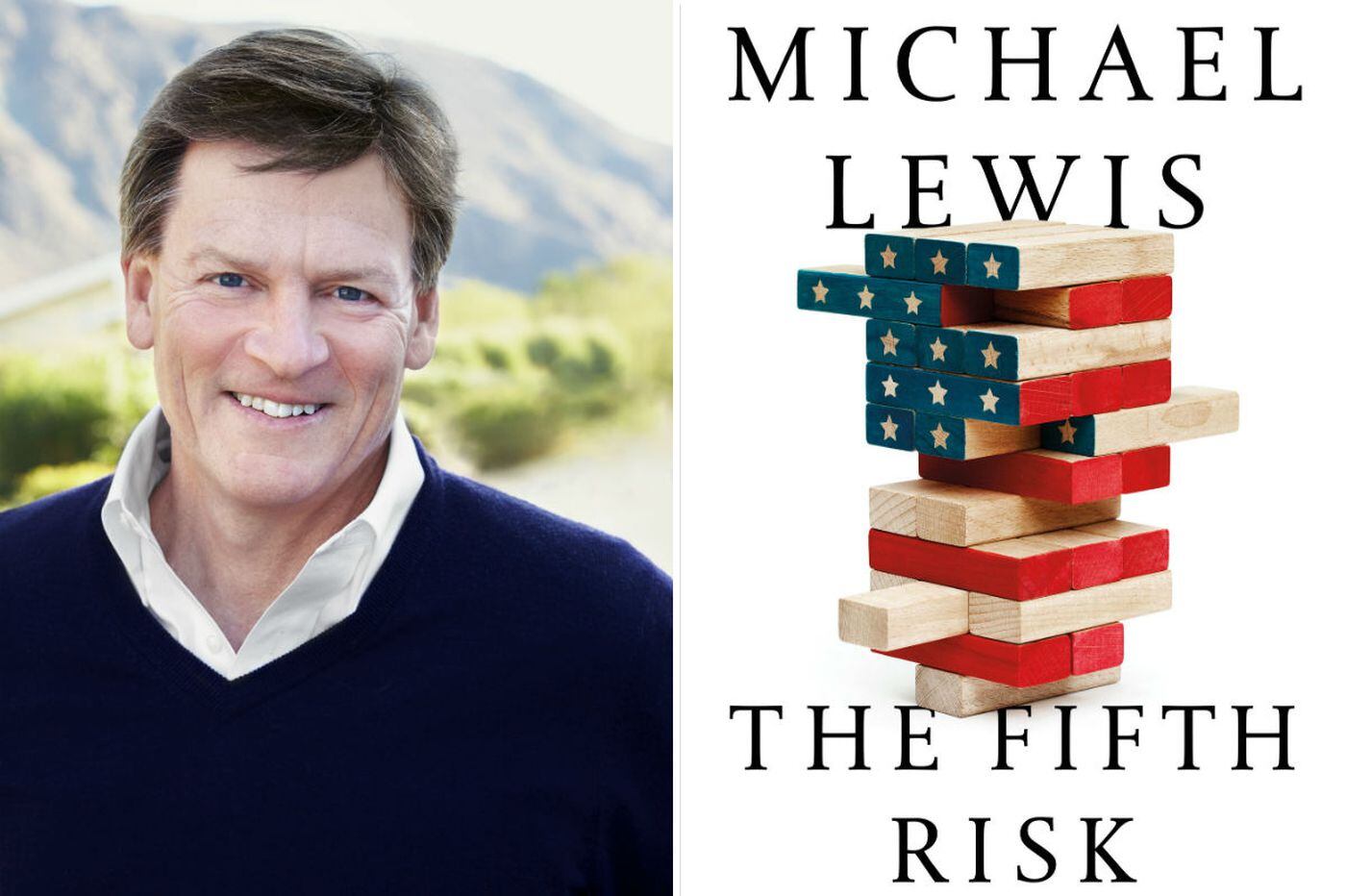
Image result for michael lewis fifth risk"Here are a few excerpts from a book I recently read, "The Fifth Risk," by Michael Lewis.


There were hundreds of fantastically important success stories in the United States government. They just never got told. Max knew an astonishing number of them. He’d detected a pattern: a surprising number of the people responsible for them were first-generation Americans who had come from places without well-functioning governments. People who had lived without government were more likely to find meaning in it. On the other hand, people who had never experienced a collapsed state were slow to appreciate a state that had not yet collapsed. That was maybe Max’s biggest challenge: explaining the value of this enterprise at the center of a democratic society to people who either took it for granted or imagined it as a pernicious force in their lives over which they had no control. He’d explain that the federal government provided services that the private sector couldn’t or wouldn’t: medical care for veterans, air traffic control, national highways, food safety guidelines. He’d explain that the federal government was an engine of opportunity: millions of American children, for instance, would have found it even harder than they did to make the most of their lives without the basic nutrition supplied by the federal government. When all else failed, he’d explain the many places the U.S. government stood between Americans and the things that might kill them. “The basic role of government is to keep us safe,” he’d say.


Too Short for a Blog Post, Too Long for a Tweet 522

  Here are a few excerpts from a book I recently read, "Moby Dick," by Herman Melville. Again, I always go to sea as a sailor, bec...