10.30.2019

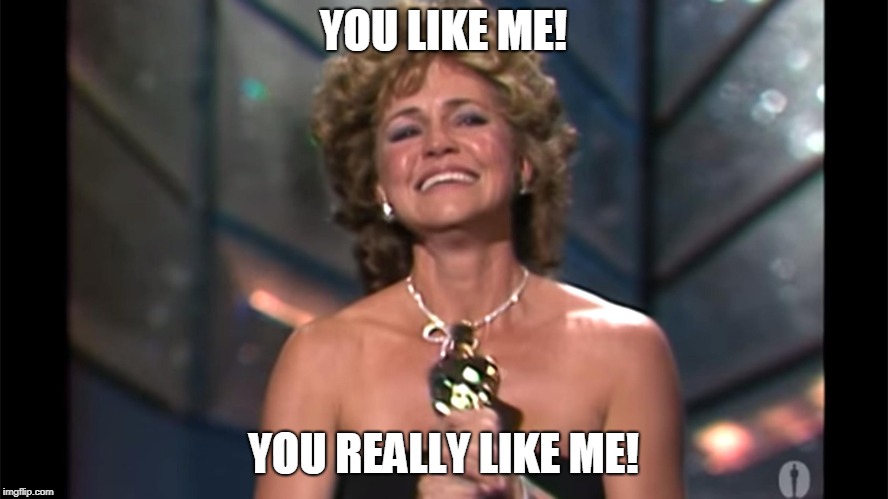
He Loves Me, He Really Really Loves Me

Image result for you like me you really like me memeAmy and I had a funny exchange the other day.  Asher was absolutely inhaling dinner, all items made by Amy the day before.  I told him he ought to be saying thank you to his mommy for all the delicious food, and then I sidled up to her myself and said with tongue firmly in cheek, "Because I don't really love Mommy, I'm just nice to her because she makes me stuff!"  I know, even in jest it was a mean thing to say.  Without skipping a beat, she said something (with her tongue also in cheek) that made me love her all the more: "Well I don't care, because you're so good to me, so if it's all because I cook you stuff, then fine by me!"

Of course, Amy and I love each other, deeply.  And that love is independent of the fact that she makes me stuff and is smoking hot and does nice things for me and is smoking hot and have I mentioned that she's smoking hot?  It's loving to tell someone that they look good and that you appreciate the nice things they do for you.  But it's also loving to love someone independent of any way they look or anything they do for you.  Indeed, love in its purest form is unconditional like that.

10.28.2019

Too Short for a Blog Post, Too Long for a Tweet 199

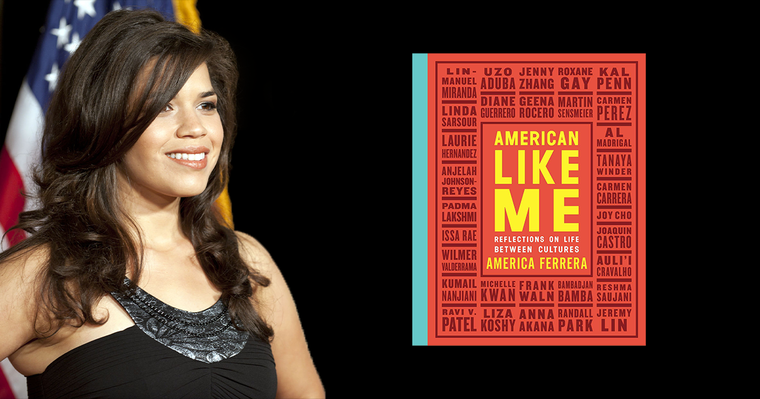
Image result for an Like ME: Reflections on Life Between Cultures america ferreraHere are a few excerpts from a book I recently read, "American Like M: Reflections on Life Between Cultures," by America Ferrera.


“Actually, I like to go by my middle name, Georgina, so could you please make a note of it on the roster-paper-thingy? Thanks.” When he has the gall to ask me why, I say something like “It’s just easier,” instead of what I really want to say, which is “Because people like you make my name unbearably embarrassing! And another thing, I’m not actually named after the United States of America! I’m named after my mother, who was born and raised in Honduras. That’s in Central America, in case you’ve never heard of it, also part of the Americas. And if you must know, she was born on an obscure holiday called Día de Las Américas, which not even people in Honduras know that much about, but my grandfather was a librarian and knew weird shit like that. This is a holiday that celebrates all the Americas—South, Central, and North, not just the United States of. So, my name has nothing to do with amber waves of grain, purple mountains, the US flag, or your very narrow definition of the word. It’s my mother’s name and a word that also relates to other countries, like the one my parents come from. So please refrain from limiting the meaning of my name, erasing my family’s history, and making me the least popular kid in class all in one fell swoop. Just call me Georgina, please?” I don’t say any of this, to anyone. Ever. It would be impolite, or worse, unpatriotic. And as I said before, I love my country in the most unironic and earnest way anyone can love anything. 

I know just how lucky I am to be an American because every time I complain about too much homework my mother reminds me that in Honduras I’d be working to help support the family, so I’d better thank my lucky stars that she sacrificed everything she had so that my malcriadaI self and my five siblings could one day have too much homework. It’s a perspective that has me embracing Little League baseball, the Fourth of July, and ABC’s TGIF lineup of wholesome American family comedies with more fervor than most. I feel more American than Balki Bartokomous, the Winslows, and the Tanners combined, and I believe that one day I will grow up to look like Aunt Becky from Full House and then Frank Sinatra will ask me to rerecord “I’ve Got You Under My Skin” as a duet with him because I know all the words better than my siblings. 

So I let it slide when people respond to my name with “Wow, your parents must be very patriotic. Where are they ACTUALLY from?” This is a refrain I hear often and one that will take me a couple of decades to unpack for all its implications and assumptions. I learn to go along with the casting of my parents as the poor immigrants yearning to breathe free, who made it to the promised land and decided to name their American daughter after the soil that would fulfill all their dreams. After all, it is a beautiful and endearing tale. Only later do I learn to bristle and push back against this incomplete narrative. A narrative which manages to erase my parents’ history, true experience, and claim to the name America long before they had a US-born child. Never mind that they’d already had a US-born child before me and named her Jennifer. Which is both a much more American name than mine and one I would kill to have on the first day of every school year.

10.24.2019

About Time

Image result for looking at my wristwatchJust so you know, today's post is one part "here are some productivity hacks" and three parts "documenting my crazy life so I can read about it fondly decades from now."  Proceed.


10.22.2019

Does Truth Even Matter Anymore


We all know and lament that we are in an era of fake news, deep fakes, and a general breakdown in the trustworthiness of sources that ought to be worthy of our trust: institutions, media, elected officials.  This is a terrible development for our society and our well-being, that truth has become so scarce and so hard to tease out of all of the noise.

Yet we must also accept our own responsibility in the matter.  The fact of the matter is that, all along, we have chosen to believe what we want to believe.  The power of narrative has always been there, and the only reason we cling to it all the more now is not necessarily because we have gotten more tribal or more cynical or more deceptive.  Rather, it is that our world has become noisier and busier.  Which makes us crave simplicity in the form of “truths” that are easy to agree with and feel good to support, regardless of whether they are borne out in the data.

10.18.2019

Not “Both Sides” But “What Works”

It is characteristic of the current tone of our national conversation that if you pick any issues, more likely than not there isn’t much engagement and compromise, polarized as we are to vilify opposing viewpoints and echo-chamber our way to feeling more strongly about our own positions.  Yet I am sympathetic to how irritating a “both sides” perspective can come off on issues of great import: how can one possibly be moderate on an issue that warrants strong condemnation and reform? 


Perhaps you will find today’s post similarly irritating, but hear me out.  Rather than “both sides,” I’m interested in “what works.”  And I want more of that to be elevated, so that we can actually solve problems, rather than scoring political points or puffing ourselves up.


10.15.2019

Blessed are the Pacesetters

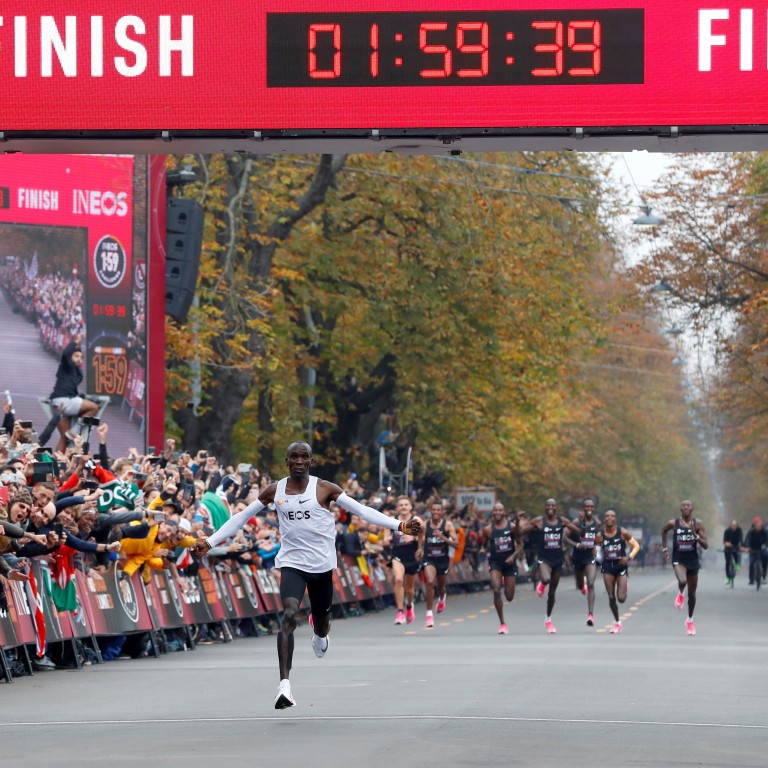
Image result for eliud kipchoge finish lineLook at this picture.  It is a triumphant one, of Kenyan runner Eliud Kipchoge finishing a marathon in under 2 hours (1:59:40 to be exact).  It isn't allowed to be a world record because he employed a rotating cast of pacesetters who kept him on record pace and drafted the head wind away from him the whole race.  But it is still an amazing achievement, for which he is rightly being praised around the world.

But about those pacesetters.  Take another look at the picture.  When the finish line neared, they hung back and let Kipchoge have the glory to himself.  They pumped their fists in celebration, for his accomplishment and their role in it.  Eliud Kipchoge had broken a seemingly unbreakable barrier, and they were literally in the front row to be able to watch it.  And they exulted in it all.

As Americans, we are conditioned to gun for #1.  No kid in his basement or bedroom dreams of sitting on the bench while the winning touchdown is scored or the walk-off home run is hit.  In the picture, we all want to be Kipchoge.  But there are many more pacesetters, seven in the picture.  And apparently 36 total, who took turns in precise formation and speed to aid Kipchoge in his historic achievement.

In life, we may have the opportunity to be the lead dog, arms held high in triumph.  But much more often, we are a pacesetter, with an important role to play in a great accomplishment.  If given the chance, may we play our part to perfection.  And when the finish line is in sight, may we pump our fists and revel in the great thing we were able to see and participate in. 

To further inspire you, here is a video of the final stretch. 


10.14.2019

Lazy Linking, 226th in an Occasional Series

Stuff I liked lately on the Internets:


226.1 These crocheted food items are so cute @thisiscolossal bit.ly/2M6aJs3

226.2 Population turnover has made that quintessential urban neighborhood, the West Village, a sterile and almost suburban place @nybooks bit.ly/2IKmEd3

226.3 #UnlikeAgholor hero meets the kids he saved and their dad = so pure, so Philly @alexholleyfox29 bit.ly/33u87Kx

226.4 Trade w/China is so beneficial to low-income households by lowering prices in categories that cater to them @cepr_org bit.ly/33n4J3L

226.5 Fancy that: diversifying higher ed happens when you diversify at the top position @chronicle bit.ly/35m4zf3


10.11.2019

Work is More Than the Work


One of the things I like about where I work, that is important for me to both model and encourage with our staff, is that we are civically involved.  Of course I would argue that just about all of our work, even as a for-profit business, has as an important audience and outcome that the public is educated on key issues.  But outside of our work, almost all of us do something else: sit on a board, volunteer in the community, participate in protests and other advocacy efforts.  To my delight, it’s become an important part of our reputation as a firm and our culture as an office. 

Cultivating this is borne of a desire to give people outlets in and outside of work to be their true selves, in terms of investing time and effort in things that matter to them.  But, because almost all we do is in the public realm, this sort of engagement makes people better at what they do.  And why is that?  Because what we do requires that we understand the kinds of things that can only be learned by participating: how does stuff really get done in the real world, what people are really thinking and doing on the issues, and what their stated (and hidden) motivations are.

10.10.2019

Too Short for a Blog Post, Too Long for a Tweet 198

Here is an excerpt from a book I recently read, "The Personality Brokers: The Strange History of Myers-Briggs and the Birth of Personality Testing," by Merve Emre:

When Chauncey invited Isabel to present her work to his all-male staff in the winter of 1957, neither she nor he could have anticipated the ridicule that would await her upon her arrival in Princeton. She came with her hair up, her glasses on, and one sleeve rolled up, wearing a sling from a recent operation she had undergone to remove a suspicious lump in her arm—an early sign of the metastatic cancer that was to kill her over two decades later. The invitation from ETS was “just manna from heaven,” she told a friend. “I thought it dropped from the skies.” The staff looked her up and looked her down. She was wearing her blue nylon dress, dotted with pink flowers, and awkward but functional shoes. After determining her age (somewhere in the midfifties, they guessed) and hearing about her various occupations (mystery writer, housewife, inventor, entrepreneur), they could not bring themselves even to feign enthusiasm for her ideas. 

She was unperturbed by the coolness of their reception. The second-guessing of her abilities was nothing new to her. The only man whose opinion mattered was Chauncey, for he controlled ETS’s research agenda and its purse strings. With the same breathless, thrilling voice she had once deployed when she spoke about the secret to a good mystery novel or the key to a successful marriage, she enthralled Chauncey with the story of how she and Katharine had dedicated their lives to adapting Jung’s type theory; how their calling had overridden all other personal and professional goals; how, like a modern-day Lewis and Clark, she and her family had traversed the United States to spread the gospel of type. Whatever she lacked in statistical training or theoretical rigor, she made up for with the ardency of her storytelling.

10.07.2019

Lazy Linking, 225th in an Occasional Series

Stuff I liked lately on the Internets:

225.1 The next killer e-reader app is...Instagram? @fastcompany bit.ly/2o7Qkcv

225.2 Is the future of US sports arenas more engagement/integration with their immediate neighborhoods? @sbnation bit.ly/2IopWCl
 
225.3 This intrepid reporter's 2 hr underground jaunt from Gallery to Comcast Center is the most on-brand Philly thing you'll read all week @billypenn bit.ly/31OKgEJ

225.4 Parking requirements turn a site that can support lots of affordable housing into one w/fewer units all very unaffordable @sightline bit.ly/2MdJ7jr


225.5 Nothing to see here, just China prepping tracks for trains w/max speed of 1000km/hr (that would be like NYC-LA in 4 1/2 hrs) @asiatimesonline bit.ly/2OngfIc

10.04.2019

It’s Costly to be Poor

Growing up in an upper-middle-class suburban neighborhood in California, I did not have much direct contact with poverty.  I heard and absorbed negative perceptions about poor people: that they were lazy, dangerous, and to be avoided.  Even the more charitable thoughts were just that: a form of charity, to be done on a drop-in basis, from on high, and from a place of advantage and superiority. 


One of the great things about living in a city is the ability to interact, both shallowly and deeply, with people from all walks of life.  I regret that all too often I can and still do cocoon myself with others like me, because my privilege affords me this choice.   But I have also made intentional choices to counteract this impulse, and have been thoroughly blessed as a result.


10.02.2019

What Am I Working On

Image result for single office light on late at nightAs has become my custom every three months, here's what I'm working on now at work. I won't repeat anything from last time that I happen to still be working on, and for confidentiality's sake I have to blur some of the details for some of these studies.

* Estimating the effect of a suburban commercial development project on the township's revenues and expenditures 

* Doing a national comparative analysis of business locations for life sciences activity

* Updating economic impact numbers for four higher education institutions in four different cities

* Articulating the economic, community, and social impact of a proposed commercial development in an economically challenged part of a big city

* Determining the availability of minority and women owned businesses in specific spending categories for a large public sector entity

* An economic impact brief for a small Christian college

Too Short for a Blog Post, Too Long for a Tweet 522

  Here are a few excerpts from a book I recently read, "Moby Dick," by Herman Melville. Again, I always go to sea as a sailor, bec...