8.29.2019

Too Short for a Blog Post, Too Long for a Tweet 195

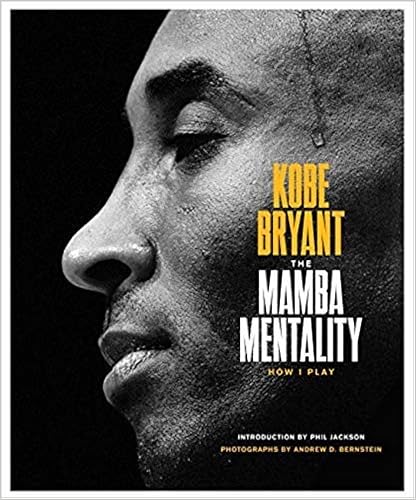
Here are two excerpts from a book I recently read, "Mamba Mentality: How I Play," by Kobe Bryant.


When it came to basketball, I had no fear.  What I mean by that is: if I wanted to implement something new into my game, I’d see it and try incorporating it immediately. I wasn’t scared of missing, looking bad, or being embarrassed. That’s because I always kept the end result, the long game, in my mind. I always focused on the fact that I had to try something to get it, and once I got it, I’d have another tool in my arsenal. If the price was a lot of work and a few missed shots, I was OK with that.


I always felt like if I started my day early, I could train more each day. If I started at 11, I’d get in a few hours, rest for four hours, and then get back to the gym around 5 to 7. But if I started at 5 AM and went until 7, I could go again from 11 until 2 and 6 until 8. By starting earlier, I set myself up for an extra workout each day. Over the course of a summer, that’s a lot of extra hours in the gym. 

At the same time, starting early helped me balance basketball and life. When my kids woke up in the morning I was there, and they wouldn’t even know I had just finished at the gym. At night, I’d be able to put them to bed, then go work out again during my own time, not theirs. 

I wasn’t willing to sacrifice my game, but I also wasn’t willing to sacrifice my family time. So I decided to sacrifice sleep, and that was that.

8.26.2019

Too Short for a Blog Post, Too Long for a Tweet 194

Related imageHere are a few excerpts from a book I recently read, "Robin," by Dave Itzkoff.


No one knows quite how to describe what they have just seen, and the precise words will elude them for months to come. Sure, it was a comedy routine, but the performer didn’t tell identifiable jokes with setups and punch lines. He wasn’t a monologist or a put-down man, an impressionist or a close observer of quotidian detail. He was more like an illusionist, and his magic trick was making you see what he wanted you to see—the act and not the artist delivering it. Behind all the artifice, all the accents and characters, all the blurs of motion and flashes of energy, there was just a lone man facing the crowd, who decided which levers to pull and which buttons to press, which voices and facades to put on, how much to reveal and how much to keep hidden. 

But who was he? Except for that one stray moment when he had spoken a few tentative words in his surprisingly stately voice and then metamorphosed into a French undersea explorer, Robin had never let the audience see his true self. Some part of him would be present in every role and stand-up set he would play over the next thirty-five years, but in their totality these things did not add up to him. The real Robin was a modest, almost inconspicuous man, who never fully believed he was worthy of the monumental fame, adulation, and accomplishments he would achieve. He shared the authentic person at his core with considerable reluctance, but he also felt obliged to give a sliver of himself to anyone he encountered even fleetingly. It wounded him deeply to think that he had denied a memorable Robin Williams experience to anyone who wanted it, yet the people who spent years by his side were left to feel that he had kept some fundamental part of himself concealed, even from them. 

Everyone felt as if they knew him, even if they did not always admire the work he did. Millions of people loved him for his generosity of spirit, his quickness of mind, and the hopefulness he inspired. Some lost their affection for him in later years, as the quality of his work declined, even as they held out hope that he’d find the thing—the project, the character, the spark—that had made him great before, as great as he was when he first burst into the cultural consciousness. And when he was gone, we all wished we’d had him just a little bit longer.


8.22.2019

Too Short for a Blog Post, Too Long for a Tweet 193

Image result for Perfectionists winchesterHere are a few excerpts from a book I recently read, "The Perfectionists: How Precision Engineers Created the Modern World," by Simon Winchester.


Precision, in other words, is an absolute essential for keeping the unforgiving tyranny of a production line going. As far as a handmade car is concerned, though, upfront precision is quite optional. It is a need that could be attended to during the hand-making process, as the process itself never depends (at least, not in the Silver Ghost days) upon every component’s being precise from the commencement of manufacturing. The irony remains: a Rolls-Royce is so costly and exclusive and has enjoyed for so long a reputation of peerless creation and impeccable performance, but it does not require absolute precision at all stages of its making. A Model T Ford, however (or, indeed, any modern car, now made by robots rather than human beings, by Chaplinesque figures staring glassy-eyed at the endlessly flowing river of parts), requires precision as an absolute essential. Without it, the car doesn’t get made.


8.20.2019

Too Short for a Blog Post, Too Long for a Tweet 192

Here are a few excerpts from a long-form article I recently read, "What is Amazon," by Zach Kanter.


With every seller that signed up for Amazon Marketplace, Walmart’s prized vendor selection machine became more and more of a liability. Here was an entire organization optimized towards one constraint – shelf space – and that constraint had been almost completely removed overnight. Even if Walmart had recognized this immediately, it would have been an enormous ship to steer – and, in the meantime, Amazon’s SKU aggregation juggernaut was running an unbound search for customer value nationwide, while Walmart’s army of finely-tuned retailer gatekeepers was still running a bounded search in local geographies. The effects began to compound, and Amazon’s ecommerce growth accelerated further.
 

8.14.2019

Recommended Reads, 34th in a Quarterly Series

Stuff I read recently that I'd recommend:


Origin Story: A Big History of Everything (Christian).  I'm a big fan of "grand theory" books, and this one had me stroking my chin with deep contemplation.

Natural Causes: An Epidemic of Wellness, the Certainty of Dying, and Killing Ourselves to Live Longer (Ehrenreich).  Turning our usual sense of how health care works on its head.  

The Sun Does Shine: How I Found Life and Freedom on Death Row (Hinton).  In light of the national discussion we're having on criminal justice, this was an absolute eye-opener.

The New Jim Crow: Mass Incarceration in the Age of Colorblindness (Alexander).  Deeply provoking in drawing parallels between slavery, Jim Crow, and modern America.

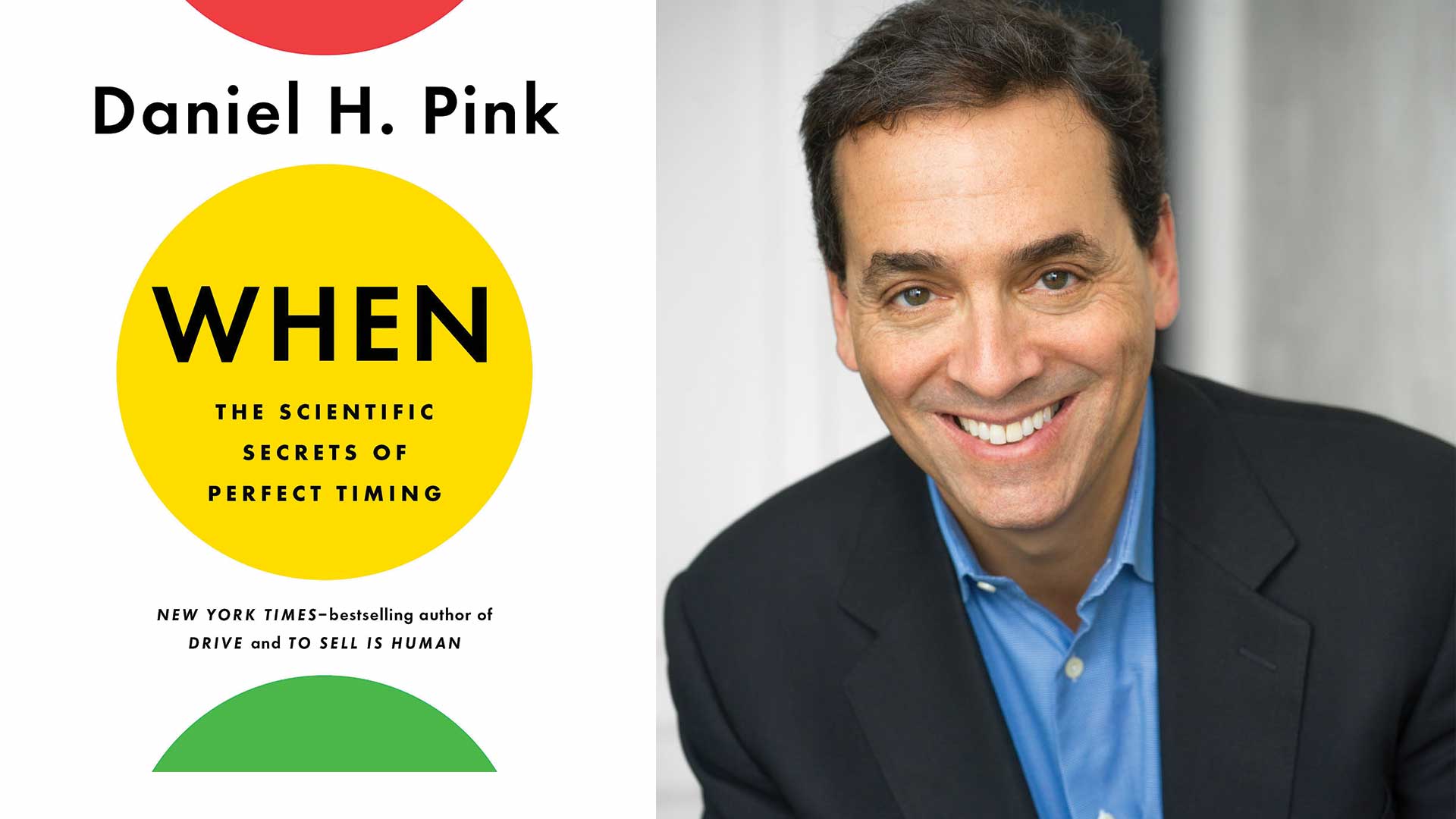
When: The Scientific Secrets of Perfect Timing (Pink).  It turns out that the way forward is less about "what" and more about "when."

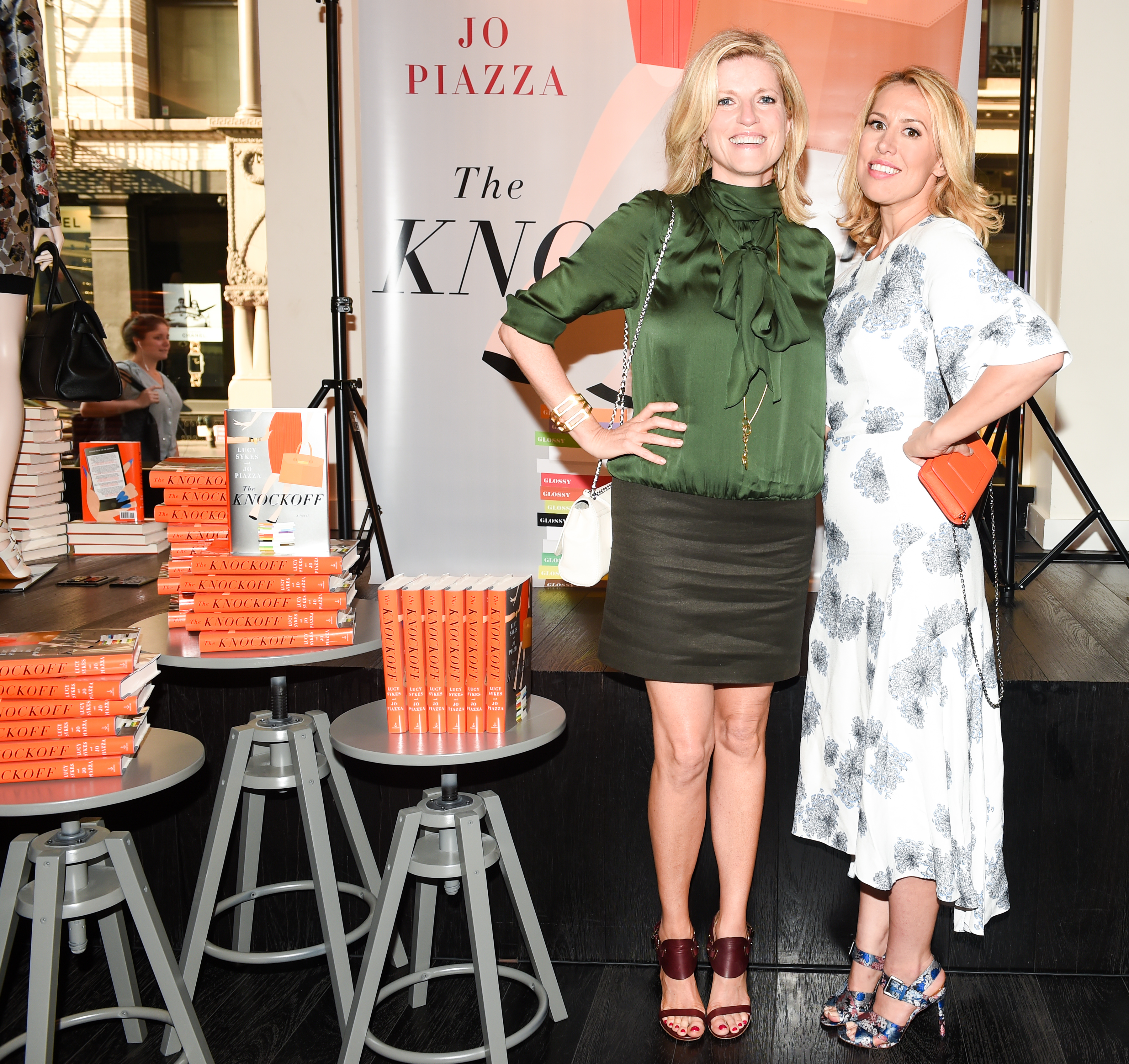
The Knockoff (Sykes/Piazza).  Deliciously snappy fictional account whose real-life parallels to Gen X and Gen Y in the workforce were spot-on.
 

8.12.2019

Lazy Linking, 220th in an Occasional Series

Stuff I liked lately on the Internets:


220.1 Is it possible to eat healthy just from gas station food? bit.ly/2Ksn2OF @feeonline

220.2 Most local papers have seen disastrous declines in readership in the Internet era bit.ly/2KfciSl @neimanlab

220.3 Nothing to see here, just growing monkey-human hybrids in China bit.ly/2YG44fc @techreview

220.4 Desirable car-light urban places are achievable, but you have to get there w/policy and not pixie dust bit.ly/2H0nfX3 @streetsblognyc

220.5 Utrecht just built a big garage...for 13,500 bikes bit.ly/2OOzD2V @thisiscolossal

8.08.2019

Too Short for a Blog Post, Too Long for a Tweet 191

Image result for knockoff sykes piazzaHere are a couple of excerpts from a book I recently read, "The Knockoff," by Lucy Sykes and Jo Piazza.


A young woman across the room smiled giddily at her. As soon as she made eye contact Imogen knew it was a mistake. 

"Imogen Tate!!!!” the girl squealed. “I just love you. I am so happy that you are back! You’re like a fashion goddess. A goddess. I just tweeted that you were sitting here in our meeting and I got, like, fifteen retweets already. All of my friends are completely jealous of me for getting to sit here in this room and breathe the air you are breathing.” 

She reached her hand—nails painted a neon pink and decorated on the tips with what looked like vanilla cake frosting—across the table. As she clasped it with her own, Imogen spied a chunky black rubber bracelet on the girl’s wrist with pink writing: “Good, Great, Gorgeous, GLOSSY.com!” 

“I’m Ashley. I’m your assistant. I’m also the community manager for the site?” Ashley’s voice was childlike and twinkly and she ended the last sentence like it was a question even though Imogen was sure she hadn’t meant it as one. Imogen had been looking for a new assistant when she left, so it would be helpful not to waste energy trying to find a new girl, but she was skeptical of this packaged deal. How was this girl going to be both her assistant and do whatever it was the community manager did? 

“Which community exactly are you managing, darling?” Imogen asked as she took in Ashley’s long corn-silk hair and huge pale blue eyes with absurdly long eyelashes that might have even been real. Her bee-stung lips were coated in a dark red lipstick that shouldn’t have worked, but somehow just made her look more intense and beautiful. She was certainly an original in this room of girls who otherwise all looked the same. 

Ashley laughed and jumped out of her seat with the energy of a Labrador puppy, her hair rippling in a silky wave. “The community. I manage all the social media. Twitter, Crackle, Facebook, Pinterest, Screamr, YouTube, Bloglogue, Instagram, Snapchat and ChatSnap. We’re actually outsourcing the Tumblr right now to a digital agency, but I’m still working with them on it.” 

Imogen nodded, hoping to convey that she understood more than half of those words.

8.06.2019

Too Short for a Blog Post, Too Long for a Tweet 190

Image result for when daniel pinkHere are a few excerpts from a book I recently read, "When: The Scientific Secrets of Perfect Timing," by Daniel H. Pink.


This is a book about timing. We all know that timing is everything. Trouble is, we don’t know much about timing itself. Our lives present a never-ending stream of “when” decisions—when to change careers, deliver bad news, schedule a class, end a marriage, go for a run, or get serious about a project or a person. But most of these decisions emanate from a steamy bog of intuition and guesswork. Timing, we believe, is an art. 

I will show that timing is really a science—an emerging body of multifaceted, multidisciplinary research that offers fresh insights into the human condition and useful guidance on working smarter and living better. Visit any bookstore or library, and you will see a shelf (or twelve) stacked with books about how to do various things—from win friends and influence people to speak Tagalog in a month. The output is so massive that these volumes require their own category: how-to. Think of this book as a new genre altogether—a when-to book.
 

8.01.2019

Too Short for a Blog Post, Too Long for a Tweet 189

Image result for The Woman Who Would Be King  Hatshepsut's Rise to Power in Ancient Egypt by Kara Cooney
Here are a couple of excerpts from a book I recently read, "The Woman Who Would Be King:  Hatshepsut's Rise to Power in Ancient Egypt," by Kara Cooney:


The selection process of Thutmose III was quickly (if not instantly) idealized and mythologized by the political players, but the practicalities of rule still needed a firm hand in the current delicate state of affairs. Thutmose III was a small child at best, more than a decade away from effective rule on his own; he would need a strong regent. His mother, Isis, was apparently an inappropriate choice; although we can assume that as a member of the harem she was beautiful and fertile, it is also probable that she was neither educated nor highborn. She was clearly trumped as candidate for regent by the dowager Great Wife Hatshepsut, who had already been serving as God’s Wife of Amen for almost a decade. When the time came to choose the hand that would guide the young king, it was Hatshepsut who took her place as regent. This fact, in and of itself, says all we hope to know about Hatshepsut’s proven leadership abilities and the confidence that the priests, military, and bureaucracy had in her. They all seem to have welcomed the rule of this young queen.

Too Short for a Blog Post, Too Long for a Tweet 522

  Here are a few excerpts from a book I recently read, "Moby Dick," by Herman Melville. Again, I always go to sea as a sailor, bec...