3.30.2018

Today’s Urban Commute is the Secret Weapon of Tomorrow’s Regional Vitality


Many of my friends, family members, and colleagues throughout the country have pleasant drives to
work.  They do not normally encounter congestion, inclement weather, or bad drivers, which gives them an oasis of luxury between work and home to enjoy tunes, talk radio, or coffee.  They envision my urban commute as dark and dystopic, which it admittedly sometimes can be: crowds of pushy commuters coughing and shouting, underground most of the time, and prone to delays and uncertainties that can throw off a carefully calibrated daily schedule.

And yet, for me as an individual and for the region I am part of, give me the urban commute every day of the week.  Because I truly believe that how I and almost all of my co-workers get to and from work is the secret sauce to our individual happiness and to why I am so bullish about Philadelphia’s future.  Here’s why.

First, why commute at all?  Most of what many of us do for our jobs can be done from anywhere, so why not decouple ourselves a central work location, and shed commute time and gain personal autonomy in the process?  Ah, but there is a difference between what we do for our jobs and what we accomplish in our jobs, the former being very self-centered and the latter requiring much more human contact.  Even things you’d think can be done in isolation, it turns out are done way more effectively when we are rubbing elbows with others.  So, sorry, we have to tolerate our commutes.

Ah, but sometimes our commutes themselves are part of the work.  Perhaps this is truer for me than for others, since I work on urban issues in my actual job.  But you don’t have to have my job to benefit from keeping your eyes open as you board a subway, walk through a train station concourse, or stroll through a historic neighborhood, three things I do every time I commute to and from work.  All of these things connect me to people, places, and experiences that help me, however directly or indirectly, with things I’m working on.  And, I suspect that no matter what you do in y our day job, these kinds of experiences will enrich the work part of you as well.

And this is why, regardless of your personal preferences, an urban commute holds the key to personal satisfaction and region-wide competitiveness.  When you are in the suburbs, you are largely in a car, which means that you certainly hope not to literally bump into anyone.  Maybe you can take in the scenery, but maybe you need to keep two hands on the wheel and two eyes on the road.  It can be a pleasant ride, but it is one in which you are not interacting with humans or with places.

An urban commute is nothing except for interaction with humans and places.  And, in urban settings, those humans and places tend to be really diverse.  Lots of different people from different walks of life, different industries, even different reasons for being on the go (work vs. school vs. tourism).  Lots of different places and spaces, which you can more easily take in via transit/bike/foot than if you were driving. 

Given what we know about how innovation happens, one of these experiences is vastly better than the other in creating a climate where creativity can flourish and regions can advance.  And it ain’t the one that relies on having to get into a car in order to get anywhere.  Which is why I’m more bullish on places like Philadelphia, and especially singling out how we get to and from work as a secret weapon for how we as a region can be more connected and ultimately more productive.

PS By the way, let’s not limit this to the trip at the beginning and end of the day.  My office is in the heart of Center City Philadelphia, which itself is the heart of the Greater Philadelphia region.  Not to brag, but I don’t think that folks who have to rely on a car to get around a sprawling region simply can’t match the intensity of interactions, both planned and unplanned, that I can fit into the same number of hours as everyone else has.  Think about the implications of this.  I can be more civically involved, schedule more meetings, and check in with more people, than if any one of those things involved me having to go get my car, drive halfway across town, park my car, and go find people/places.  This little nudge can make a huge difference in the quantity and quality of my social network, which multiplied by millions of people can make the difference between a vibrant region and a stagnant one. 

3.27.2018

Too Short for a Blog Post, Too Long for a Tweet 119

Here's two excerpts from a book I recently read, "The Turner House," by Angela Flournoy:


“There ain’t no haints in Detroit,” Francis Turner said. His children jerked at the sound of his voice. That was how he existed in their lives: suddenly there, on his own time, his quiet authority augmenting the air in a room. He stepped over their skinny brown legs and opened the big room’s door.


Even before moving home for good, she’d seen that staying in the Midwest had its rewards, the most significant being that Brianne received Francis Turner’s blessing. A blessing from Francis did not have a spiritual connotation in any formal sense. It meant that Francis would get to know your child in a way that wasn’t possible for everyone in his ever-expanding line. In the final years of his life, Francis spent most days on the back porch, eyeing his tomato patch with good-natured suspicion, listening to his teams lose on the radio, and smoking his pipe. He did these things, and he held Brianne. Right against his chest. Francis had nothing cute or remotely entertaining to offer babies; he didn’t say anything to them at all. Instead he gave them his heartbeat. Put their little heads on his chest and went about his day. Even the fussiest babies seemed to know better than to cut short their time with Francis via undue crying or excessive pooping. Lelah would stand in the back doorway and watch Brianne sleeping against Francis, his large hand holding her up by the butt, and think she could stand a few more years of being close by. How many babies had he held just like that since Cha-Cha was born, using only his heartbeat as conversation?


3.26.2018

Lazy Linking, 201st in an Occasional Series

Stuff I liked lately on the Internets:

201.1 This food is actually carved out of wood bit.ly/28LWLGC @thisiscolossal

201.2 Are there fewer wars now or is our privilege keeping us from seeing it? bit.ly/2IN9quc ht: @margrev

201.3 Utah 1st to pass laws protecting parents who sensibly choose to let their kids play unsupervised bit.ly/2pCHqRz @letgroworg

201.4 Be ready to tear up over this sweet carpool karaoke w/50 moms & kids to celebrate World Down Syndrome Day bit.ly/2ID3GmR @designergenes21


201.5 Under Trump, arts funding is...up! NEA +$153M, NEH +$153M, Natl Gallery of Art & Kennedy Center also up bit.ly/2I316FQ @edatpost

3.22.2018

Too Short for a Blog Post, Too Long for a Tweet 118

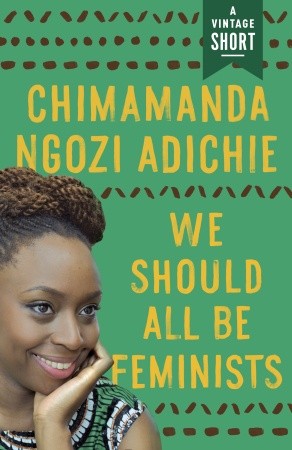
Here's an excerpt from a book I recently read, "We Should All Be Feminists," by Chimamanda Ngozi Adichie:

My own definition is a feminist is a man or a woman who says, yes, there’s a problem with gender as it is today and we must fix it, we must do better. All of us, women and men, must do better.

3.20.2018

For Richer or Poorer

Like many of you, I am digesting this Times piece about a groundbreaking longitudinal study by Raj Chetty et al on economic mobility by race.  The piece and the study are full of incredibly interesting points, but the headline finding - that boys from rich black families are just as likely to end up poor as boys from poor white families (and this is not the case for girls) absolutely stunned me.

Hailing from a high-earning household should put you on solid footing for your own economic achievement.  And, despite the mythology around economic mobility in America, by and large your parents' present salary levels is a pretty good predictor of your future salary levels.  Except, it seems statistically, for black men.

Amy and I are parenting a future black man. We want to believe that he will be a decent human being, raised in a respectable family and given every opportunity and advantage to flourish.  But the cold hard facts tell us that this society pushes a disproportionate number of black men who start from a very high position down to a very low position, in ways that it does not do for any other race, ethnicity, or gender.

One of the luxuries of affluence is being able to afford the time, money, and connections to provide the best prenatal care to your child to be.  This is increasingly understood as being a huge difference maker in the future health and well-being of kids from rich families versus poor families.   Yet this head start that rich black families give their boys does not appear to be strong enough to countervail other forces that hold those same boys back.

I will not disclose what level of prenatal care Asher received, but even if it was the best it would not be enough.  We are preparing him for a world that we increasingly understand to be difficult for and hostile to black men.  May God have mercy on him, and on us as his parents, and on our society that too often holds back people who look like him.

3.19.2018

ISO Real Places

I am, in an urban context, unashamedly pro-growth, much to the chagrin of many of my colleagues who are leery of capitalism, developers, and congestion.  I am also on the board of the region's
historic preservation advocacy non-profit, the Preservation Alliance of Greater Philadelphia.  But there is less conflict than you might think from this duality. 

After all, part of what is driving growth in our modern economies is a clamoring for real places, which is to say locations that are not manufactured or set apart.  Rather, they are in real neighborhoods, with real income diversity and real mixing of uses (commercial AND retail AND residential AND recreational).  And while new, high-end office space is in high demand, so are real buildings with real histories to them. 

In other words, historic preservation doesn't have to mean thinking of growth solely in terms of bulldozing old buildings and therefore wanting to stand in front of the bulldozers.  Historic preservation can also mean an essential characteristic of real places that must be salvaged and valued in order to growth to happen.  And growth can also mean resources to take on preservation projects that may not narrowly pencil out but that contribute invaluable broader aesthetic and historic gains to an area.  At least that's how I think about the intersection.


3.15.2018

Too Short for a Blog Post, Too Long for a Tweet 117

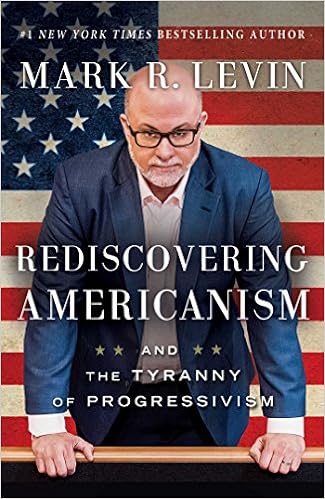
Here's an excerpt from a book I recently read, "Rediscovering Americanism and the Tyranny of Progressivism," by Mark Levin:


Hence, for Jefferson, and most of the Founders, virtue was an essential element of liberty; if the people lack virtue, no form of government can rescue them from tyranny. Again, it must be remembered that the Founders relied on the wisdom of such thinkers as Aristotle, Cicero, and Locke and were influenced by such contemporaries as Edmund Burke and Adam Smith, among others, all of whom spent considerable time contemplating virtue. And the Founders returned repeatedly to the importance of natural law, eternal truths, and the transcendent moral order, including virtue.

Indeed, French philosopher Charles de Montesquieu (1689–1755) and his book The Spirit of the Laws (1748) were widely embraced by the Founders, especially during the constitutional period. Montesquieu explained: 

“There are three kinds of government: REPUBLICAN, MONARCHICAL, AND DESPOTIC. To discover the nature of each, the idea of them held by the least educated of men is sufficient. I assume three definitions, or rather, three facts: one, republican government is that in which the people as a body, or only a part of the people, have sovereign power; monarchical government is that in which one alone governs, but by fixed and established law; whereas, in despotic government, one alone, without law and without rule, draws everything along by his will and caprices. . . . There need not be much integrity for monarchical or despotic government to maintain or sustain itself. The force of the law in the one and the prince’s ever-raised arm in the other can rule or contain the whole. In a popular state there must be an additional spring, which is VIRTUE. What I say is confirmed by the entire body of history and is quite in conformity with the nature of things. For it is clear that less virtue is needed in a monarchy, where the one who sees to the execution of the laws judges himself above the laws, than in a popular government, where the one who sees to the execution of the laws feels that he is subject to them himself and that he will bear their weight. . . . But in a popular government when the laws have ceased to be executed, as this can come only from the corruption of the republic, the state is already lost.” In despotic government, “virtue is not at all necessary to it.”

3.13.2018

Women's History Month Bleg

Ack, Women's History Month is almost half over and I haven't thought through my reading rotation in response.  So far, since December 1st about a third of the books I've read or am reading have been written by women (including one by Condi Rice and a couple by Chimamanda Ngozi Adichie), and some have covered women's history (e.g. first ladies, "Negroland: A Memoir").  Still, I'm making up for lost time because up until the recent past the vast majority of my book consumption was from male authors.  So I welcome any suggestions of authors, titles, and genres. 


3.12.2018

Too Short for a Blog Post, Too Long for a Tweet 116

Here are two excerpts from a book I recently read, "Coach Wooden and Me: Our 50-Year Friendship On and Off the Court," by Kareem Abdul-Jabbar:


Trying to apply his philosophy solely toward winning would be like doing good deeds only because you hope it will get you into heaven. Being good is the payoff, athletically and spiritually. That’s why he didn’t care for sports movies in which the underdog team or player learns the hard way that winning isn’t everything, but then they go on to win at the end. To him, those movies should have ended with the lesson learned, the team taking the court happy in their newfound wisdom, the whistle blowing to start the game, and then freeze-frame and run credits. Showing the team winning sends the wrong message: that life lessons exist to serve as a guide for acquiring things that make you feel like a success. His point was that the life lesson is the success. The traveling is the reward, not reaching the destination. 

This book is not just an appreciation of our friendship or an acknowledgment of Coach Wooden’s deep influence on my life. It is the realization that some lives are so extraordinary and touch so many people that their story must be told to generations to come so those values aren’t diminished or lost altogether. 

Coach was an old white Midwesterner with old-fashioned ideals; I was a quiet but cocky black kid from New York City who towered eighteen inches over him. He was a devout Christian; I became a devout Muslim. He loved big band music of the swing era; I loved modern jazz. On paper, it’s understandable that we would have a good working relationship as coach and player. But nothing on that same paper would even hint that we would have a close friendship that would endure a lifetime. 


It’s appropriate that the first photo is black-and-white. That accurately defined our rigid relationship in the beginning. In this photo he is leading me. He was the coach; I was his player. He made the rules; I followed them. Black and white. Mutual respect but not warmth. It’s also appropriate that we were posed, because we both look a little awkward, stiff as mannequins in a store window. As if there were something artificial about the roles we were forced to play in the photo and in life. 

The second photo, with its rich, warm colors and candid appearance, more accurately reflected the depth of our friendship. Our two hands—one fragile and one strong, one white and one black—entwined. His white head barely clears my elbow, yet I am standing straight and proud, like a man showing off his hero dad. In that photo, I appear to be leading him. But knowing how much he taught me, I knew I was still following in his footsteps, even though he was beside me.

3.08.2018

Looking to the Future But Knowing and Building from the Past


The activism of the Marjorie Stoneman Douglas High School teens in the wake of our nation’s most recent major school shooting compelled best-selling author Tim Kreider to pen this op-ed in the Times earlier this month: “Go Ahead, Millennials, Destroy Us.”  Here is the impassioned last
paragraph:

My message, as an aging Gen X-er to millennials and those coming after them, is: Go get us. Take us down — all those cringing provincials who still think climate change is a hoax, that being transgender is a fad or that “socialism” means purges and re-education camps. Rid the world of all our outmoded opinions, vestigial prejudices and rotten institutions. Gender roles as disfiguring as foot-binding, the moribund and vampiric two-party system, the savage theology of capitalism — rip it all to the ground. I for one can’t wait till we’re gone. I just wish I could live to see the world without us.

Whoa. At the risk of sounding like a crusty old man yelling at the young’uns to “get off my lawn,” I think some moderation is in order here. 

Yes, no matter where you are on our contemporary gun-control debate, you have to admire and appreciate the passion of the MSD students to agitate against the status quo and demand real answers and real action.  And, pulling the lens back, we absolutely need our young generation to feel that they have a voice, and to use that voice to advocate for the things that matter to them.  For, by definition, their time horizon is longer than ours, and their perspective often more informed than ours, so they are able to push for the greater good more easily and more forcefully than we can.

However, the best dissent and the best advocacy is an informed one.  And part of  being informed comes from the perspective of time.  A lot of who we are as a society has to go, and the long narrative has borne out and will bear out that much progress has been made and still needs to be made.  But that doesn’t need to mean that every generation needs to burn everything to a crisp and start from zero.  That does a disservice to the collective wisdom that has built up over the years, some of which needs to be updated but much of which needs to be retained and cherished and built on top of.

I realize I am treading on thin ice here.  I am not saying “wait your turn, kid” – oh how I hate that posture.   Absolutely young folks ought to take action and not wait for their time, for their time is now.  But, when up to bat, it’s not good to just start swinging at everything, with no regard to knowing and learning from the lessons of the past and the insights of those who have gone before.  I am humbled by young folks I know who are deeply steeped in history and who have demonstrated commendable wisdom in drawing from history the lessons that inform their view of the world today and tomorrow.

I am also not saying that it is never appropriate to dismantle and start anew.  There are times when entire systems need to be protested and replaced, and at times that even requires civil disobedience and violence and destruction.  But this is more often than not the exception and not the rule, and it certainly is not the case that every single thing needs to be brought down and built back up.  Again, I am appreciative of young folks I know who know the difference, and are brave enough to use extreme measures when it is called for and restraint when it is not.

Again, perhaps I am hopelessly “unwoke,” my words belying my privileged and clueless status.  I’m just nervous about a thought process that takes something noble – young people standing up for what they believe is right – and assigning to that sentiment absolute leeway to consider all things old worth burning to the ground and all things new unassailable.  I hope to be respectful of and open to the things our youth care deeply about.  But I also hope that their desire to effect progress includes room to learn from the past and to accept and steward the good parts of that past into the future.

3.06.2018

Upcoming Events You Might Be Interested In

It is fundraising and conference season, and I am honored to be attending or presenting at a number of upcoming events.  Please follow these links for more information and considering coming or
otherwise supporting.

March 9 - New Jersey Redevelopment Forum (New Jersey Future)

March 9 - Sustainaball (Sustainable Business Network of Greater Philadelphia)

March 29 - Region on the Rise (Greater Philadelphia Chamber of Commerce)

April 10 - Leverage (Community Design Collaborative)

April 13 - Urban Economic Policy Conference (Drexel University School of Economics and Econsult Solutions)


April 19 - Gala Awards Ceremony (Philadelphia Association of Community Development Corporations)

May 3 - Solas Awards (Welcoming Center for New Pennsylvanians)

June 6 - Preservation Achievement Awards (Preservation Alliance for Greater Philadelphia)


3.05.2018

Money Management Right Out of College

Around this time every year, I get all my paperwork ready to do m
y taxes.  As I was doing this, I chanced upon a stack of six-month budgets I produced right after my college years.  There were seven such documents, perfectly capturing my personal budget from the 3 1/2 year period from July 1995 to December 1998.  Here is the info, averaged to annual and monthly amounts.


Annual Monthly %
Salary $25,000 $2,083 100%
Taxes $7,646 $637 31%
College/Retirement Savings $2,286 $190 9%
Giving/Gifts $6,498 $541 26%
Rent $1,927 $161 8%
Utilities/Phone/Transportation $2,544 $212 10%
Food/Personal/Medical $3,117 $260 12%
Leisure/Discretionary $697 $58 3%
Net Income (Loss) $286 $24 1%


What an interesting window into my life some 20 years ago.  Some random thoughts:

* I earned a $25,000 salary at my first job out of college, at the then West Philadelphia Enterprise Center (now The Enterprise Center).  Depending on how you want to calculate inflation, that works out to about a $40,000-$45,000 salary nowadays.  As you can see, I did not get a raise during this time period; I think my first raise was in or after Year 4 there.

* At the end of 1995, 1996, 1997, and 1998, I funded an Individual Retirement Account at the then-max of $2,000.  Between my dad and my job with two stockbrokers, I'd had the power of compounding interest pounded into me, so there was no way I wasn't maxing out my IRA.  (By my recollection, The Enterprise Center introduced their 403b, the non-profit version of a 401k, after this period, so I didn't get to use that vehicle until after the time period in question.)

* During this time period, I was tithing to my local church (i.e. donating 10% of my gross salary), plus supporting a bunch of ministries on a monthly basis, such as Compassion International (sponsor a kid), Christian Aid Mission (support indigenous missionaries in their home countries), and Opportunity International (fund entrepreneurial ventures in the developing world), as well as spending money on the youth ministry (and its youth) that I was involved in at my church.

* My rent during this period was ridiculously low, partly because University City still hadn't exploded in value and partly because I shared a house with anywhere from five to nine people. 

* I didn't have a phone or a car, so my telecom utilities and transportation costs were pretty low too.  (I did pay house utilities, which we split between housemates so again having lots of them helps keep costs down.)

* Re: other living expenses, I didn't have any other mouths to feed except my own (I've added a few since then), I bought all my personal care supplies when they were on sale and I had a coupon (note: I still do this), and hardly ever had any medical expenditures (oh how I wish that were true today).

* Most of the leisure things I did were free or close to free, like go hiking and biking, rather than things that cost money, like go to the movies or get drinks.  (If avocado toast had existed back then, this might've been different.  OK, that's a boomer/millennial joke, never mind.)  I also didn't buy many clothes, and I didn't have a house to furnish.  (I did have a room, but I did that on the cheap.  For example, my desk at one point was a salvaged door resting on two used bookshelves.)

Importantly, thanks to my parents' saving up for me, I didn't leave college with any debt.  Obviously this is a huge piece of many kids' personal budgets nowadays, which as you can see I essentially broke even during this time period so if I had to write a check for several hundreds of dollars a month, something else has to give. 

Not sure if there is a takeaway here; my situation is different than that of many, and today is not the same as 20+ years ago.  Nevertheless, who knew back then when I was making these spreadsheets that the 40something version of me would one day find them and make them into a blog post?


3.02.2018

An Economic Perspective on Promoting Civil Discourse


There are many ways to define economics, but I'll offer one: economics is concerned with the best allocation of scarce resources for the greatest good.  Others may use different words but this isn't bad. 

But let's unpack this definition a little.  First, the notion of scarce resources.  We all realize that we don't have unlimited resources, whether the "we" is ourselves our our government.  And yet how often do we think that "X" is good and therefore anyone who isn't for "X" is either evil or stupid.  (Substitute whatever you want for "X," as this can go both ways partisan-wise.)  In a world of unlimited resources, we can give "X" to everyone, as if we were Oprah ("you get a car and you get a car and everybody gets a car!").  But in a world of scarce resources, which is to say the real world, we have to make trade-offs.  If we want "X," we have to pony up for it, or we have to give up "Y."  Seems obvious, but check yourself the next time you spout off about how obvious it is that "X" is good and how is it possible that people can oppose that unless they're evil or stupid.  Maybe, just maybe it has nothing to do with evil or stupid and rather they're opposing because while they are fine with "X," they are not fine with the trade-offs involved in obtaining it.

Second, notice that in my definition are words like "best" and "greatest good."  Again, this seems obvious to say, but I'll say it anyway: what's "best" and "greatest good" looks different for different people.  And in a nation as diverse as ours, there are almost infinite permutations of what is "best" and "greatest good."  So whenever we have to do anything involving multiple people (which is to say basically everything that is not doing something totally by ourselves, which is to say basically everything), we have to figure out how to work together given that we all don't necessarily see things the same or want the same things.  You might be thinking "duh," and yet again I ask you to check yourself when you spout off about how obvious it is that "X" is good and if others aren't getting behind you then they are either evil or stupid.  Maybe, just maybe it has nothing to do with evil or stupid and rather they're opposing because they prefer "Y" instead and have decided that given the choice between "X" and "Y," "X" is going to have to take a backseat.

We lament that our political discourse has gotten so rancorous, and yet we are all guilty of the things I've stated above.  As much as most people prefer harmony over discord, most people also prefer not to have their perspectives automatically dismissed as evil or stupid just because they are different from yours.  We should not be timid in stating our positions and fighting for them, even with harsh words and strong emotion, and I even acknowledge there are times when civil disobedience and even destruction/violence are warranted.  But while we may disagree vehemently with opposing positions, they are not necessarily evil or stupid, and it is a civil and productive thing to consider the logic and merit behind them.

Too Short for a Blog Post, Too Long for a Tweet 522

  Here are a few excerpts from a book I recently read, "Moby Dick," by Herman Melville. Again, I always go to sea as a sailor, bec...