7.31.2017

Lazy Linking, 194th in an Occasional Series


Stuff I liked lately on the Internets:


194.1 1st ever pics of various cities around the world bit.ly/2v7TQVY @oddee

194.2 Sabermetrics slowly making its way to Japanese baseball bit.ly/2uYYMMA @theringer

194.3 While politics is crazy now, business is boring…and that’s good bloom.bg/2v5HEW2 @bv

194.4 The notion of “women’s chess” is unnecessary & sexist bit.ly/2vfi6WM @chessbase

194.5 Watch Ben Folds compose an orchestral song in <10 a="" href="http://bit.ly/2s4xyns" minutes="">bit.ly/2s4xyns
@youtube

7.27.2017

Too Short for a Blog Post, Too Long for a Tweet LXXXI

Here's three excerpts from a book I recently read, "The Quartet: Orchestrating the Second American Revolution, 1783-1789," by Joseph Ellis:


Lincoln began as follows: “Four score and seven years ago our fathers brought forth on this Continent a new Nation.” No, not really. In 1776 thirteen American colonies declared themselves independent states that came together temporarily to win the war, then would go their separate ways. The government they created in 1781, called the Articles of Confederation, was not really much of a government at all and was never intended to be. It was, instead, what one historian has called a “Peace Pact” among sovereign states that regarded themselves as mini-nations of their own, that came together voluntarily for mutual security in a domestic version of a League of Nations.

And once you started thinking along these lines, there were reasons as self-evident as Jefferson’s famous truths why no such thing as a coherent American nation could possibly have emerged after independence was won. Politically, a state-based framework followed naturally from the arguments that the colonies had been hurling at the British ministry for over a decade, which denied Parliament’s right to tax them because that authority resided within the respective colonial legislatures, which represented their constituents in a more direct and proximate fashion than those distant members of Parliament could ever do. The resolution declaring independence, approved on July 2, 1776, clearly states that the former colonies were leaving the British Empire not as a single collective but rather as “Free and Independent States.”

Distance also made a huge difference. The vast majority of Americans were born, lived out their lives, and died within a thirty-mile geographic radius. It took three weeks for a letter to get from Boston to Philadelphia. Political horizons and allegiances, therefore, were limited—obviously no such things as radios, cell phones, or the Internet existed to solve the distance problem—so the ideal political unit was the town or county government, where representatives could be trusted to defend your interests because they shared them as your neighbors.

Indeed, it was presumed that any faraway national government would represent a domestic version of Parliament, too removed from the interests and experiences of the American citizenry to be trusted. And distrusting such distant sources of political power had become a core ideological impulse of the movement for independence, often assuming quasi-paranoid hostility toward any projection of power from London and Whitehall, which was described as inherently arbitrary, imperious, and corrupt. And so creating a national government was the last thing on the minds of American revolutionaries, since such a distant source of political power embodied all the tyrannical tendencies that patriotic Americans believed they were rebelling against.

In 1863 Lincoln had some compelling reasons for bending the arc of American history in a national direction, since he was then waging a civil war on behalf of a union that he claimed predated the existence of the states. This was a fundamental distortion of how history happened, though we may wish to forgive Lincoln, since it was the only way for him to claim the political authority to end slavery.

Truth be known, nationhood was never a goal of the war for independence, and all the political institutions necessary for a viable American nation-state were thoroughly stigmatized in the most heartfelt convictions of revolutionary ideology. The only thing holding the American colonies together until 1776 was their membership in the British Empire. The only thing holding them together after 1776 was their common resolve to leave that empire. Once the war was won, that cord was cut, and the states began to float into their own at best regional orbits. Any historically informed prophet who was straddling that postwar moment could have safely predicted that North America was destined to become a western version of Europe, a constellation of rival political camps and countries, all jockeying for primacy. That, at least, was the clear direction in which American history was headed.


 ***


The multiple compromises reached in the Constitutional Convention over where to locate sovereignty accurately reflected the deep divisions in the American populace at large. There was a strong consensus that the state-based system under the Articles had proven ineffectual, but an equally strong apprehension about the political danger posed by any national government that rode roughshod over local, state, and regional interests, which were the familiar spaces where the vast majority of American lived out their lives. As Madison now realized, the Constitution created a federal structure that moved the American republic toward nationhood while retaining an abiding place for local and state allegiances. In that sense, it was a second American Revolution that took the form of an American Evolution, which allowed the citizenry to adapt gradually to its national implications.

In the long run—and this was probably Madison’s most creative insight—the multiple ambiguities embedded in the Constitution made it an inherently “living” document. For it was designed not to offer clear answers to the sovereignty question (or, for that matter, to the scope of executive or judicial authority) but instead to provide a political arena in which arguments about those contested issues could continue in a deliberative fashion. The Constitution was intended less to resolve arguments than to make argument itself the solution. For judicial devotees of “originalism” or “original intent,” this should be a disarming insight, since it made the Constitution the foundation for an ever-shifting political dialogue that, like history itself, was an argument without end. Madison’s “original intention” was to make all “original intentions” infinitely negotiable in the future.


***


Finally, under the rubric of his fourth proposed amendment, Madison wrote the following words: “The right of the people to keep and bear arms shall not be infringed; a well armed, and well regulated militia being the best security of a free country; but no person religiously scrupulous of bearing arms, shall be compelled to render military service in person.” This eventually, after some editing in the Senate, became the Second Amendment in the Bill of Rights, and its meaning has provoked more controversy in our own time than it did in 1789.

Madison was responding to recommended amendments from five states, calling for the prohibition of a permanent standing army on the grounds that it had historically proven to be an enduring threat to republican values. It is clear that Madison’s intention in drafting his proposed amendment was to assure those skeptical souls that the defense of the United States would depend on state militias rather than a professional, federal army. In Madison’s formulation, the right to bear arms was not inherent but derivative, depending on service in the militia. The recent Supreme Court decision (Heller v. District of Columbia, 2008) that found the right to bear arms an inherent and nearly unlimited right is clearly at odds with Madison’s original intentions.

7.25.2017

Too Short for a Blog Post, Too Long for a Tweet LXXX

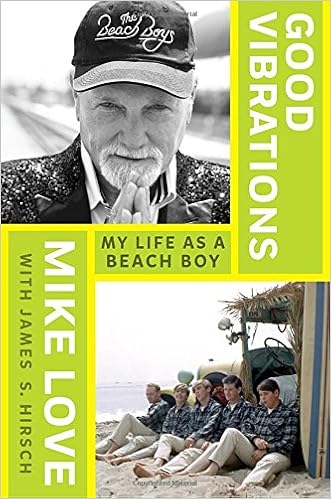
Here's an excerpt from a book I read earlier this month, "Good Vibrations: My Life as a Beach Boy," by Mike Love:

The Czechs wanted our music, but I don’t believe that the music alone was our appeal. In our three days in the country, in Prague and Brno, we were besieged by fans fascinated by the United States. They were desperate for anything Western. In contrast to their own suffocating conditions, the Beach Boys represented sun-kissed beaches and high-powered hot rods. But we also represented freedom, prosperity, and opportunity. The irony: in America itself, we were too closely associated with those values, but abroad, those values made us idols. 

All music has a political context, and we performed ours when the Soviets and the Americans were vying for the allegiance of people from across the world, from Europe to Asia to Africa as well as Latin America. Unwittingly, our music exported the American dream in two-minute capsules. I’m not claiming we helped win the Cold War, but I’ve heard from Russians and Chinese, Cubans and South Africans, East Germans and Vietnamese, who listened to our music on American Forces Network or pirate ships or bootlegged tapes or old-fashioned albums. And they loved our songs, many of which offered a vision of America, and a way of life, that they themselves wanted.

7.24.2017

Lazy Linking, 193rd in an Occasional Series

Stuff I liked lately on the Internets:


193.1 Don’t forget: traffic isn’t just happening to you, it IS you bit.ly/2vkZCRN @longbeachize

193.2 Opioid overdose antidote so costly that cities consider rationing it w/repeat users wapo.st/2uANT3K @washingtonpost
                       
193.3 Billy Beane promises one last rebuild so A’s are ready to compete in ’19 in new stadium es.pn/2ut1zNQ @espn

193.4 Donuts…w/ice cream in them. One dozen please… bit.ly/2uKF348 @scarymommy

193.5 Why intellectual elites get no sympathy: professors complain that having summer off is hard bit.ly/2trKYuy @margrev


193.6 Beating cancer isn’t 1 person in 1 life, it’s lots of ppl over many years bit.ly/2ueDmu1 @kottke bit.ly/2tKPFLd @huffpost

193.7 Everything you want to know (& you do want to know) about how/where athletes pee es.pn/2uc4pEX @espn

193.8 There’s 2 kinds of popularity & we’re fretting over the wrong one bit.ly/2tPrUDw @qz

193.9 Whoa: Mexico City eliminates parking minimums, requires bike parking bit.ly/2tKvDR5 @streetsblogusa


193.10 Argentinian bfast/tea/coffee coming to our neighborhood! bit.ly/2tESiBv @westphillylocal


7.20.2017

Too Short for a Blog Post, Too Long for a Tweet LXXIX

Here's two excerpts from a book I am reading, "Grunt: The Curious Science of Men at War," by Mary Roach:


For every general and Medal of Honor winner, there are a hundred military scientists whose names you’ll never hear. The work I write about represents a fraction of a percent of all that goes on. I have omitted whole disciplines of worthy endeavor. There is no chapter on countermeasures for post-traumatic stress disorder, for example, not because PTSD doesn’t deserve coverage but because it has had so much, and so much of it is so very good. These books and articles aim the spotlight where it belongs. I am not, by trade or character, a spotlight operator. I’m the goober with a flashlight, stumbling into corners and crannies, not looking for anything specific but knowing when I’ve found it.

***

It’s hard for me to imagine: worrying about the emotional state of other people when you yourself have just lost part of both legs and possibly some of your genitalia and on top of that your pelvis is broken. White told me his platoon sergeant said to him recently, “Maybe it happened to you because you’re the kind of person who’s tough enough to handle it.” I think White is plenty tough, but I don’t think we’re talking about toughness here. This is some kind of blinding selflessness, the sort of instinct that sends parents running into burning buildings. The bonding of combat, the uncalculating instinct of duty to one’s charges and fellow fighters, these are things that I, as an outsider, can never really understand.

7.18.2017

Too Short for a Blog Post, Too Long for a Tweet LXXVIII

Here's an excerpt from an article I just read, "Baseball Tackles Workplace Mystery: How to Build Team Chemistry?" in the Wall Street Journal:


Fast forward nearly two decades, and the thinking has changed. In a sweeping shift, many of the industry’s wonkiest stat-heads now acknowledge that how players get along with each other likely can affect how they perform on the field over a six-month season.

“Chemistry is absolutely critical, but very few teams or managers or general managers know how to create it or even have any idea how to create it,” said Houston Astros general manager Jeff Luhnow, the leader of perhaps the most data-driven front office in the majors. “You know it’s important, but you don’t know what the levers are to change it.”

But what if they did? Corporate managers and armies of consultants have wrestled with this question for decades, and now baseball is tackling it head-on: Can something as nebulous as “chemistry” be quantified like on-base percentage or ERA, and if so, can it be weaponized?

Increasingly, forward-thinking franchises think it’s possible not only to measure the impact of chemistry, but to cultivate positive chemistry in an intentional and systematic fashion. That belief has sparked an information arms race in an area often discussed but rarely analyzed in a scientific way. 

And whoever solves the riddle first will have earned a competitive advantage over their peers that could come with far-reaching ramifications.


7.14.2017

Too Short for a Blog Post, Too Long for a Tweet LXXVII

Here's an excerpt from an article I recently read, "A Columbia Professor's Critique of Campus Politics," in the Atlantic Magazine:

The idea that I disagree with you and that makes you a bad person, that might not be new. Because people were having that on the Upper West Side during Nixon, for example. It wasn't just, I disagree with you about Nixon. It was, you're a bad person. I think that now, more specifically, the problem is, “you're a bad person and you should not speak,” that's what is new.

Today the idea is that you walk out of the room, you can't hear it, because the space isn't safe. That's a theatrical gesture. It should be used for auditions.

That's what the problem is, I think.


7.13.2017

Too Short for a Blog Post, Too Long for a Tweet LXXVI

Here's an excerpt from an article I just read, "From 'Not in My Backyard' to 'Yes in My Backyard,'" in the Atlantic Magazine:


The idea of wealth redistribution was what helped convert Loe, the Seattle YIMBY, to the cause. She was raised by two art historians, she told me, who emphasized the importance of historic preservation, and so she used to support restrictions on building. She used to want to “wage a proxy war on capitalism,” she told me, by not letting builders build. Loe was the campaign manager for a Seattle city-council candidate who opposed development, and as she knocked on doors during the campaign, she met a number of NIMBYs who didn’t want their neighborhoods to be more diverse. It slowly dawned on Loe, who had been a member of the Green Party for 20 years, that building more housing was the way to make Seattle more equitable. “White homeowners have had so many advantages and subsidies and tax breaks—there’s a fairness issue there,” she said. “It’s about sharing the city.”

Too Short for a Blog Post, Too Long for a Tweet 522

  Here are a few excerpts from a book I recently read, "Moby Dick," by Herman Melville. Again, I always go to sea as a sailor, bec...