3.31.2016

Presidential Musings

http://www.theblaze.com/wp-content/uploads/2015/11/donald-trump.jpgOf course yesterday's post was an April Fools.  In fact, "a floor display" is an anagram of "April Fools' Day."  I don't begrudge the Donald for running or his supporters for voting for him.  I personally consider his policies to be wrong, his behavior to be repellent, and his tactics to be deplorable.

But, as a moderate Republican, what has infuriated me the most about the GOP primary is not the Donald's antics but rather the inability of anybody - a competitor, a debate moderator, a political pundit - to draw him out on any issue for more than 90 seconds.  As the consummate salesman, braggart, and alpha male, the Donald can talk a good game for about a minute and a half on just about any topic you throw his way.  Supporters and the undecided alike are impressed by this.  But, no matter how much they might be swayed by such shallow rhetoric, surely their comfort level in voting him into the highest office in the land would plummet if he had to carry on on a topic for longer than that, at which point he will either (a) repeat his boasts (b) start talking nonsense (c) contradict himself within the span of a few short sentences. 

As an East Coast intellectual who consumes a lot of East Coast intellectual content, I see a lot of "how come so many people can't see right through the Donald," but it's always related to his policy positions, his hateful speech, and his dubious campaign tactics.  Rarely is it plainly posited that, quite frankly, the Donald simply cannot speak on anything for more than 90 seconds without imploding.  I'm astounded that we are this deep into the election cycle and no one has done this yet.

3.30.2016

I'm For Him


http://www.richardhowe.com/wp-content/uploads/2015/12/donald_trump_for_president.jpgWhat with all of the anti-Trump sentiment floating around, I've been a little bashful about this, but it's time to just put it out there: I'm voting for Trump.  And I hope he wins.

Trump was on the "wall of fame" at Wharton when I arrived there 25 years ago, so it would be cool to have Wharton's first US president (and only Penn's 2nd, after William Henry Harrison, Class of 1791).  Speaking of which, last time I was on the Penn campus, the Trump campaign had a floor display in Huntsman Hall that was incredibly impressive and that nailed all of the policy points that I had been looking for in a president (and that, quietly, I had seen in Trump).

But it takes more than a Penn connection and some snazzy brochures to win my vote, right?  Of course. More commentary tomorrow.

3.29.2016

I Don't Know What I Don't Know

http://images5.aplus.com/uc-up/f5a72d73-067b-412c-be29-33e13ba61d1a/f5a72d73-067b-412c-be29-33e13ba61d1a.crop_3150x1654_0,89.resize_1200x630.format_jpeg.inline_yes.jpgMost of us are guilty of occasional acts of racism, sexism, and other bad isms.  We harbor deplorable attitudes and we allow them to exist in our thoughts and words and actions.  Maybe we don't care, maybe we do but just can't help ourselves. 

More common than that, though, are acts of racism, sexism, and other bad isms out of sheer ignorance.  We think, say, or do something with no intent of malice or prejudice, but that causes great offense.  What happens next is predictable: we're called on it, we protest that we didn't know and meant no harm, we're called out for our non-apology, we offer the "if I offended anyone I'm sorry" pseudo-apology, that's called out as weak sauce, and we leave in a huff because "I really and truly didn't know!"  If this has never happened to you, you are either lying or live a more sheltered existence than I do.

But here's my question.  Is ignorance a suitable defense?  Is it true that "you really ought to have known better"?  Are there certain things that we ought to know, and if we don't then shame on us?

I had to confess - to a group I am a part of that is advising a company on issues of diversity, no less - that when the Twitterverse exploded earlier this month over Joe Scarborough's seemingly innocent but actually quite offensive suggestion to Hillary Clinton that she smile after a good night at the polls, my initial reaction to the original tweet was that it was more innocent than offensive.  I probably ought to have known better, or at least my colleagues suggested to me as much when I shared this with them.

But whether I ought to have or not, I didn't.  I don't know what I don't know, and my ignorance on this issue was laid bare by the litmus test of this Twitterstorm.

To my credit, I did what I think is the right thing to do when it is exposed that you don't know that you don't know something, which is to learn about it.  Rather than remaining in my ignorance, and from that position of ignorance lobbing protests of over-sensitivity and false outrage, I did some homework to rectify my ignorance.  It didn't take much time to understand why Scarborough's tweet was so hurtful.  So now I know.

I think we put too much stock in assuming that people should "just know," and not enough stock in pushing people to "get to know."  In other words, we assume that people are either "woke" or not, and shame on them when something like Scarborough's tweet comes up and they prove that they're not.

What we should be doing for others - and, really, because we're all ignorant about a lot of things, for ourselves as well - is encouraging folks to respond to situations in which something that we don't know we don't know is exposed, to not respond with defensiveness but rather with a desire to get to know.

To be sure, just out of living life in a decent manner, we should become informed on a number of things to the point that it is completely fair for folks to expect us to "know better."  All I'm saying is that, no matter how conscious we are, there are numerous things we don't know we don't know, and when those things come into play, it is my hope  that our first impulse is not to justify ourselves or dismiss others' outrage, but rather to seek to listen and learn. 

3.28.2016

Lazy Linking, 169th in an Occasional Series


Photo by Emily TeelStuff I liked lately on the Internets:

169.1 A meal at Clarkville is a quintessentially University City experience bit.ly/1S9fgmc @phillymag @foobooz

169.2 How Trump can lose in Cleveland even if he has enough delegates; Ted Kennedy tried it vs. Carter in ‘80 bit.ly/1ZvZKq1 @voxdotcom

MacGillis-Roland-Park-Streetcar-2169.3 In sneaker endorsements, as in college & pros, Steph Curry was at first dismissed as a viable top-tier star es.pn/1Ry32Ts @espn

169.4 Racial differences in public park infrastructure investment preferences in Houston bit.ly/1WLfzqY @citylab

169.5 The parallels & personal connections btwn NFL concussion research & tobacco downplaying smoking risks nyti.ms/25nuf5w @nytimes

169.6 A story about film tax credits, religious liberty legislation, & boycotts by Disney/NFL nym.ag/1S9ehSN @nymag

169.7 Transit investment was driven by racism & has in turn entrenched racial inequalities bit.ly/1SdnyvE @placesjournal

169.8 Headline is “$250k salary qualifies for housing subsidy in Palo Alto” but note use of TOD to achieve it cbsloc.al/1pxUPbq @cbssf

169.9 Cautionary tale re: reading too much into 1 interesting (but unsubstantiated) research finding bit.ly/1EtQB4w @terenceburnham

169.10 Where the force of Trump’s support is coming from is an aggrieved white working class bit.ly/1WtA3og @nro

169.11 Etymology of "jawn," a quintessentially Philly term (that jawn is hella useful!) bit.ly/22y4e4J @atlasobscura

169.12 Trump's despicable attitude/action/words towards women thru the years slate.me/1pzNUyn @slate

169.13 African-American job seekers helped by mandatory drug tests, hurt when credit checks are banned bit.ly/1WPfXF0 @margrev

169.14 thingsorganizedneatly.tumblr.com makes me feel good @thingsorganized

169.15 Philly is 1 of "10 Towns That Changed America" to.pbs.org/1WPgfvA @pbs

3.25.2016

Casting My Cares

Waking up early to pray and read the Bible is a habit that I at least try to maintain, if my actual performance is pretty spotty.  Lately I've tried to augment that good habit with another good habit, which is to keep a journal by my bedside to use at the end of each day.  Whereas my morning journaling is relatively extensive, my bedside journal entries are intentionally sparse, intended only to capture one or two things that I worried about that day.  Having recorded that day's entry, I take a moment to try to give those worries over to God.  As I close my eyes and breathe in deeply a few times, I think about how whatever I'm worried about is important to me and therefore important to God, and that I am important to God, and that He will work things out.  I try to remember that "work things out" doesn't always (perhaps doesn't often) mean I get my way.  For He may have a better way. Indeed, He always does.

Having done this for a weeks now, I can tell you that my worries are both many and oft-repeated.  In other words, there are many things that weigh on my heart at the end of each day.  And, having laid them down before my God, I still find myself picking them up multiple times afterwards.  Nevertheless, it is a good habit that I am glad to have instituted.  May God be honored in my life and I may see with my own eyes His goodness all my days.

3.23.2016

Too Long for a Tweet, Too Short for a Blog Post XXIX

https://ksr-ugc.imgix.net/assets/005/064/663/fdce1aa28fbcec26bbbee46cedbf138e_original.jpg?v=1449874986&w=639&fit=max&auto=format&q=92&s=a9d3971c7462f48aa98570c7ffbdbbb5Here's an excerpt from an article I recently read, "How Baseball’s New Data Is Changing Sabermetrics," at FiveThirtyEight:

Finally, there’s another source of data even more exotic than exit velocity and defensive positioning. A company called deCervo specializes in monitoring the brain activity of athletes as they perform tasks such as pitch recognition. DeCervo’s software simulates the flight of a pitch and asks users to decide whether it will be in or outside of the strike zone. In a separate game, users can practice their pitch recognition by identifying the pitch type based on its motion. Using a combination of techniques, deCervo CEO Jason Sherwin showed that certain areas of the brain light up as athletes monitor the flight of the “pitch” and make the split-second decision to hit a button to react.

Sherwin had preliminary results that showed correlations between neurological readouts and performance (for example, on-base percentage), so deCervo’s technology could be promising for identifying athletes with major league potential. And even without any neural monitoring, it allows athletes to “gamify” their training by attempting to distinguish the motion path of different pitches at varying speeds and arm angles based on real PitchF/X data. Sherwin said he believed this kind of software would offer a new way for athletes to sharpen their pitch recognition skills.

3.21.2016

Lazy Linking, 168th in an Occasional Series

Stuff I liked lately on the Internets:
http://www-tc.pbs.org/wgbh/pages/frontline/art/cats/concussions/cteliving.jpg
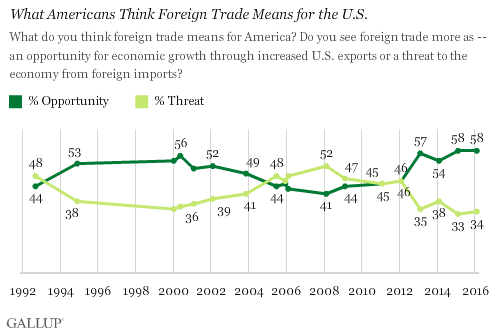
Trend: What Americans Think Foreign Trade Means for the U.S.


168.1 Etymology of "hella," a quintessentially Bay Area (and hella useful!) term bit.ly/1EF6dUd @kqednews

168.2 We know pi to 13T digits; to "only" 15 digits it’s off by 1.5" for a circle 78B miles big! go.nasa.gov/22p1HJW @NASAJPL_Edu

168.3 @gallup says more ppl for free trade than against; aren't Bernie/Trump popular b/c anti-trade sentiment? bit.ly/1SzAKgH

168.4 I'll say it again but this time slower...we lost manuf jobs to automation not China/Mexico 53eig.ht/1RTdKED @fivethirtyeight

168.5 NFL top healthy/safety official publicly acknowledges link btwn football-related head trauma & CTE es.pn/1QTxewi @espn


3.17.2016

Making Things Less Dangerous by Making Things Feel More Dangerous

http://8296-presscdn-0-77.pagely.netdna-cdn.com/wp-content/uploads/2014/10/20141029_bikingAP-1024x660.jpg
How do you make things less dangerous?  Sometimes, paradoxically, it's by making things feel more dangerous.

Let me explain, with the help of excerpts from three articles I recently read.  First, from Citified, which reported on a recent study that showed that bike-share riders had fewer accidents than regular riders:

What they found out was that, despite some factors that some experts saw as making bikeshare use more risky — bikeshare users are less likely to be experienced riders, to know local streets and to wear helmets, for instance — other offsetting factors made them less likely to get into accidents or sustain injuries...One of the chief offsetting factors is the design of the bikes themselves. "The wide body and sturdy build of the bicycle has the feel of a heavy mountain bike, and this design may reduce the degree to which dangerous maneuvers are made on these bicycles," Martin said in a news release. "This would imply that the bicycle design is influencing the bicyclist to act in a safer way." Members of the focus groups also said they cited this as a key factor and said they observed bikeshare riders behaving more cautiously as a result.

Janette Sadik-Khan recently wrote in New York Magazine about the mass introduction of bike lanes and related bicycle-serving infrastructure in New York City:
 
The anti-laners had tried to establish their own traffic-safety narrative in a letter to the New York Times. “When new bike lanes force the same volume of cars and trucks into fewer and narrower traffic lanes, the potential for accidents between cars, trucks and pedestrians goes up rather than down,” they wrote. “At Prospect Park West in Brooklyn ... our eyewitness reports show collisions of one sort or another to be on pace to be triple the former annual rates.”  While their eyewitness reports painted a dismal picture, statistics told a far different story. Russo clicked through the presentation as reporters lurked around the auditorium. Speeding on the corridor — the original impetus behind the project — bottomed out, from 74 percent of cars on Prospect Park West speeding before to just 20 percent after. Sidewalk bike riding dropped from 46 percent of riders on the sidewalk before the project to just 4 percent after. The number of crashes actually resulting in injuries dropped 63 percent. Traffic volumes and driving time remained unchanged.

Finally, from the profile in Pennsylvania Gazette of Sam Schwartz, aka Gridlock Sam:
A second factor pushed the calculus even further toward building a high-capacity modern bridge: standard 12-foot-wide lanes would be safer than the Williamsburg Bridge’s 9-foot-wide ones. That was an all but universally accepted truth among traffic engineers. Except, when Schwartz mapped three years’ worth of accidents on the bridge, the data showed something counterintuitive: the bridge’s safest sections were where the lanes shrank to their narrowest points, near the support towers. Perhaps because they caused drivers to behave more cautiously, “grossly substandard lanes seemed to be the safest of all.”
 
Transportation infrastructure is designed by engineers using computer models but is consumed by finite and fallible humans.  Where things feel more dangerous, humans take extra precaution, and their safer behavior more than compensates for the extra danger.  This is the theory behind "naked streets": less lines and less signage means I have to slow down and figure things out, more than compensating for the reduction in physical helps.

It's an interesting premise...which will get flipped on its head once humans stop driving and start riding self-driving vehicles.  However many years or decades out that is, let's be careful out there.  Really.

3.15.2016

Fundraising Season

As you know, I sit on a lot of non-profit boards.  So when it's annual fundraiser season, it makes for a lot of dialing for dollars.  Every year I go through my rolodex (aka my LinkedIn connections) and make lists of which people might be interested in supporting one of these great organizations I serve, and then I send personalized notes to encourage folks to attend or sponsor.
https://www.philaculture.org/sites/default/files/imagecache/large_sig_img/images/857197_443220462428154_274729912_o.jpg
I almost never ask the same person to contribute to more than one place.  But you, my loyal blog readers, I'm going to hit up for four things that are coming up:

1. Community Design Collaborative is hosting its Play Space Design Awards tomorrow

2. Welcoming Center for New Pennsylvanians is hosting its annual Solas Awards, with honors going to Mayor Kenney, my dear friend Tim Haahs, and Independence Blue Cross (my firm is a sponsor)


3. I am not on the board of the Philadelphia Association of Community Development Corporations but I am on their gala committee for their upcoming awards ceremony and fundraiser (my firm is a sponsor)

4. Sustainable Business Network of Greater Philadelphia is hosting its annual gala, Sustainaball (my firm is a sponsor)

I will hope to see you at one or more of these events.  They are all great times out and great networking opportunities, in support of great causes and great organizations.

3.14.2016

Upcoming Speaking Engagements

http://mydailyeleven.com/wp-content/uploads/2014/04/nervous-boy-speaking.jpgI have the pleasure and honor of having three upcoming speaking engagements, which my firm will soon be blasting out more info on:


1. Tomorrow I am speaking in Wilmington about tax policy in Philadelphia/Pennsylvania vs. Wilmington/Delaware at the Wilmington Tax Group, a society of accountants, lawyers, and other professional service providers. 

2. Next month I am on the docket for the monthly gathering of OpenAccessPHL, a network of civic-minded Philadelphians.  I'll be doing a quick presentation on the importance of neighborhood economic development to a region's economic vitality.

3. In June, I'll be speaking in Atlantic City to an audience of not-for-profit organizations funded by the Horizon Foundation for New Jersey, the foundation for Horizon Blue Cross Blue Shield of New Jersey, about why and how to make the "return on investment" case for your charitable work.

3.11.2016

Getting Older

In matters of health, I was raised well.  I may have chafed at their instruction, but I got clearly what my parents were trying to convey, that you have to take care of your body, and that you have to do so by eating right and exercising.  I appreciate having those habits engrained in me and am trying to do the same with my kids.

When you are young, the natural outcome of this kind of mindset is that as long as you take care of things, everything will be OK.  And, indeed, when you are young, this is true: eating right and exercising keeps your body healthy, and any maladies you may encounter are eventually overcome through the right medicines and therapies as well as enough time.  And, when you are young, time is on your side, in two ways: one is that you have lots of it, and two is that your body restores itself relatively quickly.

Getting older changes this equation.  It's obviously still and even more important to eat right and to exercise.  But doing this no longer guarantees that you'll feel great all the time.  Speaking of time, things take longer to heal, and you also begin to realize that you're slowly but surely running out of time.  Practically, you spend more time on medical things.  When I was in my 20's or 30's, I did a physical every two or three years, and it was perfunctory: my habits were good, my labs were good, and I was in and out in minutes.  Nowadays, I go in more often, and even though I'm in relatively good shape, inevitably something raises an eyebrow and next thing you know I'm getting multiple follow-up tests and check-ins scheduled.  What was once a short visit every two or three years has now become a handful or more of blotches on my busy schedule every year.

Getting older can be frustrating...if we don't recalibrate ourselves based on the wisdom we should be gaining as we age.  Thinking like a young person in a body that is slowly betraying us is a formula for bitterness and despair.  As our bodies age, so must our attitudes wisen.  From a Christian's perspective, we must let go of ways that we subtly associated our faith walk with a young person's privileges and learn how to be faithful in and with an aging body.

For a "Type A" workaholic like me, this has been a rude adjustment.  The young person's response to much of life's challenges is that they can be overcome with a brute force marshaling of sufficient time, energy, and insight.  I am no longer a young person, and so I lack the time, energy, and insight commensurate with today's challenges.  The realization of this can be cause for raging...or it can be a window into an important life lesson that it was never just about deploying our time, energy, and insight, important as they are.  It was always and will always be about what God can do through and for us.

Yes, He desires all of our time, energy, and insight.  But He desires that we understand where they came from, and that when we overcome through them we are really overcoming through Him, and that at times we overcome not at all through them but in spite of ourselves and in spite of and through our weaknesses and limitations and mistakes.

You often see in sports how the hot-shot youngster who dominates through sheer athleticism morphs over time into the grizzled veteran who gets by on guile and craftiness and wisdom and preparation.  And we evolve in this way too.  But even that grizzled veteran eventually must retire to the sidelines, and so it is with us.  But the team goes on.  And so does God's work, even as our role in it changes over time.  Getting older can be frustrating...or it can be liberating.  Which it is for me on any given day is a good barometer of where I am in my faith walk.

3.09.2016

Book Clubs? Book Clubs!

https://upload.wikimedia.org/wikipedia/en/a/a2/The_7_Habits_of_Highly_Effective_People.jpg
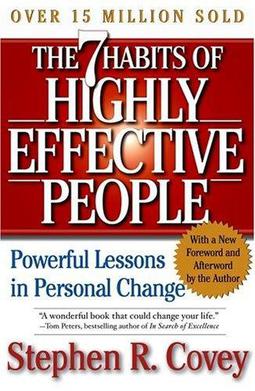
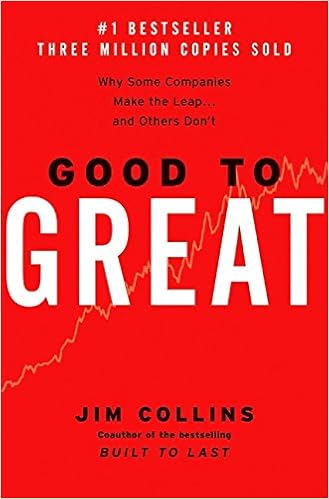
http://ecx.images-amazon.com/images/I/41EV9hbgbCL._SX327_BO1,204,203,200_.jpgLove of reading + desire to invest in and socialize with co-workers = let's do some book clubs!  Will be meeting weekly with my directors over Jim Collins' classic, "Good to Great," and with my analysts to dissect Stephen Covey's "7 Habits of Highly Successful People."  Looking forward to the discussions that will ensue and the things we will learn together for personal development and firm advancement purposes.

3.07.2016

Lazy Linking, 167th in an Occasional Series


Stuff I liked lately on the Internets:
https://cdn1.vox-cdn.com/thumbor/Wo4RRxik6_5Na3Cf5VQpN7bdRNo=/0x249:960x789/1310x737/cdn0.vox-cdn.com/uploads/chorus_image/image/48997749/12790866_10100442248746916_3503726409261978422_n.0.0.jpg
167.1 Booming demand + scarcity = hello to surge pricing at Disneyland bloom.bg/1RaQf9u @business


167.2 Sign of change in NBA+Curry greatness: he'll prob make more 3’s this yr+last than Bird's whole career bit.ly/1VXi4WT @tomhaberstroh

167.3 Are self-driving cars better or worse for environment? Depends on how fully automated they become bit.ly/1Rv7hC5 @voxdotcom

167.4 Megan McArdle asks diehard R’s if they’ll vote for Trump and gets a resounding NO bv.ms/1ScZoDq @asymmetricinfo

167.5 Whole Foods sold pre-peeled oranges & the Internet lost its collective mind bzfd.it/1Ydfbmm @buzzfeed

3.05.2016

What a Difference a Generation Makes

Although my dad and I are very different people, it is natural for me to see him as a yardstick for my maturation as a man, husband, father, professional, and citizen.  Such is the subject of today's post.  It is my hope that this post simultaneously honors him and allows me to some self-reflection.

To begin with, the title says it all.  What a difference a generation makes.  He would be considered "first generation in the US," and consider for a moment what that entailed: making it, in a new country where the language, cultural norms, and social networks are all foreign.  (By the way, it's no coincidence that I am now on the board of the Welcoming Center for New Pennsylvanians, which recognizes how difficult this is, even for people as well-educated or credentialed as my dad, and provides all kinds of useful resources to help people in this situation to thrive in this country/state/city.)

That generation gap is, really, everything.  My dad chose a highly technical career path so that he could make good enough money to make sure my sister and I had every opportunity and advantage growing up so we could succeed in our lives and in this country.  In additional to his professional path, he made choices in the social dimensions so we had a strong tie to our home culture, whether sending us to Chinese school (which I failed miserably at) or getting us involved in Taiwanese youth leadership activities (cute girls there = I was significantly more motivated).

Our choice of extra-curricular activities solidified the foot we had in our new culture: baseball, soccer, gymnastics, ice skating, swimming.  Of course, what Asian parent didn't make their kid learn a musical instrument, and so we did piano too.  If there was any time left over in his life or ours, it was to impart on us other important lessons, like respect for nature (National Geographic subscription, endless nature documentaries) or taking care of your body (exercising together as a family, whether at the local community college track or on a long nature hike).

You will find some of these themes in my life and in my parenting.  Poor Aaron and Jada are subject to Chinese language tapes, nature documentaries, and individual and group exercise outlets.  And, more broadly speaking, I've inherited my dad's absolute commitment to doing right by the children, whether in providing for them or in otherwise preparing them for their own lives.  In these senses, the proverbial apples has not fallen far from the tree.

And yet there are some considerable differences.  I came to faith through my friend and his church community, so Christianity is an overarching influence in my life and so we have church activities and spiritual gatherings that were absent from my childhood.  Also, whereas my mom stayed home and handled most of the kid and home tasks, Amy and I have a more balanced division of labor, so the roles that were more distinct in my parents' parenting of my sister and me are more shared out between my wife and me.

Finally, my job involves running the business and getting new business, so my extra-curricular outlets get me into issues and circles that help me be out there with my work hat on, like sitting on boards or getting involved in my local civic association or going to business events.  Whereas my dad hewed to things like Taiwanese gatherings, fitness events, and coaching my baseball team.  Notably, my dad's activities had a lot of intersection with our lives, whereas my activities have very little if any intersection with my kids'.

Ultimately, as a dad you want your kids to take from you the values you hold dear but live them out in new ways commensurate with the new contexts in which you're growing up.  I think I can say that that's largely what's happened.  A generation between my dad and me has also included a cultural/language/country gap and a faith gap.  Though they won't have as far to bridge, maybe Aaron and Jada will find someday that there is a lot to compare and contrast for them as well.

Too Short for a Blog Post, Too Long for a Tweet 522

  Here are a few excerpts from a book I recently read, "Moby Dick," by Herman Melville. Again, I always go to sea as a sailor, bec...