11.30.2015

Lazy Linking, 157th in an Occasional Series

Unseen ArtStuff I liked lately on the Internets:

157.1 The case to let 13-year-olds vote bit.ly/1YzLz33 @voxdotcom

157.2 AM Slaughter, TN Coates on the Princeton/Wilson controversy on.fb.me/1Iqxage @slaughteram theatln.tc/1Hw5fAH @tanehisicoates

157.3 Stark racial disparity in home lending in Baltimore bit.ly/1PNG4KY @ncrc

157.4 When are economic impact multipliers wrong or even useless bit.ly/1NfVpyY @c2er

157.5 Recreating masterpieces in 3D so the blind can enjoy them bit.ly/1XiGEWY @thisiscolossal


11.26.2015

A Crying Shame

http://www.gannett-cdn.com/-mm-/b630d3e106f7887704e8accad2747f225a810ea8/c=141-0-3650-2638&r=x513&c=680x510/local/-/media/2015/11/24/USATODAY/USATODAY/635839990787576262-EPA-USA-CHICAGO-POLICE-SHOOTING-77821974.JPGI don't need to embed the video because you have seen it: 17-year-old Laquan McDonald shot 16 times by a white police officer on the streets of Chicago, the footage of which was recently released on the heels of the officer being charged with first degree murder.  I have only watched the video twice, and have not consumed any other coverage on the original shooting or the subsequent legal proceedings.  But - and if you know me, this is an extraordinary statement for me to make - I don't really need to know anything more about this.  What I saw was a young black man gunned down in a way that you might put down a wild animal.  It doesn't really matter to me what the extenuating circumstances are that led to this, because there is no explanatory context that makes this incident in any way acceptable.

How we treat young black men in this country is becoming shameful.  I am embarrassed, I am angry, and - because I have an infant who is going to be a young black man in this country someday - I am afraid.  I am not sure whether my tears or my prayers are borne of embarrassment, anger, or fear.  But there has been a lot of all of that since this story broke.  May God have mercy on us all.


11.25.2015

Complaining About Complaining

http://maastricht-students.com/wp-content/uploads/2011/11/dare_to_complain.jpg
With Thanksgiving coming up, I figured I would devote a post to complaining about complaining.  Well, hopefully there is some insight and soul-searching amidst the complaining.

First, why do we complain?  A lot of reasons, which I won’t be able to comprehensively list off the top of my head.  For starters, we don’t realize how good we have it.  We may tend to discount the good and amplify the bad.  Or, we may have unresolved anger or disappointment or jealousy that manifests itself in complaining about one thing but really that’s just a proxy for a much bigger grievance that we haven’t yet worked out. 

Consider also the social element of complaining.  After all, when it feels good to complain, it’s not because of the complaining itself, it’s having an audience for the complaining.  (If you disagree, try ranting to yourself and see how unsatisfying it is.)  So what do we get out of complaining to others?  Maybe it’s a cry for much-needed sympathy.  Maybe there’s joy in sharing in a grievance against a mutually hated group, whether a sports team or a political party.  Maybe there’s a little bit of “humblebrag” going on – oh look at me juggling so many parental tasks at home or lamenting that I’m missing a key ingredient for the eight-course meal I’ve been able to whip up in the midst of working a demanding job. 

I’m sure there are other reasons why it feels good to complain, but I’ll stop there.  As a person of faith, complaining is an indicator of ungratefulness, which is more serious of a problem than you might think.  But before I get into that, let me just clarify that by ungratefulness I do not mean that we are chipper in all situations.  For sure, life is awful sometimes, and it is not meant for people of faith to keep up a sunny countenance through it all. 

But there is a difference between always having a smile and always being grateful.  Life may knock us down so badly that it seems there is no end to the darkness that has enveloped us.  We need not always be able to say easily that God is working good in the totality of our lives, including the rough patches.  We need not always feel close to God or feel He is close to us, or at least this is the conclusion I have drawn from my read of the Psalms, a surprising number of which are raw rants against God amid crushing devastation.  But somewhere in our soul, even if we have let go of God, we may hold out hope that He has not let go of us.  There is tumult all around us, but also a faint sense that there is an anchor nearby.

Thankfully, most of us, most of the time, are not swimming in such crisis.  And yet still we whine and bicker and generally harbor a cynical and snobby attitude towards life.  To steal a line from a Louis CK monologue, we gripe about flying (a common source of complaints) without considering just how miraculous and privileged an experience it is.  To extend this line of thinking even further, many of our most common complaints in this country belie a level of luxury that is unthinkable to the rest of the world and the rest of history – hospitals, grocery stores, gas stations, TV shows, sporting events, and yes even politics. (Read the non-US sections of The Economist if you ever need a reminder about how good we have it here.) 

As a dad, it enrages me when my kids act like this.  Partly it’s because I’m trying to raise them as thankful and respectful people.  But partly it’s because it is a slap in the face to me and my wife.  We work hard to provide for them, and sweat so much small stuff as part of that, and as a result they live the charmed life, but don’t fully appreciate it.  Believing in a good God who is lavish and wise in His provision to all, I can only begin to contemplate how irked He must be at our potty attitudes. 

End rant.  Enjoy this Thanksgiving season, and give yourself more fully to a spirit of gratitude.  I know I will try to.

11.24.2015

The Maturation of A Young Icon

Remember when Facebook first came out and Mark Zuckerberg was pilloried as an immature nerd not ready to lead a growing empire?  (I haven't seen "Social Network" but I understand he doesn't come off that great in that flick.)  That was like 800 million followers ago, and since then he has shown a deft touch in scaling up, correctly backtracking where he overstepped, and adding new features that have proven to be indispensable to our daily lives.

He also seems to have found his voice as a person of influence.  His philanthropy has become less impulsive and more reasoned.  He shared from his heart about miscarriages to combat the stigma many people feel about being open about such losses.  And, just last week, his announcement that he was taking two months of paternity leave made national headlines and reflected his understanding of both the importance of being away from work and the pressure many successful people feel to not take the time.

In other words, he gets that he has created an incredibly influential thing and seems sincere about wanting it (and himself) to do as much good as possible, understanding that all eyes are on it (and him).  To a smaller degree, we are all in the same situation and should try to think this way.

11.23.2015

Lazy Linking, 156th in an Occasional Series

Stuff I liked lately on the Internets:
156.1 Big ups to my friend and grad schl classmate for doing well by doing good bit.ly/1OUN2iG @phillytrib

156.2 The best church programs not only don't cost $ but invite others' resources in bit.ly/1QxS7Oc @fexpressionsus ht @fredtmok

MORAVIA 1156.3 Fancy that: every time you add a govt reg you have to subtract one @mercatus bit.ly/1Mrbogl ht @margrev
156.4 Did media Beirut covered less than Paris or did we readers just not care as much? bit.ly/1QHqhhs @voxdotcom

156.5 HBR says humble leaders are effective ones (shades of Collins' "Level 5 Ldrs") bit.ly/1MmX4TU @harvardbiz ht @margrev

156.6 1.1B NYC taxi/Uber trips is a lot of data pts to play w/ bit.ly/1j8UB6W @todd_schneider ht @kottke

156.7 Unending extensions of original movie ideas (Star Wars, Marvel)...now that's an original idea! bit.ly/1MYFrJr @wired

That face. Here's what he pulls when he has to stay in bed because he's sick.156.8 Agreed: Caillou is the worst bzfd.it/1QSkkhK @buzzfeed

156.9 "The Rock" talks about his bouts w/depression bit.ly/1I15nIn @people ht @namicommunicate #iamstigmafree

156.10 Nice tool for seeing which banks invest locally bit.ly/1ME12Yf @nextcityorg

11.20.2015

Recommended Reads, 22nd in a Quarterly Series

http://junesilny.com/wp-content/uploads/2015/02/ct-prj-0106-stack-of-books.jpgThis past three months included our Amtrak trip across the country, so there was plenty of time for reading even in the midst of the craziness of my work and family life.  Here are my favs from the past quarter:


Zealot: The Life and Times of Jesus of Nazareth (Aslan).  A really interesting look into the time period Jesus lived in.

What If?: Serious Scientific Answers to Absurd Hypothetical Questions (Munroe).  The kinds of crazy questions you think of but never consider anyone will answer, and voila here they are.

Dreams from My Father: A Story of Race and Inheritance (Obama).  Interesting to get into the head of our POTUS as he mulled over issues of family and race.


Bonhoeffer: Pastor, Martyr, Prophet, Spy: A Righteous Gentile vs. the Third Reich (Metaxas).  An incredibly exciting book about a truly committed Christian who paid the ultimate price for standing up to dastardly evil. 

The Life-Changing Magic of Tidying Up: The Japanese Art of Decluttering and Organizing (Kondo).  I don't buy everything here but I did get motivated to minimize my possessions and my living space.

Gang Leader for a Day: A Rogue Sociologist Takes to the Streets (Venkatesh).  I loved this account of a PhD candidate who embeds himself in the life of Chicago's most notorious housing project and learns about the drug trade in the process.

Salt Sugar Fat: How the Food Giants Hooked Us (Moss).  A searing expose into both Big Food's marketing ways and our mindless consumption of them.

11.18.2015

Mixing It Up

http://neworleans.media.indypgh.org/uploads/2006/06/p6170522.jpg
A week ago I posted the following statement on social media:

"We say we want mixed income nhds but then resist rich ppl moving into poor nhds or poor ppl moving into rich nhds. Discuss."

What ensued was a lively discussion with all sorts of perspectives and statements.  But I could've guessed this: whether in the blogosphere, academia, or here in the streets of Philadelphia, gentrification is a hot topic.  And why not?  In one issue, we're talking about race, economics, home, change, cities, and justice. 

I'm not going to wade any further into the topic today.  I did want to counterbalance the focus on gentrification (i.e. "rich ppl moving into poor nhds") by touching on something no one reacted to, which is the heat generated towards "poor ppl moving into rich nhds."  Those with means have many defenses against this, the most common of which is exclusionary zoning, whereby houses have to have a high minimum square footage or lot size, thus deterring the smaller and cheaper options that are needed to allow people of less means gain a foothold in a nice neighborhood or school district. 

On my very block, there's been a lot of hand-wringing over an old rowhouse being torn down and replaced by a plain-looking building that holds eight two-bedroom apartments.  In a sea of twins, the new construction may look out of place.  And parking, which is always a challenge, will become more difficult.  But this is how you make our nice neighborhood and school catchment accessible to a lower housing price point.  By my rough calculation, a family that can move into one of those two-bedroom units can make half to a third the amount that families that bought single-family homes at the peak 8-10 years back. 

In my book, that's a nice diversity of income levels all in one place, all accessing a great neighborhood and a great public K-8 school.  But, again, there's been a lot of hand-wringing.  On the surface, the issues are aesthetics, parking, and historic preservation.  But, below the surface, is it that people actually aren't that comfortable with a wider income distribution?  I can't say I can read people's motivations.  But I can say that whenever there is something that makes possible multiple price points in the same neighborhood by adding lower price points in the midst of higher ones, those of us who can afford the higher price points find all sorts of reasons to protest. 

Sometimes it seems it's easier to give up on mixed-income neighborhoods altogether.  So long as all neighborhoods, at all price points, have basic characteristics like a functioning school and public safety and reasonable municipal services, isn't that a pretty good thing to aim for?  I'm sympathetic to that thrust, although it feels too much like "separate but equal" for me to want to give up just yet on the possibility of more mixing.  Then again, easier said than done.  I'm glad for my block, and the diversity represented on it, and I realize that most Philadelphians, and really most Americans, don't enjoy the same experience.  I still wish more did.

11.16.2015

Lazy Linking, 155th in an Occasional Series

https://usatftw.files.wordpress.com/2014/11/ap_aptopix_cowboys_giants_football_68976850.jpg
M-Doors Open 2015- Rooftop maze 3.93 GRID KIDS.jpgStuff I liked lately on the Internets:

155.1 Milwaukee wastewater plant, unlikely tourism destination bit.ly/1MmgzM4 @amercitycounty

155.2 Taxpayers spend more subsidizing driving than other transp modes (>$1K/person/yr) bit.ly/1zwH1BX @uspirg

155.3 Do male execs favor young men b/c they're afraid initiating w/young women = sexual harassment? bit.ly/1PmKZUw @hrexecmag

155.4 Immigrants: 16% of labor force, 18% of business owners, & 28% of Main Street shops bit.ly/17HJzAu @ascoa
155.5 Do stop talking about Starbucks' red cup; don't stop talking about whether there's a war on Xmas bit.ly/1kPDNTG @fdrlst

http://i2.cdn.turner.com/money/dam/assets/151108180859-starbucks-red-cup-780x439.jpg155.6 Why brushing teeth w/your left hand helps you be an elite NFL receiver, by ODB on.wsj.com/1OGBdwk @wsj
155.7 Yelpers want poor white nhds to stay authentic but poor black nhds to change bit.ly/1kOjrdB @citylab
155.8 CA basing its transp projects on VMT vs LOS may make transit projects in the US easier to advance bit.ly/1qGCFB1 @citylab
155.9 Middle-aged white folks are seeing a troubling rise in death rate bit.ly/1Qqjysj @newyorker

155.10 How food tastes depends on how it smells/sounds/looks/feels bit.ly/1kK2CAm @newyorker

11.15.2015

Too Long for a Tweet, Too Short for a Blog Post XXVI

Coca-Cola’s 1971 “I’d like to teach the world to sing” ad marked a switch towards advertising that aimed to “lift the heart”
Here's an excerpt from a Financial Times article I just read, "How the Mad Men Lost the Plot":

What if you were to invent a way of getting light buyers to recall your brand just as they are about to choose? Ideally, it would reach millions of people who aren’t particularly thinking about your product. You’d want them to see the same thing at around the same time, so that they can talk to each other about what they’ve seen, reinforcing each other’s memories of it. You would need to sneak up on them, since they have near-zero interest in hearing from you, indeed don’t want to. You’d need a form of content requiring negligible mental effort to process: one which comes in bite-sized chunks, but which is still capable of moving and delighting. It turns out there is an app for that: the TV ad.

TV is in healthier condition than anyone predicted 10 years ago. The average viewer watches nearly as much TV, on TV sets, as he or she always did, and now they watch programmes on mobiles and tablets too. We aren’t skipping ads any more than we used to: 87 per cent of viewing in the UK is “live”. A recent US study found that ad-skipping is declining; people are too distracted by their phones to bother. The passive nature of TV turns out to be its hidden weapon: it facilitates a détente between viewer and advertiser. The best ads make us pay attention and look up from our phones.

11.13.2015

University, City

http://photos.uwishunu.com/wp-content/uploads/2014/08/BaltAveDollarStroll_J.Fusco_47.jpgI'm obviously biased but I can't help but think that there is exploding interest in a certain kind of urban living situation that has the following characteristics (in no particular order):

  • Affordable
  • Racial/ethnic/socio-economic diversity
  • Historic architecture
  • Trees
  • Lots of non-car transportation options (transit, bike share, car share)
  • Good neighborhood public school
  • Nearby green space
  • Great retail
  • Near major employment centers
  • Safe

You know where I'm going with this.  University City is a great example of just such a neighborhood, circa 2015.  Many of my college classmates, who graduated with me 20 years ago, weren't from Philly and didn't stay in Philly, so their impression of my neighborhoods is from the mid-1990's and the notion that you could raise a family here is crazy to think. 

Penn's presence and investments obviously play a huge part in making University City what it is, and it is interesting to see how campus-proximate locations have become hot places for all kinds of people to live, from millennials to young families to retirees.  The intersection between universities and cities has proven to be a vibrant place, and I'm thankful to have fallen into such a residential location for my family.

11.11.2015

The Great Challenge for Our Times

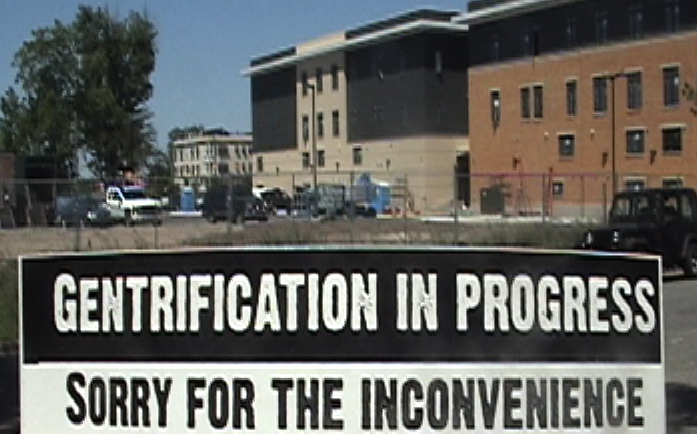
https://griid.files.wordpress.com/2012/05/picture-34.pngGentrification has been in the news a lot lately among the intelligentsia.  I liked but didn't love this recent article in The Atlantic called "In Defense of Gentrification."  It is absolutely true that displacement is rarer than people think, that improving a neighborhood or public school is a huge plus for the long-timers that do stay put, and that an influx of new investment/residents/activity in an area has positive implications for a city and school district as a whole.  It is unfortunate that we cry foul about gentrification - either for or against - without delving deeper into what is obviously a much more nuanced and complex dynamic.  And it is sad that we say we desire socio-economic diversity and yet get so riled up when rich people want to move into a poor neighborhood or vice versa. 

But what is equally true is that, for a variety of reasons, we are becoming a more socio-economically polarized society, and that the poorest among us are getting poorer (in resources) and weaker (in influence).  And how we respond to this should matter, whether we are rich or poor, free-market or socialist. 

Now, we can and ought to disagree about what actually to do.  You know that I am a fairly cold-blooded capitalist who is leery of the efficacy of top-down public sector action.  Hopefully even the most pro-government person around understands - conceptually and in the real world - that trying to do good through government mechanisms is fraught with all kinds of unintended consequences.  But a completely laissez-faire approach doesn't do much better.  The whole social justice movement is predicated on the belief, which I assume everyone would agree is true, that those who have been systematically denied of power will always get screwed, either consciously or unconsciously, by everyone else. 

So there you have it.  We need to act decisively and intentionally in order to do right by the poorest and most marginalized among us, but actually doing so in ways that are even remotely positive (let alone hugely transformational) is far easier said than done in the day to day.  This is quite the challenge for our times.

11.09.2015

Lazy Linking, 154th in an Occasional Series

What I liked lately on the Internets:
http://cdn.andnowuknow.com/mainStoryImage/cosmicapple.jpg
154.1 Dems have a voter suppression strategy too 53eig.ht/1MEtuP9 @fivethirtyeight

http://cinemajaw.com/wordpress/wp-content/uploads/2014/08/Suburbia.jpg154.2 We want intelligent longform journalism but there's no good business model to sustain it bit.ly/1RySrcG @stratechery


154.3 Socialists are horrified, but market forces make food banks more effective for all bit.ly/1XMV12u @margrev


154.4 This account of a Mt. Airy couple that adopted 20 kids is eye-opening bit.ly/1JKcIGL @newyorker

154.5 The South is dead (lost the Civil War), long live the South (its ways still influence all of America) bit.ly/1H4hUot @newyorker

154.6 The making/branding of new apple products (the fruit, not the company) nyti.ms/1WvPNeh @nytimes

154.7 The #1 determinant of successful/happy people is that they did chores when they were kids bit.ly/1khzxg2 @techinsider

154.8 It doesn't benefit the airlines to be nice to passengers econ.st/1kBX0Ik @theeconomist

154.9 1st views of what Provident Mutual bldg in West Phila (my 1st office location!) will look like bit.ly/1Oth5xG @westphillylocal

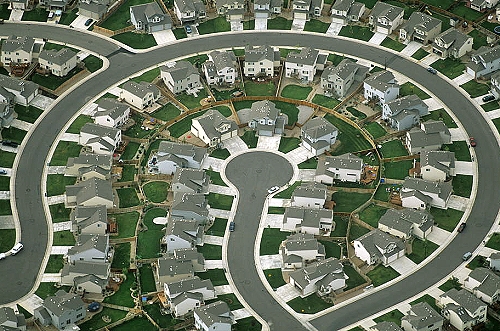
154.10 Suburbia makes it hard for adults to make/see friends bit.ly/1PUke8W @voxdotcom


11.04.2015

Learn How to Learn

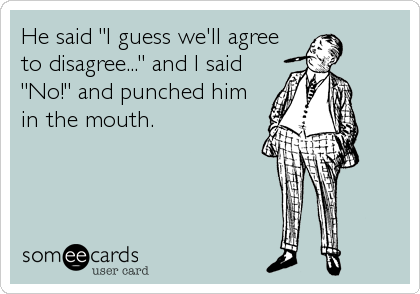
https://blogger.googleusercontent.com/img/b/R29vZ2xl/AVvXsEhzf8UNMsVQTtMJctpPCWbdYNAR75WktPSfl2NF_G8Gv4_CmnDO-yMiq3-NGZxZal5a_PYbW-VEXqICsSIhvQ1g3pJyjgERAIqI52Ocolj3QVmm_G1A9VZgFljjcSRida3EFXze/s1600/agree+to+disagree-3.pngIn no less than the perceived left-leaning New York Times was this great article on the consequences of academia's rejection of conservative thought.  Of all the places you'd expect to find open-mindedness, surely it would be tenured professors who have almost complete intellectual freedom to explore all angles on all issues.  And yet still there is bias and close-mindedness and group-think. 

When my kids get old enough to sniff higher ed, I hope they can find a place where they can learn how to learn, which is to say to gain the tools to absorb information, weigh all the perspectives fairly, come to a conclusion but hold it loosely, and respect that others will come to different conclusions in equally pure and informed ways.  How many such universities will exist by then?

11.02.2015

Lazy Linking, 153rd in an Occasional Series

What I liked lately on the Internets:


153.1 More proof that coddling kids crumbles them as adults bit.ly/1Lw8O9B @lifezette

153.2 The selfie girls we all made fun are actually better people than we are bit.ly/1Wnoym8 @medium

153.3 A stadium sold off into private hands...and the community wins as a result bit.ly/1GQmg8a @nextcityorg

153.4 Why 5x3=5+5+5 was marked wrong and why it matters bit.ly/1GEvvs5 @medium

153.5  That iconic pic of Bob Beamon's incredible long jump was taken by an amateur hdeadsp.in/1MU1fuc @deadspin


11.01.2015

Huang Family Newsletter, October 2015

Aaron and Jada are really getting into their extra-curricular activities.  Aaron has karate three times a week and swimming two or three times a week.  Jada has choir, her gymnastics class is now supplemented with an additional three-hour practice with the pre-competitive team, and her violin lessons at school have led to public performance opportunities.

Asher turned six months and a couple of teeth have popped out.  He had a choppy month sleeping, with one two-week period consisting of more middle-of-the-night feedings than the previous three months combined.  He's acclimating to baby food and rice cereal in addition to formula.

Amy and Lee are running around crazy with parent, house, and work stuff.  Amy's job has involved many hours of charting at home, while Lee's job is also needing more evenings out and working into the night.  Both could desperately use a good night's sleep!


Too Short for a Blog Post, Too Long for a Tweet 522

  Here are a few excerpts from a book I recently read, "Moby Dick," by Herman Melville. Again, I always go to sea as a sailor, bec...