9.30.2015

Huang Family Newsletter, September 2015


Aaron, Jada, and I kicked off the month with a bang, taking a train across the country all the way to California, with stops in Pittsburgh and Chicago and through beautiful scenery like the Mississippi River and the Rocky Mountains.  We saw my parents and my sister and her family while we were in California before flying home to the start of work and school. 

Aaron and Jada are now in 3rd and 5th grade.  Aaron picked up swim team practices at the local Y and will be starting karate next month.  Jada is doing choir and gymnastics again, and made it to the gymnastics institute’s club team so will be practicing there more.

Asher is now 5 months and is healthy and happy.  He sleeps through the night and is easing his way into solid foods.  Between his parents and siblings and our great nanny and her daughter, he gets lots of care and attention. 

Amy is adjusting to work under new ownership, and now works 3 days a week instead of 3 ½.  She and I do a lot of shuttling of kids to various activities, and I also have to shuttle myself to clients throughout Pennsylvania, Delaware, and New Jersey.


9.29.2015

It Was the Best of Times, It Was the Worst of Times

Philadelphia at night
I came to Penn and to Philadelphia in the early 1990's.  I was not from around here.  Far from it; I grew up in an upper middle class suburban neighborhood in San Jose, in the heart of Silicon Valley, and attended a public high school that consistently ranks among the best in the country.

The Philadelphia I arrived in as a fresh-faced 18-year-old freshman in 1991 was on the brink of bankruptcy.  There was no Pennsylvania Convention Center, no tourism strategy, no live/work/play buzz.  No major commercial or residential developments loomed on the horizon.

University City was similarly grim.  It was essentially a formal part of Penn freshman orientation to not go west of 40th Street.  On the corner of 40th and Walnut were two fast food restaurants that everyone nicknamed "McDeath" and "Murder King."  University City District did not yet exist, and while I was an undergrad a popular professor who lived just west of campus was stabbed to death on the sidewalk not far from his home.

I feel old saying this, but my freshman year in college was almost a quarter-century ago.  And the Philadelphia of 2015 is markedly different.  Coming off the glow of hosting Pope Francis, and in anticipation of hosting the Democratic National Convention, Philly is feeling swaggy about its ability to play host to the world.  A recent LA Times article gushes, "Why Now is the Best Time to Visit Philadelphia (and It's Not Just Because of Pope Francis)," and recounts all of the wonderful amenities now available to residents and visitors alike.

I have a lot of Penn classmates who shared the Philly of the early 1990's with me but didn't stick around after, going back to where they grew up (which was all over the world) or heading for familiar landing places for Penn grads (Manhattan, London, Silicon Valley).  Invariably, some will act curious or even patronizing when they learn that I never left University City let alone Philly, puzzled as to why someone who has choices would choose the West Philly they remember from their undergraduate days.

And, invariably, they return to Philly - for a convention or a wedding, or for a Penn function - and they see what the LA Times article reported, and what I enjoy every day, which is a Philly that is packed with the kinds of things that delight both residents and visitors.  Incredible public spaces? Check.  New retail and entertainment choices?  Check.  Food, culture, urbanist grit?  Check, check, and check.

As for me, I bet long on Philly as a 22-year-old newly minted graduate, and I'm glad I did.  My mortgage is affordable, my kids can walk to a great public school, and our daily routine involves a lot more flavor and a lot less driving than that of many of my peers.  I'm feeling very full and very grateful.

But all is not utopia.  Part of what I was betting long on in 1995 was a Philly that was broken and needed healing.  Though not all of my faith persuasion believe or live this, I think the Bible speaks of the importance of cities to God's heart and to humanity's redemptive story.  I have decided that there is more good to do and more gain to be had in participating in city life - in all its textured highs and crushing lows - than to be walled off from human pain and community dysfunction in leafy, homogenous suburbs or bucolic rural settings.

Philly may be 180 degrees today from its early 1990's version.  But it still contains crushing poverty, wrenching hurt, and systemic injustice.  Our nation's generations-long shift to a knowledge economy has widened the gap between the have's and the have-not's, and cities like Philadelphia are really becoming tales of two cities, one of grim existence and the other of glamorous cosmopolitanism.  Hence, flashpoints of urban gentrification and cultural insensitivity abound.

A recent Philadelphia Magazine blog post wondered about "The Death of Gentrification," which is to say this generation's gentrifiers are no longer guilty about this juxtaposition between affluence and indigence.  I am torn.  It is good, at a macro and micro level, for people with means to come into a city and enjoy it, invest resources in it, and want more out of it.  Without their activity, there is not enough tax base to solve the problem of municipal services and public education.  We ought not vilify people for this. 

However, even at a very shallow level it is disrespectful to insensitively frolic amidst the graveyard of wrongs and ills that weigh down the vast majority of our citizens.  Inequality in all its forms is a huge issue of our time, and one man's actions cannot possibly solve it; but nor should we be numb to the role we play in either solving or aggravating it.

Twenty plus years after a much younger version of me made big life choices to stay in Philly, I am glad for all the progress the city has made, but I am also alerted to all of the pain that remains.  Both are part of Philly's story past and present, and mine as well.  What will become of our future? 

9.28.2015

Lazy Linking, 150th in an Occasional Series


Cyclists take to the streets during the Pope Ride Saturday. | Photo by Jesse Delaney
Stuff I liked lately on the Internets:

150.1 Interactive map of the whens/wheres of fall foliage bit.ly/1lBlnWG @vacationhere (h/t: @kottke)

150.2 A critical look at what actually makes a difference when you're trying to make a difference bit.ly/1JrACpZ @lrb (h/t: @margrev)

150.3 Urbanists rejoice at car-free Philly; I predict Mayor Kenney OKs a repeat (sans Pope, Coast Guard) next yr bit.ly/1iTCcfi @phillymag

150.4 A cultural anthropologist interprets Apple Stores in religious terms bit.ly/1WnfOJu @atlasobscura

150.5 Does sanitizing "offensive" language on campus help students today or tomorrow? theatln.tc/1EkIxUW @theatlantic

9.24.2015

Joy Ride

You may have heard some Catholic dude was rolling into town this weekend and he may be bringing a few of his friends with him.  Yup, the Popecalypse is upon us.  I'm hoping Philly shows and proves it's up to pulling off the logistics of protecting one of the famous people in the world and accommodating the 1.5 million pilgrims who are here to see him.

It also occurs to me that, while I'm not Catholic, I ought to use the opportunity to do some of my own joy seeking.  After all, my life is crazy, in part because of the many things that make up my normal schedule.  Well, one by one things are getting canceled: meetings are getting rescheduled, most of the kids' extra-curricular activities have been shuttered for the weekend, and even my gym is closed for four days.  

In other words, I can tend to the essentials of my existence and still have extra room during my waking hours to slow down a bit, to contemplate, to be still.  Here's hoping I do good for my soul and spirit, just like so many others in town are seeking to do.

9.23.2015

Too Long for a Tweet, Too Short for a Blog Post XXII

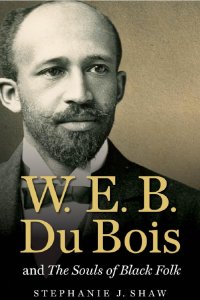
Here's an excerpt from a book I read earlier this month, "The Souls of Black Folk," by W.E.B. Dubois:

In his failure to realize and impress this last point, Mr. Washington is especially to be criticised. His doctrine has tended to make the whites, North and South, shift the burden of the Negro problem to the Negro's shoulders and stand aside as critical and rather pessimistic spectators; when in fact the burden belongs to the nation, and the hands of none of us are clean if we bend not our energies to righting these great wrongs. 

9.22.2015

Context is Everything

I've written often about the importance of having an open mind, which is to say truly seeking to understand someone else's perspective, rather than just absorb their points from your own perspective.  Everyone says they have an open mind but really getting into someone's shoes is hard work, so unsurprisingly we often choose instead to feed on views that support our own.  

You know what else is hard work?  True diversity.  A lot of people pay lip service to diversity but then don't actually implement it in their lives.  Or it is assumed that token diversity is diversity; I still cringe when I hear phrases like "check the box" or "diversity hire."   Or it is forgotten that true diversity means not just the co-existence of different perspectives but the honoring of those different perspectives by all.  True diversity takes effort, and that effort must be motivated by an appreciation of the payoff of diversity, which is that a narrower worldview is improved by the inclusion of many worldviews, each given their right due and all learning from all.  And so it turns out that diversity depends on and is fueled by a commitment to keep a truly open mind.

You know what else is hard work?  Understanding history.  Whether it is past eras or religious texts, all too often we interpret from our modern perspectives rather than taking time to learn what words and actions would've meant during their contemporary period.  How many times have you heard both lovers and haters of the Bible take passages completely out of context to prove their already set opinion, rather than reading with an open heart and an inquisitive spirit?  How many times have you heard friends and presidential candidates purport to know what our Founding Fathers believed, only to be oblivious to the context in which they lived and the past strands of philosophers and sages upon which their opinions were formed?  Why else would we do such things except that we've already made up our minds about something, and refuse to let words and actions be spoken to us from the context in which they were birthed, rather than filtering them through our own pre-set worldviews?  Once again, we realize that properly allowing religious texts and historical information to inform our worldviews takes a truly open mind.

And so it appears that context is everything.  And that keeping an open mind is essential to respecting that context and allowing yourself to be enriched by it.

9.17.2015

Wearing Lots of Hats

http://imgs.inkfrog.com/pix/ndegler1/GFHATDSP_800_001.jpgEven with increasing specialization, it seems to me that so many jobs involve wearing lots of hats.  I've written before about all of the different roles a pastor plays, which you can read here.  But consider three other examples:

(1) I am just an adjunct faculty member at Penn but I know a lot of full-time professors at schools all over the country.  Of course professors teach, and most people understand that the way universities work is that professors are also expected to do research.  That by itself is a hard juggling act, although obviously there is synergy between teaching and research.  But it doesn't stop there.  In order to do research, you need funding, and most professors spend a lot of time doing what professional development officers do, which is the day-to-day slog of fundraising: write grant applications and network and fill out paperwork.  Furthermore, somewhere between teaching and research is the mentoring of graduate students who work under you to do your research.  This too is a major responsibility, to guide and delegate and  manage and instruct.  Finally, many professors have administrative responsibilities within their department, to interview candidates or preside over reorganizations or oversee expansion plans.

(2) Having once been a non-profit executive, and still knowing many good ones, I can speak firsthand to the juggling involved in such a gig.  Of course you are constantly doing fundraising and public relations.  If you have any physical space, you have to worry about facilities issues.  If you have any employees, you have to worry about human resources.  And you also have to worry about back-office functions like accounting, bookeeping, legal, and IT.  Oh yeah, you are also managing a program, or more often than not, multiple programs. 

(3) Of course I think about my own juggling, having gone from being an economic consultant to being a part-owner of said economic consulting firm.  The consulting part itself entails a lot of hats, from the work itself to managing team members, providing customer service, and staying up on industry knowledge.  Tack onto that the responsibility of running the business itself and of getting new business, and it ends up being a lot of hats. 

Some days it's fun to have so many different responsibilities, and some days you wish you could just have only one thing to worry about.  But there's no mistaking that there's a lot of hats involved.

9.15.2015

Market Street, 40th to 50th (from 1995 to 2015)

I first started working at The Enterprise Center about 20 years ago this month.  One of the organization's focuses was a physical location, and in particular Market Street between 40th and 50th Streets.  Back then, the difference between east and west of 40th was stark; driving west on Market you'd even hit a dip at that very intersection, in case the arrival wasn't memorable enough.  Indeed, it was essentially a formal part of freshman orientation at Penn that you just didn't go west of 40th.

I decided 20 years ago that I was going to take four pictures at each intersection on Market between 40th and 50th (one pic from each corner), and do so every five years to see where things were changing and where they were staying the same.  I have kept to that schedule every fifth September since then, and this past weekend I took my three kids with me; Aaron and Jada dutifully pushed Asher around and carefully crossed streets while I raced around each corner at each intersection.

The whole exercise took well under an hour, plus another few minutes uploading photos onto a Google+ album.  I decided to put my other pics, from 1995, 2000, 2005, and 2010, on Google+ albums as well.  You can peruse them all here (I'm pretty sure you don't need a Google account to see these):

1995

2000

2005

2010

2015

I suppose that I could put photos next to each other, so they are organized by place rather than by year.  Seeing the change over time, after all, is the whole point of this exercise.  But that is beyond my technological ability and time availability.  Still, I hope you will take a quick peek and marvel at what was (if you are new to this neck of the woods) or what is (if it's been awhile since you've been).  And, if you're interested in tagging along next time, look me up in September 2020 and we'll go for a walk!

(Btw, kudos to The Enterprise Center, which has played a big part in a lot of the positive transformation.  That building itself is, in my opinion, the most incredible before-and-after story.)

9.14.2015

Original Sin

http://media-cache-ec0.pinimg.com/736x/6b/5e/be/6b5ebe54dce428d8f9be11194120d607.jpgJust because I have an African American child doesn't mean I'm not racist sometimes.

Even though I have a beautiful wife and a wonderful daughter, I still give into lust and sexism.

"Love your neighbor" and "all men are created equal" is as basic as it gets, and yet my heart fills too often with jealous or gossipy impulses, critical or divisive thoughts, and "I'm better than you" haughtiness.

I have a great job and sufficient material possessions, and yet I continue to covet.

I know I should be generous, I have the resources to be generous, and the opportunity to give is all around me...but I do not often give.

I believe that injustice is an offense to God and that I am to fear no man, but so many times I shrink back instead of standing up or standing with.

God is deserving of "sole deity in my life" status, and yet my day is littered with homages to and reliances on false god after false god.


I know that to harbor poor self-esteem, jealousy, and despondency is to insult God by doubting His wisdom in making my life the way it is and not another way.  But I am still guilty of these things many times over.

I know that to harbor anxiety, impatience, and drivenness insult God by doubting His perfect provision and His perfect timing for my life.  But I am still guilty of these things many times over.

Daily I am weighed down by the depravity around me and the depravity within me.  And daily I am lifted up by the remembrance of the assurance and finality of forgiveness that is available to me. 
 
I am a believer.

9.10.2015

Hollywood Family

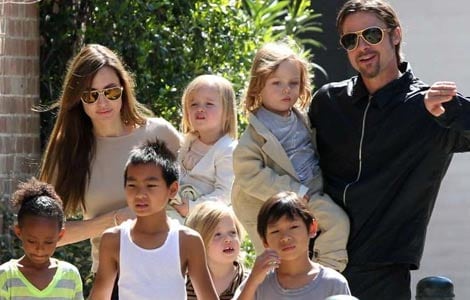
A Facebook friend of mine who I hadn't seen in the flesh in a while recently congratulated me on our new addition.  He teased me about being a "Hollywood family," referencing the practice of some star couples to adopt babies from all over the world.  I took the quip in stride and appreciated the kind words.

It made me think, though, what is meant by a "Hollywood family."  Negatively, it insinuates that babies are accessories and adoption is trendy, which is of course pretty shallow.  But the description is not without its positive connotations.

Partly it means people with significant means can afford the cost of adoption and of big families.  While we are by no means raking in $20 million per film, we are fortunate to have sufficient financial resources to stomach the extra cost of growing our family through adoption.  It's not easy but it is doable, and for that we are grateful.   

Partly it means that eclectic families are noticeable, and that's a good thing too.  Not the attention per se, as we are not "look at me" type of people.  But more so that we like how we look because it reflects what we value, which is the power of diversity, connection to multiple cultures, and a response to what we see in the Bible as an invitation to be blessed by being an adoptive family.

We realize that our lives are not just our own to live, but that we are out there in the world, being observed by others and hopefully conveying a message that is of benefit to others.  It's what we all do, is watch others and in turn be watched by others.  And I can't think of anything more I'd like to communicate about what's important in my life than that God has seen fit to bless us with three beautiful children who are now part of the funky, colorful clan called the Huangs.

9.08.2015

Too Long for a Tweet, Too Short for a Blog Post XXI

Here's an excerpt from a book I just completed, "Zealot: The Life and Times of Jesus of Nazareth," by Reza Aslan:


Whatever languages Jesus may have spoken, there is no reason to think he could read or write in any of them, not even Aramaic. Luke’s account of the twelve-year-old Jesus standing in the Temple of Jerusalem debating the finer points of the Hebrew Scriptures with rabbis and scribes (Luke 2: 42– 52), or his narrative of Jesus at the (nonexistent) synagogue in Nazareth reading from the Isaiah scroll to the astonishment of the Pharisees (Luke 4: 16– 22), are both fabulous concoctions of the evangelist’s own devising.

Jesus would not have had access to the kind of formal education necessary to make Luke’s account even remotely credible. There were no schools in Nazareth for peasant children to attend. What education Jesus did receive would have come directly from his family and, considering his status as an artisan and day laborer, it would have been almost exclusively focused on learning the trade of his father and his brothers. 

9.07.2015

The Train Ride of a Lifetime

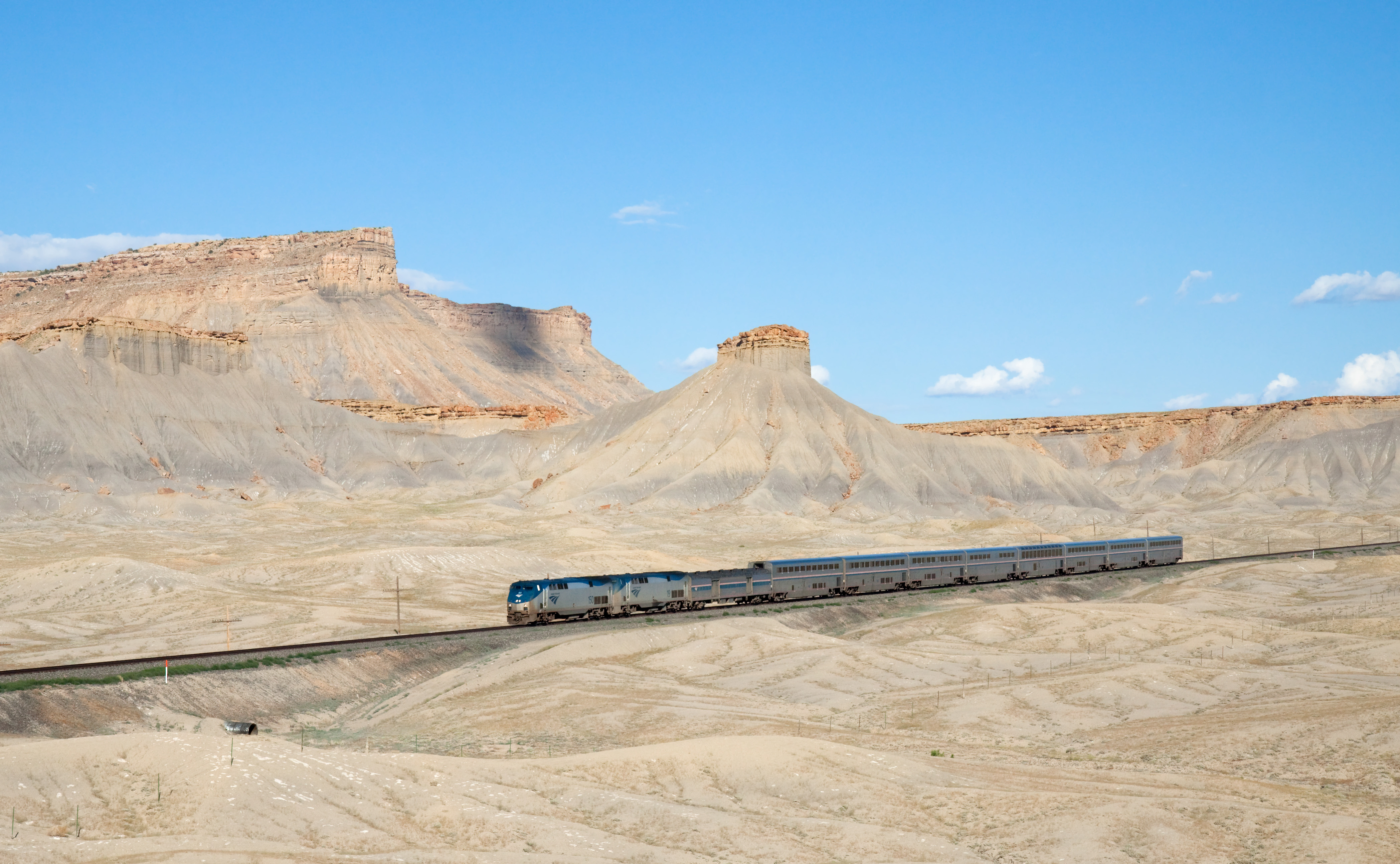
https://upload.wikimedia.org/wikipedia/commons/f/f6/Amtrak_California_Zephyr_Green_River_-_Floy,_Utah.jpgFrom Philly to the Bay Area via Pittsburgh, Chicago, and the Rocky Mountains, I just took the train ride of a lifetime.  The most scenic parts where on the famous California Zephyr from Chicago to Emeryville (pictured), but the whole thing was grand: lots of uninterrupted time by the window lost in a good book, quality time with Jada and Aaron, and many "whoa" moments of scenery. 

I highly recommend it and we three are all scheming about when we can do this again.  You can see more, plus the rest of our vacation, over at Huang Kid Khronicles.

9.01.2015

Huang Family Newsletter, August 2015

Asher is now four months old.  His charmed life includes sleeping through the night, smiling easily, eating a lot, and getting doted on by his parents and big siblings.
Amy returned from her three-month leave from her job.  We have a great nanny who takes care of Asher during the weekday and also brings her toddler daughter along for companionship.

Lee finished up the grad-level class he teaches every summer and spent a lot of time in Delaware during client work.  He also had an overnighter to Connecticut and is helping break in three new hires at work.
Aaron reveled in two weeks of drama camp at the local theater, while Jada was in her element with two more weeks of sleepaway camp. 


Too Short for a Blog Post, Too Long for a Tweet 522

  Here are a few excerpts from a book I recently read, "Moby Dick," by Herman Melville. Again, I always go to sea as a sailor, bec...