 Because I teach during the months of May, June, and July, and the kids' school year starts so late, my vacation tends to be at the very end of the summer. With the addition of a newborn and the growing geographic footprint of my consulting practice, this year has me at the precipice of my week off with very little left in the tank. For the next several days, you'll find my by the window of a train slicing through the heart of the country, with many books loaded on my phone and no intention of checking work email. Here I go...
8.29.2015
Vacate
Because I teach during the months of May, June, and July, and the kids' school year starts so late, my vacation tends to be at the very end of the summer. With the addition of a newborn and the growing geographic footprint of my consulting practice, this year has me at the precipice of my week off with very little left in the tank. For the next several days, you'll find my by the window of a train slicing through the heart of the country, with many books loaded on my phone and no intention of checking work email. Here I go...

8.28.2015
Now Hiring: Administrative Associate
 My
firm has an opening for Administrative Associate, which is an entry-level
position that will touch just about every aspect of the inner workings of our firm, including accounting, HR, and IT. As we grow, having good administrative support becomes paramount, so I am very excited about the existence of this position and about who we will get to bring on board. Please go here and scroll down to the bottom.
My
firm has an opening for Administrative Associate, which is an entry-level
position that will touch just about every aspect of the inner workings of our firm, including accounting, HR, and IT. As we grow, having good administrative support becomes paramount, so I am very excited about the existence of this position and about who we will get to bring on board. Please go here and scroll down to the bottom.
8.27.2015
Too Long for a Tweet, Too Short for a Blog Post XX


"The ever-growing population of free blacks— who came to Philadelphia with the hope of making a life for themselves and their families— were a frequent target of that violence. Much of the anger came from Philadelphia’s large working-class and poor populations, who were easily enraged by what they saw as the unfair competition that free blacks presented in the labor market. It was ironic that the racism that emboldened employers to pay free blacks less money than their white counterparts for the same jobs was also the source of so much racist anger volleyed at them by the white workers, who felt they had been robbed by workers who were willing to be paid so much less."
8.25.2015
Hypocrite
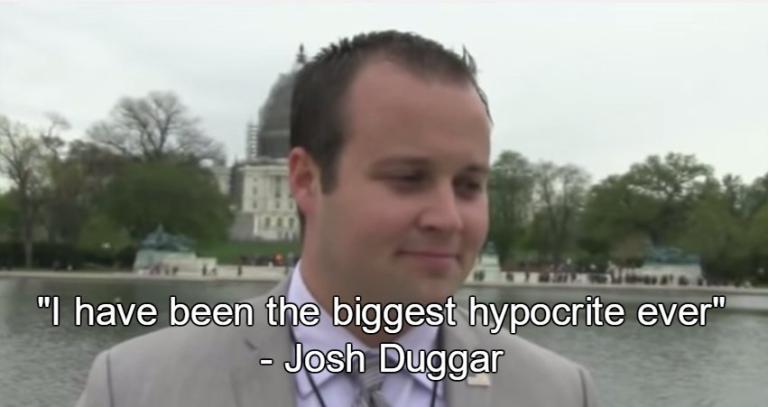
 My
friends are generally a peaceful lot, not given to violence or vitriol. Except when it comes to moral hypocrisy. Josh Duggar and Bill Cosby, for example, have
been spared no sharp word or hurtful threat for purporting to represent the
high ground while dragging themselves through all manner of despicable
behavior.
My
friends are generally a peaceful lot, not given to violence or vitriol. Except when it comes to moral hypocrisy. Josh Duggar and Bill Cosby, for example, have
been spared no sharp word or hurtful threat for purporting to represent the
high ground while dragging themselves through all manner of despicable
behavior.
There
is, I suppose, an appropriate level of disgust and perhaps even Schadenfreude
when people fly high at others’ expense only to flame out so
spectacularly. But hypocrisy hits far
closer to home for most of us. You may
know that the original meaning of this word was as a synonym for “actor.” And which of us, for a variety of reasons and
from a range of motives, does not “act out” big chunks of our lives? What are our Facebook/Instagram/Twitter feeds
but carefully curated tableaus of what how we want to be perceived by the
outside world? In a professional venue,
what are our LinkedIn profiles or the saccharine personae we assume when we are
out on a big sales call?
These
are not deceitful or despicable behaviors on the order of drugging young women
or cheating on our spouse, to be sure.
But they are a form of hypocrisy, nonetheless. So what am I saying – that some hypocrisy is
OK, or that we should be careful at pointing a judgmental finger? I guess a little bit of both, as well as an
appeal to appropriately express ourselves a little bit more authentically, to remember
to celebrate those who are true to their real and messy selves, and to be
thankful for relationships within which we are free to be our own true and
messy selves. Real, non-hypocritical
behavior is rare and to be cherished, indeed.
8.20.2015
Recommended Reads, 21st in a Quarterly Series
 Stuff I've read lately that I'd recommend:
Lean In: Women, Work, and the Will to Lead (Sandberg). Challenged, in a good way, by what Sheryl Sandberg is saying.
One Summer: America, 1927 (Bryson). Such an iconic year, such familiar names, and yet such fascinating stories.
I Am Malala: The Girl Who Stood Up for Education and Was
Shot by the Taliban (Yousafzai). When I grow up, I will still never be a tenth as brave or principled as Malala.
David and Goliath: Underdogs, Misfits, and the Art of
Battling Giants (Gladwell). Quintessentially Gladwellian in its entertainment value and "make you think" perspective.
The Better Angels of Our Nature: Why Violence Has Declined
(Pinker). Expansive, incisive, and thoroughly informative.
From Eden to Exile: Unraveling Mysteries of the Bible (Cline). Do our hallowed Bible stories hold up to professional archeologists' scrutiny?
8.18.2015
What Am I Working On
 As has become my custom every three months, here's what I'm working on
now at work. I won't repeat anything from last time that I happen to
still be working on, and for confidentiality's sake I have to blur some
of the details for some of these studies.
As has become my custom every three months, here's what I'm working on
now at work. I won't repeat anything from last time that I happen to
still be working on, and for confidentiality's sake I have to blur some
of the details for some of these studies.* What can a set of proposed development projects in a fast-growing neighborhood generate in tax increment financing
* Employment analyses in support of projects seeking EB-5 Immigrant Investor Program funds from US Citizenship and Immigration Services
* Economic impact study of a fast-growing research university on the East Coast
* Employment and tax revenue impact of proposed research laboratory space in an urban innovation corridor
8.14.2015
When Charging Different Prices for the Same Product is the Right Thing to Do
 Charging different prices for the same product would seem to be the height of unfairness. How could someone get away with this, and why would anyone advocate this? And yet I'm here to tell you that, in one very controversial example, it is warranted. The example is (gulp!) higher education.
Yes, the thing we are all talking about as far as rising unaffordability and rampant inequity. I'll be the first to admit I don't have all the facts, so I welcome corrections and additions here. But it is my understanding that while tuition has soared, financial aid has partially increased. In other words, the increase in the actual cost of education - the "net price," in industry parlance - is smaller than the increase in "sticker price."
Net price has still gone up, especially at public four-year colleges, due in large part to failing state budgets necessitating big hikes in tuition without a commensurate increase in financial aid. It is towards these state institutions where a lot of hue and cry has been made, to make public higher education more accessible. The obvious solution seems to be to lower tuition rates.
But it's not so obvious that that solution is the best way forward, if your goal is accessibility. Many of these public four-year colleges are on par with the best private counterparts, which means that the marketplace is often willing to pay much more than current tuition levels to attend. Is it possible that current tuition levels at these institutions are fine, or perhaps even too low, such that those who can pay full freight are helping make possible more generous financial aid packages to others who get accepted but need financial help?
At a much smaller level, I can tell you that these sorts of discussions are happening. I know colleagues who run schools who are trying to make sure they express the true value of the education they are providing, so that they can reset the price expectation for those paying full freight, so that they can use those funds to help subsidize others they want to admit who need help paying for tuition. This is seen as preferable to the status quo, in which those who can afford to pay more are paying a relatively low tuition, and the school has insufficient funds to lower the price for those who can't afford to pay the current tuition.
At the end of the day, the college experience is the same, whether you pay in full or get a full scholarship or anything in between. It seems to me that this is an example of offering the same product for vastly different prices, that it is good that we are doing this, and that we might want to consider doing this even more.
8.12.2015
What Opened My Mind

Where did this sentiment come from? Five somewhat overlapping influences, in no particular order:
(1) It is said that INTJ's (my Myers-Briggs personality type) tend to view the world in a detached sort of way, kind of like a chess-master surveying the chessboard. In this sense, arguments are not unlike chess moves, which are pored over and played out without the need for ownership of any of them. So it is less emotionally fraught to step through a line of thinking and look for the logic and good in it without feeling dirty or waffly.
(2) I did a lot of what was called Oxford Debate in high school, which is basically two-on-two debate in which half the time you are on the affirmative side and the other half the negative side. This was invaluable training in being able to craft an argument for one day and then pursue with equal vehemence the exact opposite argument the next day.
(3) My economics training underscores the importance of fairly weighing both sides of an argument and of following through on both intended and unintended consequences. The old saw about longing for a one-armed economist (because of tiring of us saying "on the one hand, on the other hand") has a lot of truth to it.
(4) I came to my Christian faith in my teen years rather than growing up in it, and have subsequently sought to intentionally be in places where Christianity is sparse so as to be an influence for good in those places. This is an infiltration of sorts, which I believe to be how Jesus functioned, and which I think requires a commitment to "walking a mile" in others' shoes.
(5) We started with hard-wired personality type, and we will end with such. I like being a contrarian. While many people seem to revel in shedding friends who choose to have and voice different ideological positions, I prefer to collect people and perspectives that are contrary to mine. I grow when I learn more from people who disagree with me, and I enjoy extracting whatever good is in those viewpoints so I can add color to conversations with people who do agree with me. I am also deathly afraid of "group-think," which is to say that when I am with others who think like me, I am fearful that we have a collective blind spot, and I hate the possibility of being ignorant or incomplete in my thinking.
I'm sure there are other influences but those are the five I can think of right now.
8.10.2015
Lazy Linking, 150th in an Occasional Series
 Stuff I liked lately on the Internets:
 150.1 It took us 50 yrs to get comfortable w/driverless
elevators n.pr/1KLMd9S @npr
150.1 It took us 50 yrs to get comfortable w/driverless
elevators n.pr/1KLMd9S @npr
150.2 Read not for Trump coverage but for insight on how R's
winnow to 1 candidate 53eig.ht/1P8nJq9 @fivethirtyeight
150.3 Young men say they want to be there for their kids…until
they actually have kids nyti.ms/1Mg1wbn @nytimes
150.4 “Our operating assumption is that everything west of
Interstate 5 will be toast” nyr.kr/1Sj4Noz @newyorker
150.5 How to fly all the time for free (my daughter, the
world traveler, lit up at the possibility) rol.st/1gKMBbQ @rollingstone
8.07.2015
Let's Talk, Part V
 As noted Monday, this week is all about creating a venue for conversation.
This last post is for opening up the discussion lines on anything of interest. We're all tapped into the same social networks, following and contributing to the same strings of conversation, monitoring the back and forth on any number of hot topics.
Consider this place off the beaten path. What are you dying to say that hasn't been said enough? What's grinding your gears? What do I need to know in order to know what's really what?
8.06.2015
Let’s Talk, Part IV
 As noted Monday, this week is all about creating a venue for conversation.
My third topic is a request for help and/or advice. Last summer, I and some of my grad classmates from the Class of 2006 at the Fels Institute of Government at Penn hatched a plan. We realized our 10-year reunion was coming up, and the wheels started turning about how to celebrate it. It occurred to us that, in the true spirit of Fels, the best way to reunite was through service, and that the best way to serve would be to be a resource to the Class of 2016. After all, one of the best things about going to Fels was tapping into its active alumni base, and learning about all of these cool people doing cool things who were willing to help you figure out how to do similar cool things in your own life.
We realized that, while we 2006'ers were still early in our careers, we had a 10-year head start on the 2016'ers, and that collectively we represented a lot of different career paths that would be helpful to share with the 2016'ers. We also realized, last summer, that those 2016'ers would be arriving on campus that fall, so we got ourselves in gear and worked with Fels staff to set up a LinkedIn group and some mixer events. It's been fun to reconnect with our 2006 classmates and meet the members of the Class of 2016, and I think they've appreciated having a body of people they can tap into to see what life after Fels is like for people of varied interests.
Some time this fall, we'll be organizing a "speed networking" event, modeled after "speed dating" events, which will be designed to compress the experience of tapping into established professionals into very small chunks of time so that you can get a whirlwind sense of how people got to where they are in their professional careers. If you are interested in participating, please click here to join our LinkedIn group and keep an eye out for information on this event. Or, if you can't commit to being there in person, join the LinkedIn group and by doing so your professional information will be in the mix so that folks who take interest in what you do can connect with you and tap into your life story that way.
8.05.2015
Let’s Talk, Part III
 As noted Monday, this week is all about creating a venue for conversation.
My second topic is a bit of an outsourcing of topic selection to the hive mind, which is that once a year I like to write to my elected officials in Congress and I am stumped about what I should write about. This is complicated by the fact that my representative in the US House of Representatives was recently indicted, but that's neither here nor there...goshdarnit I can't figure out what to talk about! In the past, I've cycled through world hunger, mental illness, innovation, and immigration, and I could return to one of those topics or I could go in a wholly new direction. So what should I write about? And what should I write? What do our elected officials need an earful from me on?
8.04.2015
Let’s Talk, Part II
 As noted yesterday, this week is all about creating a venue for conversation.
My first topic is purely selfish although hopefully with some broader social value. Having recently become the father of an African-American child, my challenge is to help Asher tap into that part of his identity in the absence of either him having African-American parents to guide him or me having any of my own experience to draw from. So I am seeking your help in knowing what’s important.
This is obviously a very broad topic so I want to start small. Today’s question is: what is important for Amy and me to know and for Asher to experience in his first year of life? This is intentionally open-ended, as I am seeking a wide range of answers, from cultural high points to personal experiences to sociological insights to practical advice. We could use your help!
8.03.2015
Let’s Talk, Part I

That said, one of the nice things about blogging is the opportunity for real-time interactivity. Even though I blog about my own opinion, that opinion is not set but is rather open to feedback from others whose perspectives are different from mine and who may cause me to amend or even reverse my thinking on something.
The most common type of feedback I receive is positive encouragement, which I greatly appreciate and which I receive in the authentic spirit for which I assume it is given. I also get a lot of “yes, and” or “yes, but” comments, which are hugely instructive for me, to extend or counter something I am thinking so that I end up having a richer perspective than I had before. I wish I got more “you’re full of crap,” not so much if it is meant to be mean but if it is because I am off-base, have a blind spot, have used a loaded word/phrase unknowingly, or am just plain being stupid. I put out so much dreck that I am certain that much of it is open to “you’re full of crap” feedback, which may sting a little but is for my good and so I welcome more of it.
To tap more deeply into the hive mind of the wider world out there, I’m going to experiment with a much more open and question-oriented format this week. Which is to say that instead of saying anything this week, I’m going to be posting requests for people to respond to – information I am seeking, debates that I’d like to hear more sides of, and opportunities to help out. Keep an eye out and join in on the conversation if you are able; it’ll be a safe place to speak from your heart without recourse, as long as you keep an open mind.
A logistical note: as my blog gets cross-posted to a number of places - Blogger, Google+, Facebook, and Twitter - I welcome your participation at any of those venues.
Subscribe to:
Comments (Atom)
Too Short for a Blog Post, Too Long for a Tweet 522
Here are a few excerpts from a book I recently read, "Moby Dick," by Herman Melville. Again, I always go to sea as a sailor, bec...

-
PHILADELPHIA NAMED BEST CITY FOR NEW GRADS How about Philly besting Boston, New York, Chicago, Atlanta, and every other city in America for ...
-
 I recently had a humorous but telling incident on my bus ride into work. It being rush hour, the vehicle is often crowded and even standin...