Another busy month for the Huangs. We all ran in Jada's school's fundraiser race, with Jada and Lee completing the 5-K and Aaron and Amy gutting out the 1-mile. The kids attended birthday parties on three straight weekends. Aaron finished up his baseball season, making so much progress that he even rapped out two hits in his last game on the new pitching machine. Jada's done with 1st grade and is in summer camp. Amy's busy as always at work, yet still summons up the energy to do all the cooking/cleaning/laundry for the family. Lee's still juggling work, church, and teaching. 73-91 born SEA lived SJC 00 married (Amy) home (UCity) 05 Jada (PRC) 07 Aaron (ROC) 15 Asher (OKC) | 91-95 BS Wharton (Acctg Mgmt) 04-06 MPA Fels (EconDev PubFnc) 12-19 Prof GAFL517 (Fels) | 95-05 EVP Enterprise Ctr 06-12 Dir Econsult Corp 13- Principal Econsult Solns 18-21 Phila Schl Board 19- Owner Lee A Huang Rentals LLC | Bds/Adv: Asian Chamber, Penn Weitzman, PIDC, UPA, YMCA | Mmbr: Brit Amer Proj, James Brister Society
6.30.2012
Huang Family Newsletter, June 2012
Another busy month for the Huangs. We all ran in Jada's school's fundraiser race, with Jada and Lee completing the 5-K and Aaron and Amy gutting out the 1-mile. The kids attended birthday parties on three straight weekends. Aaron finished up his baseball season, making so much progress that he even rapped out two hits in his last game on the new pitching machine. Jada's done with 1st grade and is in summer camp. Amy's busy as always at work, yet still summons up the energy to do all the cooking/cleaning/laundry for the family. Lee's still juggling work, church, and teaching. 6.28.2012
The Cost of Cuts to Public Housing Authorities
A report I've been working on since last last year is finally done and published. The Cost of Cuts: The Impact of Reductions in Capital Investment to Public Housing Authorities is a look at the negative impacts that occur as a result of cuts in capital funding to public housing authorities. The link above will take you to a page where you can access the full report plus a press release.
6.27.2012
What's the Message from the Church
With our denomination having recently approved an amendment allowing practicing homosexuals to be ordained as ministers within the church, there's been a lot of talk about what our congregation wants to do next: stay but be in willful disobedience of the denomination's tenets, jump ship to another denomination, or any number of new middle-ground options percolating around.
It's an important decision for a lot of important reasons, but for me it boils down to what will allow me to explain to a normal non-churched person (who couldn't care less about denominational finagling) why we're standing where we're standing. The typical non-churched person, if they think about modern Christians at all, hears one of two messages regarding homosexuality and the church:
(1) Blanket condemnation because homosexuality is a sin.
(2) Loving acceptance because God is love.
These are simple positions to understand and they represent the totality of most people's perception of where the church is on this issue. They are also damagingly wrong.
I don't know where we're going to end up as a congregation. But wherever it is, I want to be able to explain, in simple terms, why we ended up there, and in doing so presented a better message than the two above regarding homosexuality and the church.
It's an important decision for a lot of important reasons, but for me it boils down to what will allow me to explain to a normal non-churched person (who couldn't care less about denominational finagling) why we're standing where we're standing. The typical non-churched person, if they think about modern Christians at all, hears one of two messages regarding homosexuality and the church:
(1) Blanket condemnation because homosexuality is a sin.
(2) Loving acceptance because God is love.
These are simple positions to understand and they represent the totality of most people's perception of where the church is on this issue. They are also damagingly wrong.
I don't know where we're going to end up as a congregation. But wherever it is, I want to be able to explain, in simple terms, why we ended up there, and in doing so presented a better message than the two above regarding homosexuality and the church.
6.26.2012
A Homier Church
To save money, our church is meeting in our fellowship hall for the summer, which is more manageable to cool than our more cavernous sanctuary. I'm always a big fan of doing worship in new places, so that the focus isn't on physical representations of grandeur but rather on a group of people focusing on giving God glory.
The smaller setting also lends a homier feel to a congregation that is already warm and close knit. We aren't very impressive by worldly metrics, but we're doing our best to be faithful to God and loving to one another, and I'm thankful for that. Enjoy these pictures as literal snapshots of our church life together.6.25.2012
This Party Required No Limos
Here's something you can't do easily in the burbs: have a movie theater birthday party without using any cars. One of Jada's closest friends had a birthday party this past weekend and it involved watching Madagascar 3 at the local movie theater. Even better for the environment, Jada and all the other party attendees were picked up on foot at their doorstep, walked to the theater, taken out to pizza afterwards, and then escorted home.
Nice for us that our house is within walking distance of so many of Jada's friends, as well as of a nice movie theater and other retail amenities. For those of you who moved to the burbs and assume it must be hard to raise kids in the city, here's one example of how it's actually quite easy.
6.24.2012
Innovation Nation (Redux)
This morning, I'm somewhat lazily reposting below two post of mine from a few months back on innovation in America. How's that for irony: to emphasize the subject of promoting innovation, I'm rehashing some of my old stuff.
With the presidential election run-up in full gear, I'm still waiting for a real response from the candidates. Obama is serving up warmed-over arguments about how Romney would be a return to the failed policies of his predecessor, while Romney argues that the incumbent has failed but hasn't provided a sense of why what he'd do different would make any difference.
Look, I realize the real way out of this mess is through some painful medicine, unpopular reforms, and boring blocking-and-tackling, not the greatest fodder for campaign sound bites. But we're the US of Freaking A, and we're at a moment. So if you're auditioning for Leader of the Free World, I expect you to show some cojones and to be able to think something complex and say something simple at the same time. Gentlemen, I'm waiting.
***
Dear presidential candidates: here's a 25-point toss-up. What is your plan to make America a place where innovation happens? I'm tired of your pandering on jobs and tariffs and subsidies, and I want to know what policies you will put in place to create a welcoming environment for our innate curiosity, creativity, and drive to make the world a better place.
Within the past week, I have read about a running shoe made out of two sewn pieces, a camera that allows you to focus after you've taken the picture, and a soccer ball that stores the kinetic energy from its movement to provide electricity, and I am heartened by the ingenuity and cleverness. But I am not sure that America is doing all it can to encourage such risk-taking and multiply such successes.
If you can give me a cohesive response to my query, you have my vote on November 6.

***
Dear Sir:
In the eyes of many of your constituents, capitalism is not only on trial but has been found guilty. And yet I argue that it remains the most powerful tool we have for solving many of today's biggest challenges. And so I urge you not to take the steps necessary, while guiding capitalist forces, to not squelch them, and in doing so to squelch the innovative spirit that has made our country so great and so prosperous.
The numbers are sobering: we are creating 100,000 fewer start-ups per year now versus the period from 1985 to 2005. The possible suspects are many - slack demand, soaring health care costs, plummeting housing prices to use as collateral - and I do not mean to suggest that the public sector holds all the levers. However, at the very least the government should strive to do no harm, and to not fear the disruptive nature of capitalism.
With great progress comes the loss of many jobs and even of entire industries, which I realize is hard to swallow at a time of high unemployment, and hard to bear when you are judged by the job numbers of the jurisdiction you represent. But churn is an essential part of our great American economic story. We want entrepreneurs out there disrupting old ways of doing things and offering new things in new ways. For from that destruction comes great advances, with gains for all.
A completely free market is no solution. Government has a role to play. But in playing that role, let it consider how it can stimulate and not discourage the risk-taking, innovation, and even disruption that is characteristic of our nation. Please be mindful to encourage and not discourage entrepreneurship. It is part of what has made us great as a country, and I hope it will be part of what keeps us great.
With the presidential election run-up in full gear, I'm still waiting for a real response from the candidates. Obama is serving up warmed-over arguments about how Romney would be a return to the failed policies of his predecessor, while Romney argues that the incumbent has failed but hasn't provided a sense of why what he'd do different would make any difference.
Look, I realize the real way out of this mess is through some painful medicine, unpopular reforms, and boring blocking-and-tackling, not the greatest fodder for campaign sound bites. But we're the US of Freaking A, and we're at a moment. So if you're auditioning for Leader of the Free World, I expect you to show some cojones and to be able to think something complex and say something simple at the same time. Gentlemen, I'm waiting.
***
Dear presidential candidates: here's a 25-point toss-up. What is your plan to make America a place where innovation happens? I'm tired of your pandering on jobs and tariffs and subsidies, and I want to know what policies you will put in place to create a welcoming environment for our innate curiosity, creativity, and drive to make the world a better place.
Within the past week, I have read about a running shoe made out of two sewn pieces, a camera that allows you to focus after you've taken the picture, and a soccer ball that stores the kinetic energy from its movement to provide electricity, and I am heartened by the ingenuity and cleverness. But I am not sure that America is doing all it can to encourage such risk-taking and multiply such successes.If you can give me a cohesive response to my query, you have my vote on November 6.

***
Dear Sir:
In the eyes of many of your constituents, capitalism is not only on trial but has been found guilty. And yet I argue that it remains the most powerful tool we have for solving many of today's biggest challenges. And so I urge you not to take the steps necessary, while guiding capitalist forces, to not squelch them, and in doing so to squelch the innovative spirit that has made our country so great and so prosperous.
The numbers are sobering: we are creating 100,000 fewer start-ups per year now versus the period from 1985 to 2005. The possible suspects are many - slack demand, soaring health care costs, plummeting housing prices to use as collateral - and I do not mean to suggest that the public sector holds all the levers. However, at the very least the government should strive to do no harm, and to not fear the disruptive nature of capitalism.
With great progress comes the loss of many jobs and even of entire industries, which I realize is hard to swallow at a time of high unemployment, and hard to bear when you are judged by the job numbers of the jurisdiction you represent. But churn is an essential part of our great American economic story. We want entrepreneurs out there disrupting old ways of doing things and offering new things in new ways. For from that destruction comes great advances, with gains for all.
A completely free market is no solution. Government has a role to play. But in playing that role, let it consider how it can stimulate and not discourage the risk-taking, innovation, and even disruption that is characteristic of our nation. Please be mindful to encourage and not discourage entrepreneurship. It is part of what has made us great as a country, and I hope it will be part of what keeps us great.
6.22.2012
When You're a Hammer, Everything's a Nail (The Business Nut's Version)
I guess I was destined to go to Wharton and yet do something slightly different with that passport. I eschewed the more common destinations for Wharton grads (Wall Street, hedge funds in Greenwich, McKinsey anywhere in the world) because I'm neither a pure quant (though I lean that way) nor a pure cut-throat capitalist (though I lean that way). But I'm glad for my Wharton roots because I love business.
And, in the category of "when you're a hammer, everything's a nail," I see business everywhere. Here's three examples from my recent print and online reading:
(1) Sci fi is a great way to explore how the future will play out. In that sense, authors in this genre are identical to economists, who similarly set up simplified models, make some basic assumptions, and then forecast what will happen next.
(2) Bees can teach banks a thing or two about "too big to fail," risk management, hedging for the long run rather than maximizing in the short run. Next thing you hear the phrase, "hive mentality," let's hope it means this. [Hat tip: kottke.org.]
(3) Nigerian email scams - why are they so intentionally obvious? So as to only lure in the really gullible, thus efficiently focusing follow-up efforts on the most lucrative respondents. [Hat tip: Marginal Revolution.]
And, in the category of "when you're a hammer, everything's a nail," I see business everywhere. Here's three examples from my recent print and online reading:
(1) Sci fi is a great way to explore how the future will play out. In that sense, authors in this genre are identical to economists, who similarly set up simplified models, make some basic assumptions, and then forecast what will happen next.
(2) Bees can teach banks a thing or two about "too big to fail," risk management, hedging for the long run rather than maximizing in the short run. Next thing you hear the phrase, "hive mentality," let's hope it means this. [Hat tip: kottke.org.]
(3) Nigerian email scams - why are they so intentionally obvious? So as to only lure in the really gullible, thus efficiently focusing follow-up efforts on the most lucrative respondents. [Hat tip: Marginal Revolution.]
6.21.2012
What Am I Working On
As has become my custom every three months, here's what I'm working on
now at work. I won't repeat anything from last time that I happen to
still be working on, and for confidentiality's sake I have to blur some
of the details for some of these studies).
Advising a suburban township on the technical, financial, and public outreach aspects of implementing a transit-oriented development project.
Assisting in the development of a statewide bicycle and pedestrian master plan by discussing the economic impacts of investments in supportive infrastructure.
Estimating the statewide employment impact of a health care provider's expansion.
Conducting market research in support of a suburban township's zoning reform efforts.
Providing a framework and accompanying research for a distressed municipality to engage stakeholders in a visioning exercise.
Preparing a retail leakage analysis for a predominantly Hispanic commercial corridor.
Facilitating a staff and board retreat for a local non-profit, and conducting an economic impact study on its many real estate and programmatic activities.
Estimating the economic impact of a proposed large-scale mixed-use project.
Estimating the property value impact of a series of real estate developments in a previously distressed neighborhood.
Estimating the employment impacts and market feasibility of a proposed shopping center development.
Advising a suburban township on the technical, financial, and public outreach aspects of implementing a transit-oriented development project.
Assisting in the development of a statewide bicycle and pedestrian master plan by discussing the economic impacts of investments in supportive infrastructure.
Estimating the statewide employment impact of a health care provider's expansion.
Conducting market research in support of a suburban township's zoning reform efforts.
Providing a framework and accompanying research for a distressed municipality to engage stakeholders in a visioning exercise.
Preparing a retail leakage analysis for a predominantly Hispanic commercial corridor.
Facilitating a staff and board retreat for a local non-profit, and conducting an economic impact study on its many real estate and programmatic activities.
Estimating the economic impact of a proposed large-scale mixed-use project.
Estimating the property value impact of a series of real estate developments in a previously distressed neighborhood.
Estimating the employment impacts and market feasibility of a proposed shopping center development.
6.20.2012
Recommended Reads, Tenth in a Series
Stuff I'd recommend from the past few months:Thin (Greenfield). A haunting look at girls, self-esteem, and disordered eating. Greenfield, who I had the pleasure of meeting through British American Project, is sensational.
The Company Town: The Industrial Edens and Satanic Mills that Shaped the American Economy (Green). A fascinating look into the places that were synonymous with a firm, and the reasons behind their existence and fate.
Everything Bad is Good for You: How Today's Popular Culture is Actually Making Us Smarter (Johnson). Loved loved loved this book. Who knew that video games, Survivor, Apprentice, and syndicated sitcoms are proof of our evolving intelligence?
The Scavengers' Manifesto (Rufus, Lawson). This look at the world of scavenging is surprisingly deep and insightful from an economic standpoint.
The Protestant Ethic and the Spirit of Sport: How Calvinism and Capitalism Shaped America's Games (Overman). A little drier than I would have liked, but I appreciated the exploration of faith, recreation, commerce, and heroism.
The Big Scrum: How Teddy Roosevelt Saved Football (Miller). Fun to read this in light of the growing tumult around football and concussions.
6.19.2012
Altar Boy
Later this summer, our pastor and her family will be away for several weeks on a missions trip to Scotland. In her absence, I will be one of several elders guest-preaching. I'm still mulling over my topic, but am leaning towards expositing out of the 22nd chapter of the book of Genesis, in which Abraham is asked to sacrifice his son Isaac on the altar. Consider this post some unpolished, very clunky, stream-of-consciousness notes that will hopefully take shape and form over the next few weeks.
You may or may not know the context of this chapter. Abraham has been called by God out of his hometown to go to a new place. He is promised a multitude of descendents, which represents just about the best possible thing a man in his time could be offered. But the promise must have seemed a cruel joke as the years and decades passed, and he and his wife Sarah aged well past the age at which you can have kids. God continues to assure this wanderer, though, and sure enough Sarah bears him Isaac at the ripe old age of 90.
And yet just one chapter later, God tells Abraham to sacrifice his son, the one and only conduit to the fulfillment of that promise for a multitude of descendents. Abraham, incredibly, obeys, and proceeds to lay his son on the altar and ready his knife for the kill. Abraham passes this most rigorous of faith tests - the book of Hebrews notes that God "tested him" - and God provides a ram just seconds before Abraham is to plunge his knife into his son's heart.
The margins of my Bible tells me that the words "love," "obey," and "worship" appear for the first time in the Bible in this passage. Genesis 22 is, admittedly, pretty early on in the good book. And yet, a lot has happened in those first 21 chapters. So for these three words, pretty fundamental principles of the Christian faith, to appear for the first time here, all in the same story, has to mean something, right?
I think what it means is that they are inextricably related to this notion of being able to lay on the altar for sacrifice the most cherished thing in your life. "Love" can be winnowed down to emotions or even physical lust, "obey" can have a cold and detached feel to it, and even a notion as exalted as "worship" can simply mean getting caught up in a good praise song. Alas, we too often settle for these shadows of the real meanings behind these concepts. These three words mean so much because God has infused life with so much more meaning that we are often willing to dig for.
Too often, we are willing to be Christians in the most superficial ways: it means we lean a certain way on certain social and political issues, or that we wear a cross, or that we go to Sunday morning worship. But it does not fundamentally change our lives, and it certainly doesn't intersect with the things we hold most dear. Which is a shame, because it is our relationship with the things we hold most dear, and our ability or inability to lay them on the altar out of love, obedience, and worship to God, that is the true litmus test of our faith.
Because I did not grow up in the church, I think it is easier for me to see my major life decisions with this lens. Believing, for me, meant going all out, rather than just settling for what I had known or what my parents taught me. Not that I always made the right choices. But at least I knew that I had to make a choice. When I was graduating from college, I had to decide whether I was willing to put my career on the altar. Now, as a husband and father, I have make very real decisions about whether I am willing to lay my family on the altar.
Following Jesus doesn't always mean killing the good things in our lives, of course. But I do think that in a very real way, we are kept from true love, obedience, and worship, when we withhold the truly cherished things in our lives from God's control. When we worry ourselves over our financial security, our vocational trajectories, and our children's education, we can do so in ways that tell God and others that those things are too important to leave to God to deal with.
For some, that is entirely sane. I don't begrudge that opinion, because for those people, religion is just a part of your life, not unlike a hobby or an allegiance to a hometown. In that frame of reference, it makes perfect sense for your religion to affect some life choices but not the really important ones; I mean, you might alter your life to catch a really important ballgame or to not miss the first day of hunting season, but you wouldn't change your career or imperil your children for these things.
But we who say we are Christians have no such excuse. For if the Bible is real, if Jesus is real, if faith is real, then it really is an all-or-nothing proposition. God demands our all, and deservedly so. And it is in our best interest to give Him our all, for He will do better than we can. But time and again, we surrender to God only on the margins, and continue to cling tight to the really important things. We are far poorer for it, for the Bible suggests that we are missing out on real "love," "obedience," and "worship."
You may or may not know the context of this chapter. Abraham has been called by God out of his hometown to go to a new place. He is promised a multitude of descendents, which represents just about the best possible thing a man in his time could be offered. But the promise must have seemed a cruel joke as the years and decades passed, and he and his wife Sarah aged well past the age at which you can have kids. God continues to assure this wanderer, though, and sure enough Sarah bears him Isaac at the ripe old age of 90.
And yet just one chapter later, God tells Abraham to sacrifice his son, the one and only conduit to the fulfillment of that promise for a multitude of descendents. Abraham, incredibly, obeys, and proceeds to lay his son on the altar and ready his knife for the kill. Abraham passes this most rigorous of faith tests - the book of Hebrews notes that God "tested him" - and God provides a ram just seconds before Abraham is to plunge his knife into his son's heart.
The margins of my Bible tells me that the words "love," "obey," and "worship" appear for the first time in the Bible in this passage. Genesis 22 is, admittedly, pretty early on in the good book. And yet, a lot has happened in those first 21 chapters. So for these three words, pretty fundamental principles of the Christian faith, to appear for the first time here, all in the same story, has to mean something, right?
I think what it means is that they are inextricably related to this notion of being able to lay on the altar for sacrifice the most cherished thing in your life. "Love" can be winnowed down to emotions or even physical lust, "obey" can have a cold and detached feel to it, and even a notion as exalted as "worship" can simply mean getting caught up in a good praise song. Alas, we too often settle for these shadows of the real meanings behind these concepts. These three words mean so much because God has infused life with so much more meaning that we are often willing to dig for.
Too often, we are willing to be Christians in the most superficial ways: it means we lean a certain way on certain social and political issues, or that we wear a cross, or that we go to Sunday morning worship. But it does not fundamentally change our lives, and it certainly doesn't intersect with the things we hold most dear. Which is a shame, because it is our relationship with the things we hold most dear, and our ability or inability to lay them on the altar out of love, obedience, and worship to God, that is the true litmus test of our faith.
Because I did not grow up in the church, I think it is easier for me to see my major life decisions with this lens. Believing, for me, meant going all out, rather than just settling for what I had known or what my parents taught me. Not that I always made the right choices. But at least I knew that I had to make a choice. When I was graduating from college, I had to decide whether I was willing to put my career on the altar. Now, as a husband and father, I have make very real decisions about whether I am willing to lay my family on the altar.
Following Jesus doesn't always mean killing the good things in our lives, of course. But I do think that in a very real way, we are kept from true love, obedience, and worship, when we withhold the truly cherished things in our lives from God's control. When we worry ourselves over our financial security, our vocational trajectories, and our children's education, we can do so in ways that tell God and others that those things are too important to leave to God to deal with.
For some, that is entirely sane. I don't begrudge that opinion, because for those people, religion is just a part of your life, not unlike a hobby or an allegiance to a hometown. In that frame of reference, it makes perfect sense for your religion to affect some life choices but not the really important ones; I mean, you might alter your life to catch a really important ballgame or to not miss the first day of hunting season, but you wouldn't change your career or imperil your children for these things.
But we who say we are Christians have no such excuse. For if the Bible is real, if Jesus is real, if faith is real, then it really is an all-or-nothing proposition. God demands our all, and deservedly so. And it is in our best interest to give Him our all, for He will do better than we can. But time and again, we surrender to God only on the margins, and continue to cling tight to the really important things. We are far poorer for it, for the Bible suggests that we are missing out on real "love," "obedience," and "worship."
6.18.2012
Precious Baby Girls
As the father of a girl adopted from China, I cannot help but be drawn into recent stories about forced abortions in China. The work of blind activist Chen Guangcheng is relatively well-known by now, what with his brushes with the law as a result of his attempts to shine a light on late-term abortions and sterilizations. More recently, a graphic photo of a forced abortion on a woman seven months pregnant went viral, sparking outrage and shock.
No
one will ever know what Jada's situation was while she was in her
biological mother's belly, but it's not at all improbable that abortion
was contemplated. By whom and how seriously I don't care to think too
hard about, because it fills me with utter horror to even think about
the possibility of never getting the chance to meet her and have her as
my daughter.It is a fundamental belief that every person is unique, that every person is special, and that every person is equal. So it saddens me deeply to see so many precious baby girls terminated and discarded before they even got a chance to see the light of day. When I consider how much joy Jada has brought into our lives, it pains me something fierce to know that other Jadas will never get such an opportunity.
I have a habit of always qualifying my remarks, of trying to keep an open mind about both sides of an argument and of avoiding blanket statements. But this I will say without reservation or qualification: when we allow such atrocities to go on, humanity is far, far poorer as a result.
6.15.2012
All Very Important
I have to recuse myself from ranting too much here, since my firm is involved on this issue, but wanted to share a few words about the City of Philadelphia's proposed Actual Value Initiative, which City Council voted to officially postpone yesterday. In my circles, the issue has gotten a lot of play; of course at work, but also at my Spruce Hill Community Association board meeting, my conversations with other urbanites, and spirited discussions with the class I teach at Penn. (Who knew there was a group of young'uns out there that was willing to discuss property tax reform on summer weekend mornings?)
This City Paper article does a pretty good job of summarizing the topic and its many political facets. My students are right to want to unpack this issue every Saturday morning, because there's so much there. If you want my personal opinions, you'll have to get them off-line, but for now I'll just say stay tuned and stay informed.
6.13.2012
Trusting God with My Son's Education
Tomorrow is the last day of public schools for the 2011-2012 school year. And we still haven't heard from the School District of Philadelphia as to which school they have assigned our son Aaron to. If you follow me, you know that we live in the Penn Alexander catchment area, but that all 24 hours of waiting in line netted us was #6 on the wait-list. So, unless six kids un-enroll, Aaron has no room at the school we're supposed to be able to send him to, and instead we await the School District to assign him to another school.You can hardly think of an issue that matters more to an urban parent than where his kids go to school. And it is terrifying to think that your child's education is subject to the whims of the School District. And, sorry to bust on our son, but he could use a good school like Penn Alexander, especially since we've seen how much of a difference it's made for our daughter Jada, who like Aaron has some developmental delays. Of course, there's the practical matter of having to bear two morning drop-off locations, two sets of rules, two sets of friends, and two sets of fellow parents. So, yeah, I'm sweating a little.
But I'm also trusting that, greater than the District, but far more benevolent and competent, is a God to whom we pray for Aaron daily (hourly!), who has our and his best interests in mind and can work out complex things that we could not possibly have conceived or even imagined. It would not be the first time in my life that a seemingly crushing closed door in fact led to a unimaginably wonderful open door.
And so, despite the gnawing feeling of not having our first option for school location, and not even knowing what our school location is at all, it has not been hard to find peace with God and peace in God. Perhaps our example and our words can testify to other parents around us that we trust not in ourselves but in a great and loving God. Perhaps God has us and Aaron at another school for another reason. Perhaps we will end up at Penn Alexander after all, and we are being taught a valuable lesson in letting go and letting God.
Who knows? All I know is He knows. Sometimes that's all we get. And sometimes that's all we need.
6.12.2012
Who'll Go Down in History
As much of a sports nut as I am, I follow less and less and so am less and less informed, even about my favorite sports and teams, let alone other wildly popular sports and teams. (Can someone explain to me how Euro 2012 works?) But since I grew up reading old sports books, and think a lot about the very long-term future, I thought I'd pose this thought exercise: who is playing now that will we be telling our grandkids about?
Embedded in this conversation is, I think, at least two strains of thought. First, whose legacies will pass the test of time, that their names will remain iconic two generations from now. Second, whose play was so memorable that we can not only acknowledge that they were great but call to mind specific moments when their greatness was imprinted on our minds (which means, of course, that championships matter).
I am speaking from ignorance when answering this myself, but this is my short list (in no particular order):
(1) LeBron James - When all is said and done, he might not get those 7 championships he so cockily predicted two years ago when he took his talents to South Beach. But he'll likely get one or more (his first maybe as early as a week from now), he's already had countless Pantheon-level games, and for all of his controversy we forget just how unique he is - an incredible physical specimen who has an underrated intelligence about and respect for the game and (despite his notable late-game yips) enough of a chip on his shoulder that he can and will will himself to many more great performances in the future.
(2) Derek Jeter, (3) Mariano Rivera - I despise the Yankees but tip my cap to #2 and #42. Jeter may not be as clutch as we make him out to be, but he'll end up with around 3,500 hits and lots of rings, and he embodies a certain archetype that we'll continue to call on when we talk about this era of baseball. Meanwhile, Rivera gets only three outs at a time, but they are among the most pressure-packed of them all, and his postseason success is unparalleled.
(4) Roger Federer, (5) Rafael Nadal, (6) Novak Djokovic -
It's been a very long time since I've been a tennis fan, and I don't
follow at all now, but boy are we spoiled watching this triumvirate
battle it out. I think when all is said and done, these guys will
easily outpace, in records and legacy, the last great players before
them (Sampras, Agassi) and will all enter into the G.O.A.T.
conversation. We're going to be talking about all three of these guys
for a long, long time, and people 50 years from now are going to go ape
thinking about how we were able to watch them play each other live.
(7) Tom Brady, (8) Peyton Manning - Like the Federer/Nadal/Djokovic triumvirate above,
these two stud QBs' legacies are enhanced by their many mano-a-manos.
Football doesn't lend itself as easily to memorable lead men (careers
too short, helmets obscure being able to see faces, it's too much of a
team sport), and it's very possible football will not only not exist but
be vilified within a few decades. But Brady and Manning seem to have
been cast by Hollywood, and I'm guessing they still have a few good
years left.
(9) Tiger Woods - I don't think he's going to get more than one
more major, so the second half of his career will have been pretty
underwhelming. But the first half of his career was so transcendent.
So many special moments, so many gritty wins, so much significance about
his success. His tragic downfall, while signaling the beginning of the
end of his career, will also be another piece in the story that
separates him from the field.
(10) Usain Bolt - In Beijing, while everyone was oohing and
aahing about Michael Phelps (and rightly so), all Bolt did was win the
three most important events in track and field (100, 200, 4x100),
breaking Olympic and world records in all three in the process, and even
celebrating a good 20 meters before the finish line of his 100 meter
race. He's got pizzazz, bravado, and one more Olympics to cement his
legacy.(11) Lionel Messi - I don't watch soccer but I like watching soccer highlights, and there are plenty of Messi highlights. Not only has he been prolific, but he has stamped his unique style on the game. Quite simply, the little man seems to be a man among boys; in the sport that the most people in the world play, he is the very best by a lot.
(12) Manny Pacquiao - Don't know a thing about boxing, but I sense that if I left him off my list, he'd be the first person people brought up as a snub. I get the feeling he's going down in history, and that he's still got a lot of history to write, inside and outside of the ring.
Not that we won't be talking about others. But my bold prediction is that these 12 will be head and shoulders above everyone else. Of course, I've missed a bunch of others based on ignorance and differing perceptions of greatness and memorability. Would love to hear your list.
6.11.2012
Lazy Linking, 71st in an Occasional Series
What I liked lately on the Internets:
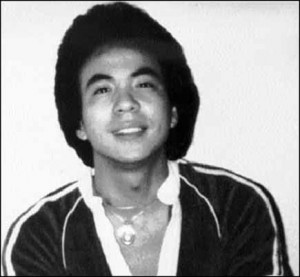
71.1. The 30th anniversary of the murder of Vincent Chin is coming up.
71.2. It's not very right wingy to be a right winger against low-skilled immigrants.
71.3. What might it take to get this generation to recycle? How about free tunes?
71.4. Maybe this is how we should decide who is the next president: do you prefer Obama's "Call Me Maybe" mash-up or Romney's "The Real Slim Shady" remix?
71.5. Is the NFL the next Big Tobacco?
71.1. The 30th anniversary of the murder of Vincent Chin is coming up.
71.2. It's not very right wingy to be a right winger against low-skilled immigrants.
71.3. What might it take to get this generation to recycle? How about free tunes?
71.4. Maybe this is how we should decide who is the next president: do you prefer Obama's "Call Me Maybe" mash-up or Romney's "The Real Slim Shady" remix?
71.5. Is the NFL the next Big Tobacco?
6.09.2012
Things That Make Me Happy, the "Wasting Time on YouTube and Loving It" Version
YouTube is the source of both much time-wasting and much happiness for me. Here are four videos I watched lately that I have enjoyed.
I do this now when I wash my hands. Shake! Fold!
Love the Philly shots: Italian Market, Parkway, and of course the Art Museum steps. And, I mean, it's Stallone.
Really fast cars + creative camera angles + over-the-top use of slo-mo + Moby = pure awesomeness.
Yeah, it's slug porn. But, strangely, it's beautiful.
I do this now when I wash my hands. Shake! Fold!
Love the Philly shots: Italian Market, Parkway, and of course the Art Museum steps. And, I mean, it's Stallone.
Really fast cars + creative camera angles + over-the-top use of slo-mo + Moby = pure awesomeness.
Yeah, it's slug porn. But, strangely, it's beautiful.
6.08.2012
Innovation Philadelphia
I've been telling my friends that Philly's the place for 20+ years now, and yet some still have a negative perception of the City of Brotherly Love. Thankfully, that perception is changing; and, even better, Philly keeps on doing cool stuff. Here's two nice articles I read recently:
(1) City Paper talks about Philly as a new hot spot for social enterprise and environmental sustainability. Our success stories include a bike-powered laundry service, a social entrepreneurship business accelerator, and a "B Corp" certifying body.
(2) Grid Magazine talks about SEPTA harnessing the energy from subways braking at stations to power the lights at those stations. (Love, though, how the article calls out SEPTA for still selling tokens in plastic baggies.)
Why is Philly on the map in this way at this point in time? Off the top of my head, and in no particular order, I'd go with the following reasons:
(1) Huge density of really smart people, thanks to all of our world-class universities.
(2) Way cheaper than DC or New York, but close enough that we can leverage ties to those hubs.
(3) A legacy of innovation melded with civic engagement and social responsibility. (Thanks, Ben Franklin!).
(4) An improving political culture, such that young'uns no longer necessarily feel they have no place to contribute.
(5) Not being flush with resources or attention creates a "starving artist" mentality, in a good way.
(6) We put something in the water. (Just kidding. Or am I?)
Whatever the reasons (and I'm sure I left out about 10), it's looking up for Philly. If you've been away for awhile and think otherwise, you should reconsider.
(1) City Paper talks about Philly as a new hot spot for social enterprise and environmental sustainability. Our success stories include a bike-powered laundry service, a social entrepreneurship business accelerator, and a "B Corp" certifying body.
(2) Grid Magazine talks about SEPTA harnessing the energy from subways braking at stations to power the lights at those stations. (Love, though, how the article calls out SEPTA for still selling tokens in plastic baggies.)
Why is Philly on the map in this way at this point in time? Off the top of my head, and in no particular order, I'd go with the following reasons:
(1) Huge density of really smart people, thanks to all of our world-class universities.
(2) Way cheaper than DC or New York, but close enough that we can leverage ties to those hubs.
(3) A legacy of innovation melded with civic engagement and social responsibility. (Thanks, Ben Franklin!).
(4) An improving political culture, such that young'uns no longer necessarily feel they have no place to contribute.
(5) Not being flush with resources or attention creates a "starving artist" mentality, in a good way.
(6) We put something in the water. (Just kidding. Or am I?)
Whatever the reasons (and I'm sure I left out about 10), it's looking up for Philly. If you've been away for awhile and think otherwise, you should reconsider.
6.07.2012
Nothing is Sacred in the Church Because Everything is Sacred in the Church
One of the underrated ways in which my church is diverse is in the expected faith traditions of its congregants. That is to say, people come from lots of different upbringings and therefore have lots of different expectations of what the church should do over the course of a year. Not growing up in the church, I continue to be astounded by the abundance of holidays that have some deep meaning to some sub-group within our congregation. Unfortunately, with that diversity comes an expectation that all of those events and practices will be given their due weight, which can make it hard for us to focus when focus is called for.
Another consequence of not growing up in the church is not holding anything sacred. So it's easier for me to say that we should stop doing something or take a break from doing something or do something a completely different way than before. For someone for whom that thing is the most important thing about their spirituality, it's much harder to let that thing go or to be told it is expendable enough that it will be dropped in the coming year. And yet, at the risk of saying something that is easier for me than others to say, pruning is an important discipline for a church.
While it never feels good to ruffle someone's feathers, it is perhaps a sign that we are on the right track. For Jesus had His share of feather-ruffling. He was, after all, both the fulfillment of long-held traditions as well as a representative of a new thing being done among God's people. Those who ultimately followed Him tended to fall into one of three categories: (1) desperately hurting enough that His healing trumped all, (2) not as tied to the old ways of doing religion, or (3) soft-hearted enough to see His new ways as actually the actualization of old ways.
We have a lot of (1) in our midst at my church. And I am among many who are (2). Let's hope that those who can be (3) will be (3), which is to say that they are willing to give God room to show them how their long-held traditions are less important in their literal practice than the broader messages and disciplines that they are intended to represent. If we are willing to let go of what we think is sacred in the church, we might just experience the true sacredness of the church.
Another consequence of not growing up in the church is not holding anything sacred. So it's easier for me to say that we should stop doing something or take a break from doing something or do something a completely different way than before. For someone for whom that thing is the most important thing about their spirituality, it's much harder to let that thing go or to be told it is expendable enough that it will be dropped in the coming year. And yet, at the risk of saying something that is easier for me than others to say, pruning is an important discipline for a church.
While it never feels good to ruffle someone's feathers, it is perhaps a sign that we are on the right track. For Jesus had His share of feather-ruffling. He was, after all, both the fulfillment of long-held traditions as well as a representative of a new thing being done among God's people. Those who ultimately followed Him tended to fall into one of three categories: (1) desperately hurting enough that His healing trumped all, (2) not as tied to the old ways of doing religion, or (3) soft-hearted enough to see His new ways as actually the actualization of old ways.
We have a lot of (1) in our midst at my church. And I am among many who are (2). Let's hope that those who can be (3) will be (3), which is to say that they are willing to give God room to show them how their long-held traditions are less important in their literal practice than the broader messages and disciplines that they are intended to represent. If we are willing to let go of what we think is sacred in the church, we might just experience the true sacredness of the church.
6.05.2012
Felt Need
Among the motley crew that can be found at my church are some who are among society's neediest. In the midst of a big city, we have all you might expect in such a setting: the homeless and near-homeless, the very poor, the mentally ill, the physically disabled, those who are in trouble with the law, and so on.
The issues these brethren raise in our midst are, to be sure, vexing ones. We are not a resource-rich church, and despite the heroic efforts of many in our congregation, there never seem to be enough hours in the day to deal with the deep and complex situations they find themselves in.
And yet it is not hard to feel thankful for our hurting friends. For one, they affirm that we are what we are trying to become, which is a warm, welcoming, and loving church. For another, they are, in spite of and through their quirks, beautiful people.
And, importantly, the way they ask for help and the way they conceive of God is highly instructive to the rest of us. It calls to mind the deep lesson I took in while volunteering at Whosoever Gospel Mission one spring break. The men that were housed there were all recovering from some form of addiction, and their plight made for a very real understanding of the nature of sin in holding us back from the people God made us to be. I was humbled, shamed, and encouraged by the ways these men worshipped God, clung to God, and begged God for forgiveness and freedom.
And so I learn from many in my midst at our church. I am given a window into the fragility of humanity, the pain of disenfranchisement, and the despair of hopelessness. I am schooled in how to come naked and empty before a great God to be filled up and boosted up. Their expression of their felt need reminds me that I am no less needy, but perhaps not nearly as bold or honest as they are in feeling and acting on it. I am blessed for it.
The issues these brethren raise in our midst are, to be sure, vexing ones. We are not a resource-rich church, and despite the heroic efforts of many in our congregation, there never seem to be enough hours in the day to deal with the deep and complex situations they find themselves in.
And yet it is not hard to feel thankful for our hurting friends. For one, they affirm that we are what we are trying to become, which is a warm, welcoming, and loving church. For another, they are, in spite of and through their quirks, beautiful people.
And, importantly, the way they ask for help and the way they conceive of God is highly instructive to the rest of us. It calls to mind the deep lesson I took in while volunteering at Whosoever Gospel Mission one spring break. The men that were housed there were all recovering from some form of addiction, and their plight made for a very real understanding of the nature of sin in holding us back from the people God made us to be. I was humbled, shamed, and encouraged by the ways these men worshipped God, clung to God, and begged God for forgiveness and freedom.
And so I learn from many in my midst at our church. I am given a window into the fragility of humanity, the pain of disenfranchisement, and the despair of hopelessness. I am schooled in how to come naked and empty before a great God to be filled up and boosted up. Their expression of their felt need reminds me that I am no less needy, but perhaps not nearly as bold or honest as they are in feeling and acting on it. I am blessed for it.
6.04.2012
Long-Term Predictions
Things I think my grandkids will be astounded about when I tell them stories about the year 2012:(1) That football was so immensely popular.
(2) That we didn't have personalized medicine.
(3) That we drove our own cars.
(4) That we loaded our groceries into our shopping carts, onto a conveyer belt, back into our shopping cart, into our car trunks, and finally into our kitchens.
Things that'll still be true by the time I become a grandparent:
(1) Things will still be wired.
(2) Big cities will still matter.
(3) Internal combustion engines and gas will still be a big part of how we get around.
(4) The US will still be the world's only superpower.
6.03.2012
Flagged for Remembrance
I really like this new addition to our front porch. I've had this American flag for forever, but only last weekend did we get a flag pole for it. I have a soft spot for the Ol' Red, White, and Blue, and now I'll get to see it every time I go out and come in. May God bless America. And, may my everyday sight of its colors remind me to be thankful for its past and prayerful for its future.
6.02.2012
Helpful Marital Analogies
The book and Sunday School class, Sacred Marriage, has been a helpful one for my conception of marriage and my practice of being a married person. Starting with the premise that marriage is designed to make us holy (God-centered) rather than happy (me-centered), it has been of particular use in introducing me to two powerful analogies that have assisted me in understanding how I am to be as a husband.
The first is to consider God as my father-in-law. Being a father to a daughter, it is not hard to think about what a father-in-law hopes for his daughter and his son-in-law, which is that his son-in-law treats his daughter with the utmost respect, lives sacrificially and honorably with her, and seeks her best interests. It is something I pray my future son-in-law will take seriously when he takes my daughter's hand in marriage, and it is something real that I can contemplate as I consider how to be a good husband to my wife.
The first is to consider lust a form of predation. When we lust in our flesh for a woman besides our own wife, we are taking a good and pleasing instinct - sexual pleasure - and perverting it in two ways. First, we are going out of bounds in seeking someone outside of the relationship we covenanted before God and others. Second, we are seeking to satisfy ourselves at the expense of another, instead of seeking to satisfy ourselves in relationship with and in service to another. When I lust, I have literally become a predator, preying on flesh in singular pursuit of carnal pleasure. This is a far more dangerous, disgusting, and dissatisfying imagery than what I have tended to conjure up in response to a temptation to lust, especially when contrasted with the beauty, sanctity, and deep satisfaction of partaking in sexual intimacy as our Maker intended for us.
Analogies are powerful teachers. They can help you take concepts that are hard to master and boil them down to stark images that help you to advance. I have found these two to be that for me in my thoughts on and living out of the married life.
The first is to consider God as my father-in-law. Being a father to a daughter, it is not hard to think about what a father-in-law hopes for his daughter and his son-in-law, which is that his son-in-law treats his daughter with the utmost respect, lives sacrificially and honorably with her, and seeks her best interests. It is something I pray my future son-in-law will take seriously when he takes my daughter's hand in marriage, and it is something real that I can contemplate as I consider how to be a good husband to my wife.
The first is to consider lust a form of predation. When we lust in our flesh for a woman besides our own wife, we are taking a good and pleasing instinct - sexual pleasure - and perverting it in two ways. First, we are going out of bounds in seeking someone outside of the relationship we covenanted before God and others. Second, we are seeking to satisfy ourselves at the expense of another, instead of seeking to satisfy ourselves in relationship with and in service to another. When I lust, I have literally become a predator, preying on flesh in singular pursuit of carnal pleasure. This is a far more dangerous, disgusting, and dissatisfying imagery than what I have tended to conjure up in response to a temptation to lust, especially when contrasted with the beauty, sanctity, and deep satisfaction of partaking in sexual intimacy as our Maker intended for us.
Analogies are powerful teachers. They can help you take concepts that are hard to master and boil them down to stark images that help you to advance. I have found these two to be that for me in my thoughts on and living out of the married life.
Subscribe to:
Comments (Atom)
Too Short for a Blog Post, Too Long for a Tweet 522
Here are a few excerpts from a book I recently read, "Moby Dick," by Herman Melville. Again, I always go to sea as a sailor, bec...
-
PHILADELPHIA NAMED BEST CITY FOR NEW GRADS How about Philly besting Boston, New York, Chicago, Atlanta, and every other city in America for ...
-
I recently had a humorous but telling incident on my bus ride into work. It being rush hour, the vehicle is often crowded and even standin...